Hi, what do you want to do?






Curated OER
Pleistocene Mammals
Students research the causes of the extinction of Pleistocene mammals. For this Pleistocene mammals lesson, students read essays to understand the Pleistocene epoch. Students write an essay about the personal impact of this...

Curated OER
The Puzzle of the Ice Age Americans
Young scholars describe alternative theories for how the first humans came to the Americas, and explain evidence that supports or contradicts these theories. They examine the role of skepticism in scientific inquiries.

Curated OER
The Time of Man
Students demonstrate visually Mankind's relative place on the earth's timeline. They familiarize themselves with the use of the metric system in measuring and producting a timeline.

Channel Islands Film
Island Rotation: Lesson Plan 3
How far have California's Channel islands moved? What was the rate of this movement? Class members first examine data that shows the age of the Hawaiian island chain and the average speed of the Pacific Plate. They then watch West...

Curated OER
The Gopher Tortoise
Can you believe the gopher tortoise was around when the dinosaurs were walking the Earth. Learn all about this creature that is one of Florida's most popular reptiles. Hands-on-activities and a glossary full of scientific terms...

Curated OER
Glaciers Worksheet #2
A map of the Hudson River Valley is exhibited here. Arrows representing glacial striations are spread across the map for learners to analyze. They answer five multiple choice questions in response. The worksheet is a compact review of...

Curated OER
By Land or by Sea...or Both?
High schoolers research a video and participate in a discussion. In this watercraft lesson students review material and answer questions about what they learned.

Curated OER
We Arrived 10,000 Years Ago...
Students explain ways that humans migrated from Asia and settle in the Americas. In this investigative lesson students participate in a brief archaeological demonstration and review what they learned.

Curated OER
Paleo-Diving
Young scholars study sinkholes and how they are associated with paleoamerican settlements. In this underwater exploration lesson plan students explain how sinkholes are formed.

Curated OER
How Was Coal Formed?
Geology can be a lot of fun. Learners review geology related vocabulary, make flashcards, use encyclopedias to answer questions, then explore the formation of coal. They identify dates and order them into key time frames of geologic...
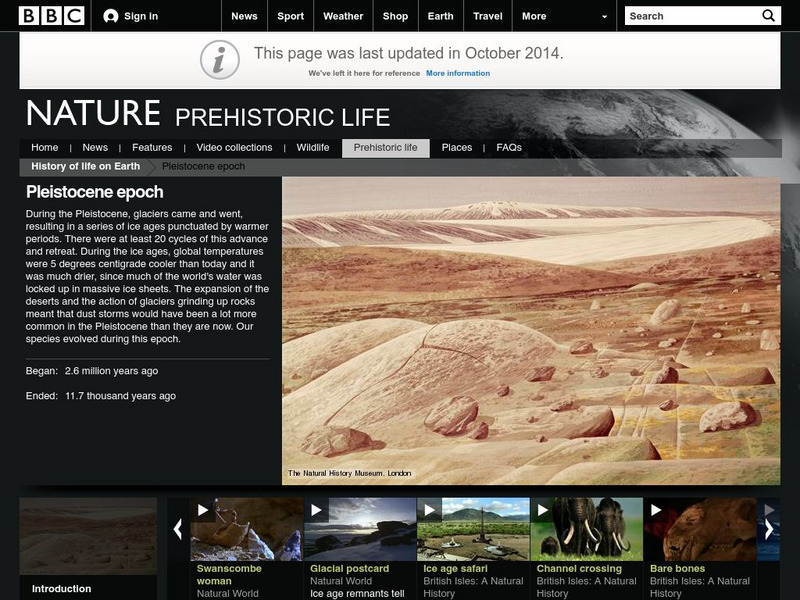
BBC
Bbc Nature: Prehistoric Life: Pleistocene Epoch
Overview of the Earth in the Pleistocene Epoch told by photos, news, and external links with an emphasis on what grew then, what lived then, the causes of mass extinction, types of fossils, and what life was like in general.

Encyclopedia of Earth
Encyclopedia of Earth: Evolutionary Biology: Pleistocene
Article describing the Pleistocene Epoch, which lasted from 1.8 million to about 10,000 years ago. It discusses species that lived then (e.g., the mammoth), and the climate changes that took place at that time. (Published: May 8, 2010)
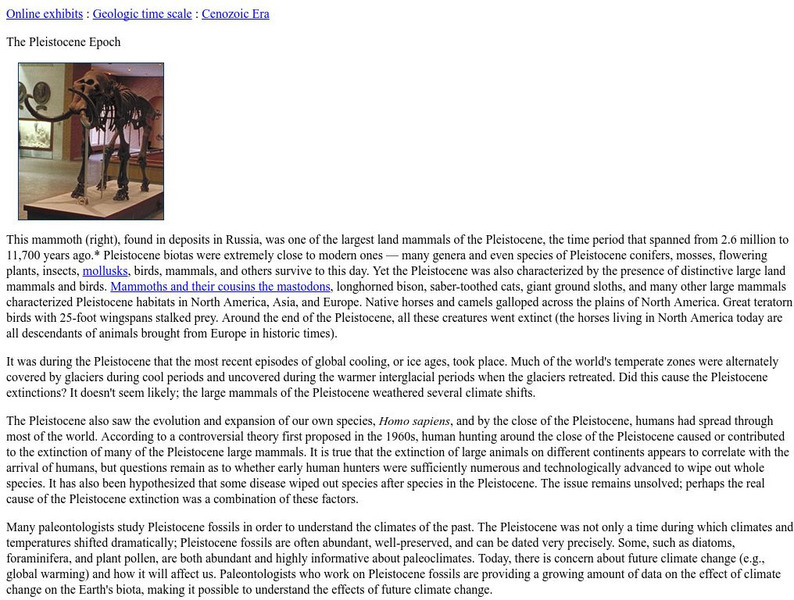
University of California
Ucmp: The Pleistocene
The UCMP Berkeley provides a brief overview of the Pleistocene Era, including links to more information.
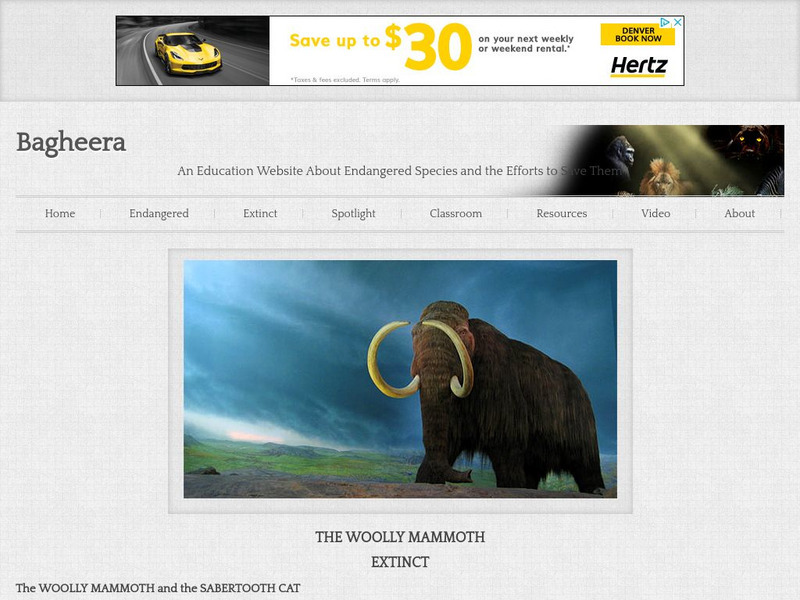
Bagheera
Bagheera.com: Extinct in the Wild Pleistocene Mammoth and Sabertooth Cat
This article is about the many mammals that became extinct in the late Pleistocene era. Many causes are considered and there are some great questions at the end for your consideration.
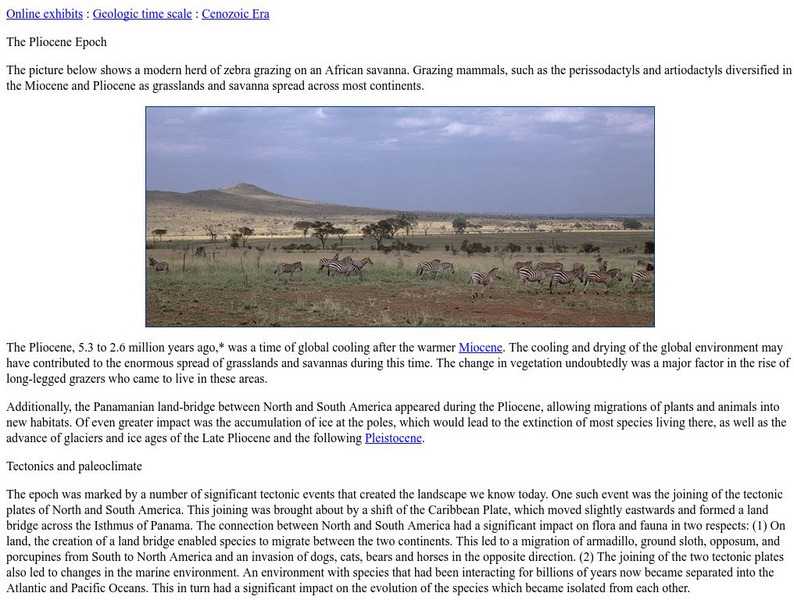
University of California
Ucmp: The Pliocene Epoch
A good brief review with links to additional information and a clickable chart showing the subdivisions of the Pliocene Epoch.
Other
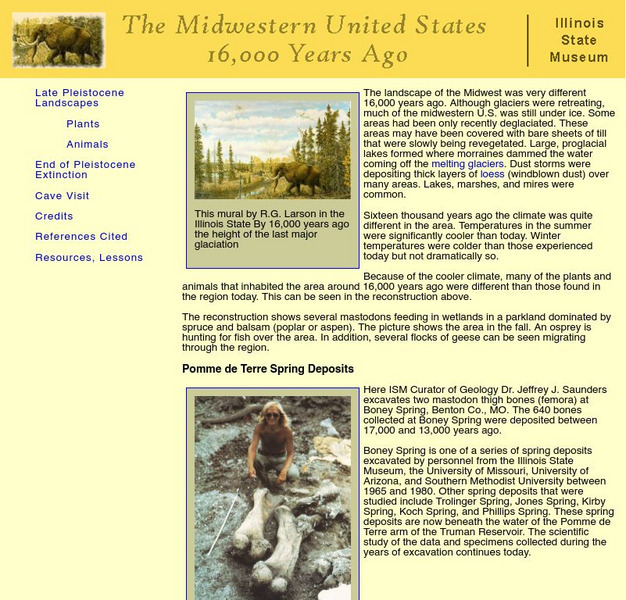
Illinois State Museum: The Midwestern United States 16,000 Years Ago
What did Northern America look like 16,000 years ago? Were the plants the same? What happened to the mastodons and the saber-toothed cats? Here's a short website that is easy-to-understand and supplies at least some of the answers.

PBS
Nova: America's Stone Age Explorers: End of the Big Beasts
Three opposing views about the disappearance of the "megafauna" in North America. What really happened to the wooly mammoth, mastadon, saber-toothed tiger, among other animals?
Other
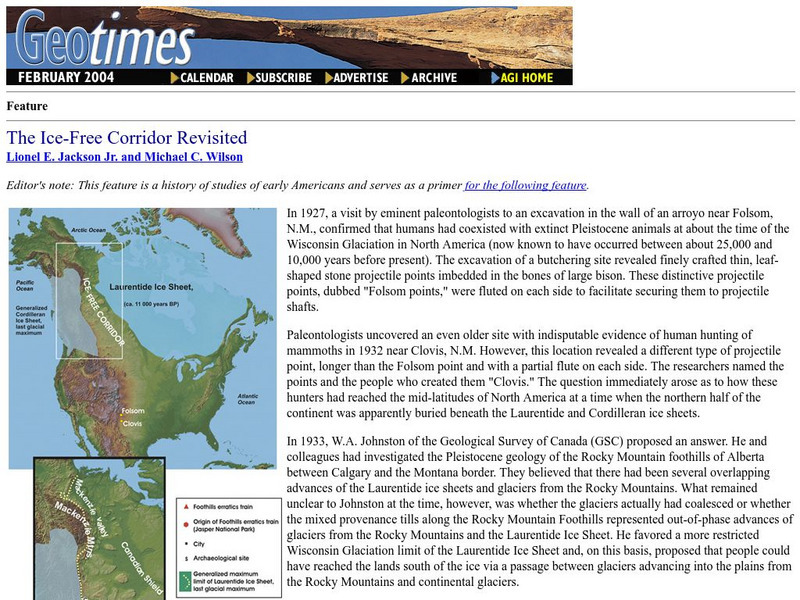
Geo Times: The Ice Free Corridor Revisited
A very comprehensive article about the ice-free corridor which was possibly the passageway for Paleoindians to enter North America. The discussion includes geology as well as anthropolpgy.
University of California
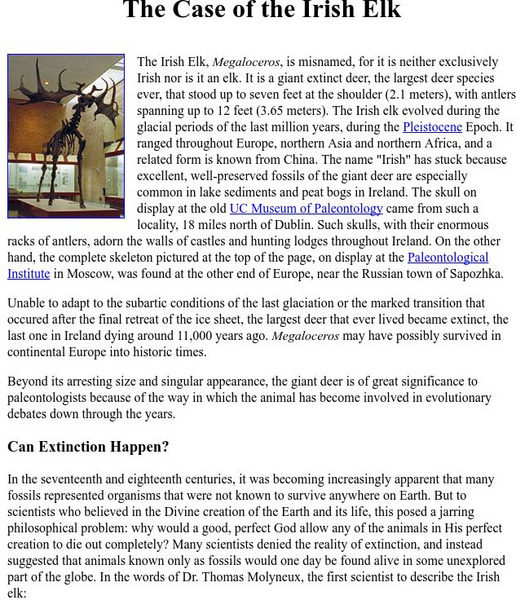
Ucmp: The Case of the Irish Elk
This site provides a general overview of the extinct deer species, the Irish Elk.
San Diego Natural History Museum
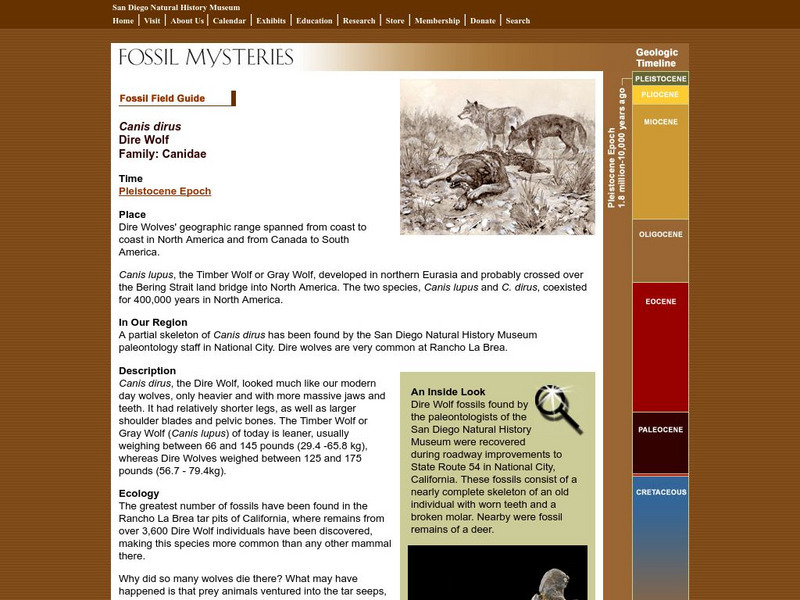
San Diego Natural History Museum: Fossil Field Guide: Dire Wolf
A look at what fossil evidence reveals about life and ecological interactions of the extinct dire wolf.

San Diego Natural History Museum
San Diego Natural History Museum: Fossil Field Guide: Mammoth
A look at what fossil evidence reveals about the life and ecological interactions of the extinct mammoth.
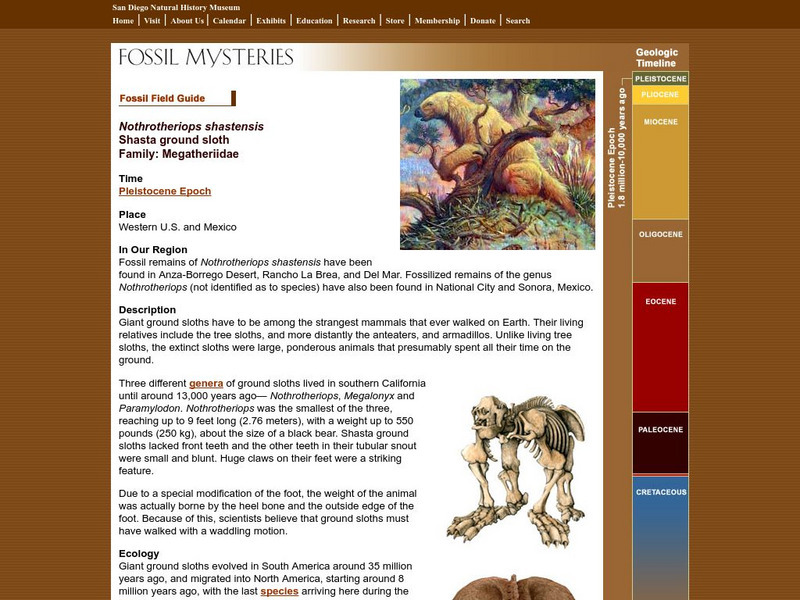
San Diego Natural History Museum
San Diego Natural History Musem: Fossil Field Guide: Giant Ground Sloth
A look at what fossil evidence tells us about the life and ecology of prehistoric giant ground sloths.
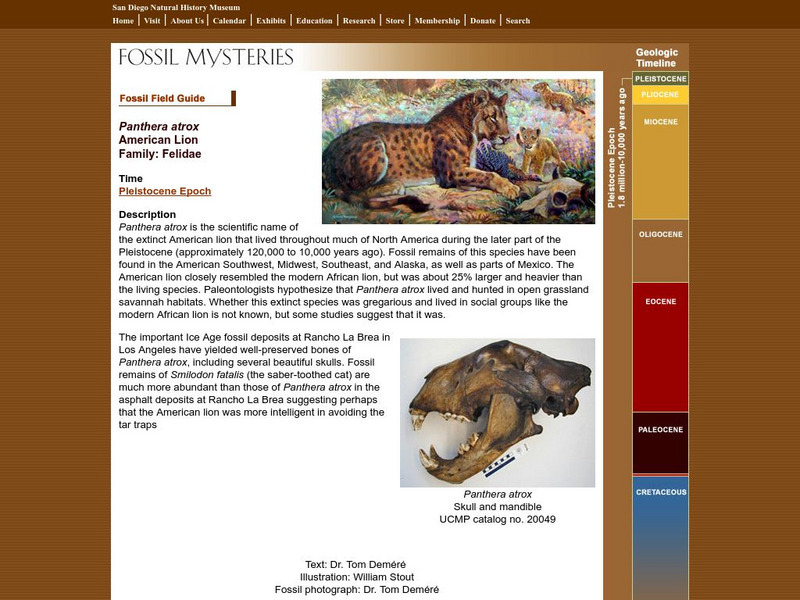
San Diego Natural History Museum
San Diego Natural History Museum: Fossil Field Guide: American Lion
A brief look at what fossil evidence reveals about the life and feeding habits of prehistoric American lions.
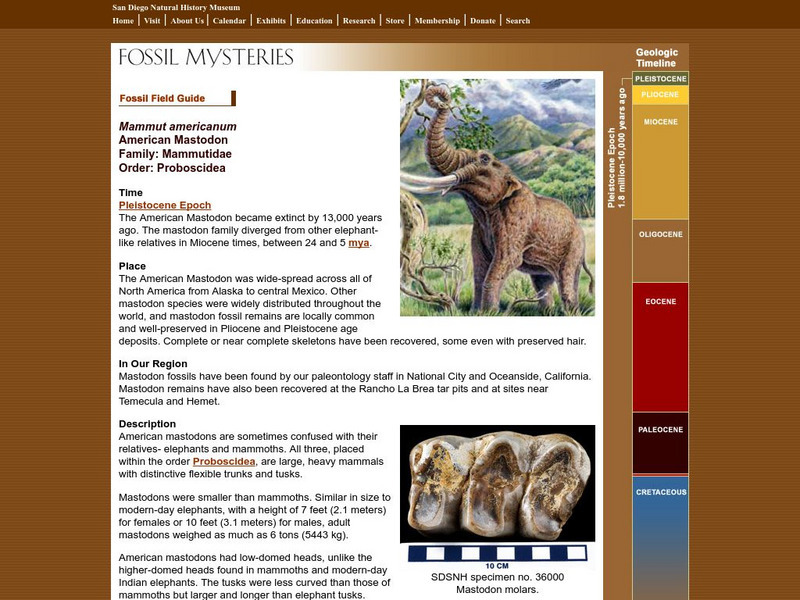
San Diego Natural History Museum
San Diego Natural History Museum: Fossil Field Guide: American Mastodon
A detailed look at what fossil evidence unveils about the life and ecological interactions of the extinct American mastodon.