Hi, what do you want to do?





PBS
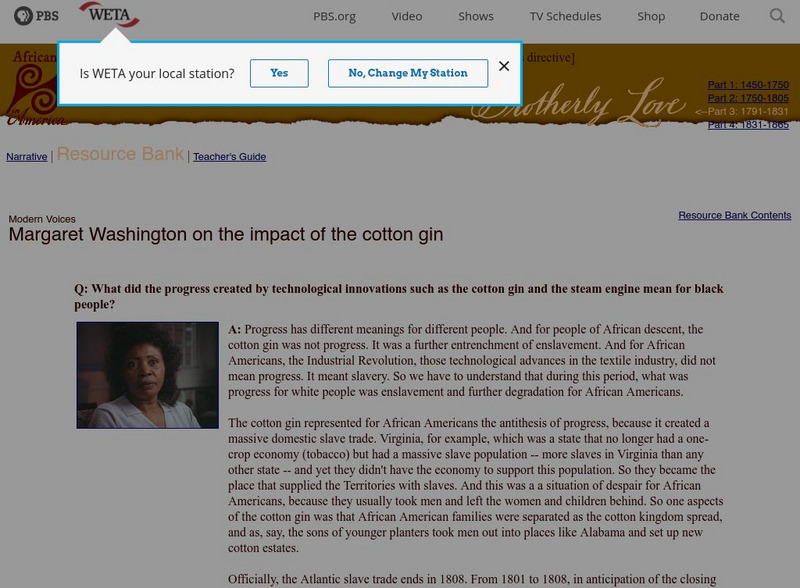
Pbs: Africans in America: Part 3: Impact of the Cotton Gin
An African American associate professor of history at Cornell discusses the impact of the cotton gin on slavery.
Other
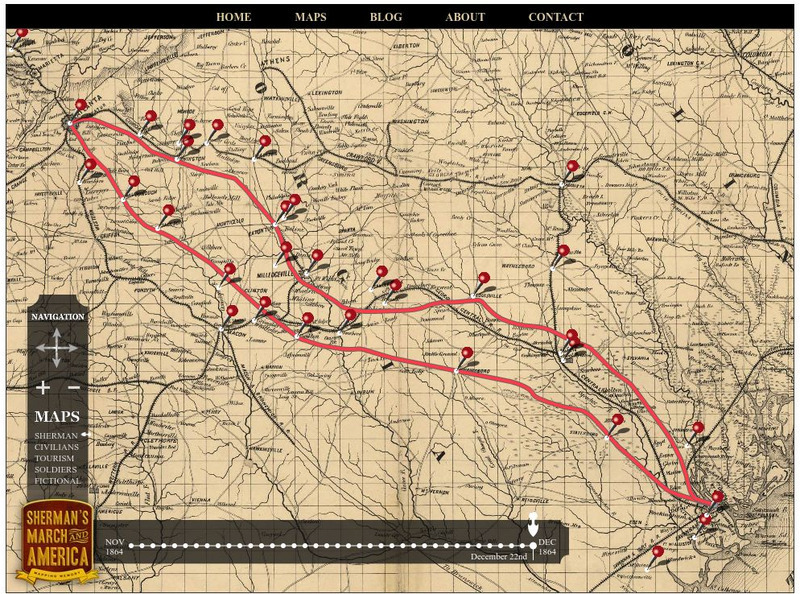
Sherman's March and America: Mapping Memory
A collection of five interactive maps that each focus on a different perspective of Sherman's March to the Sea. These include a factual map, one that looks at African Americans and Southern civilians, one about travel, one on soldiers,...
PBS
Pbs: Africans in America: Part 1: The Growth of Slavery in North America
Focuses on slavery in North America, the worry about uprisings, and slavery's economic impact. Links to related information.
National Humanities Center
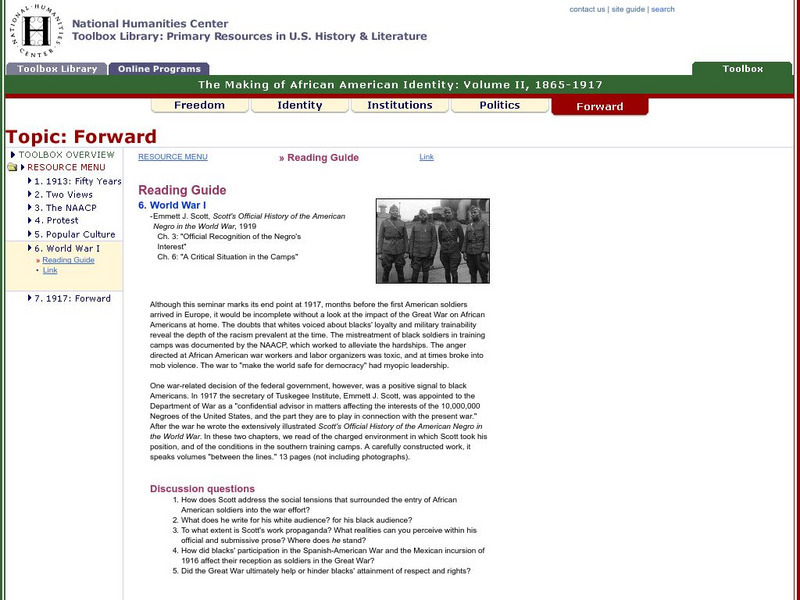
National Humanities Center: Toolbox Library: Making of African American Identity: World War I
Excerpts from "The Official History of the American Negro in World War I" by Emmett J. Scott, depicting the impact of the Great War on African Americans at home. The doubts that whites voiced about African Americans' loyalty and military...
Yale University
Yale New Haven Teachers Institute: Mosaic America: Civil Rights Movement
A lesson unit designed to outline the civil rights movement as seen through the eyes of African Americans, Chicanos, and Native Americans.
National Humanities Center
National Humanities Center: Toolbox Library: Two Views, Making of African American Identity: V. 2
Two poems that explore the struggles of African Americans in the early-twentieth century. Links to both poems by Fenton Johnson are provided, and illustrate the struggles experienced as black man in white America in the 1910s
National Humanities Center
National Humanities Center: Toolbox Library: Business, Making of African American Identity: V. 2
A painting and an appeal that explore the role business played in black uplift in nineteenth-century America. This resource focuses on the work of Edward Bannister (1828-1901), one of the leading black painters of the nineteenth century.
National Humanities Center
National Humanities Center: Toolbox Library: Capture, Making of African American Identity: V. 1
Several narratives of the capture of West Africans, including the famous autobiography of Venture Smith, from the eighteenth century, two accounts of conditions on slave ships, and an audio recording of the memories of the descendants of...
National Humanities Center
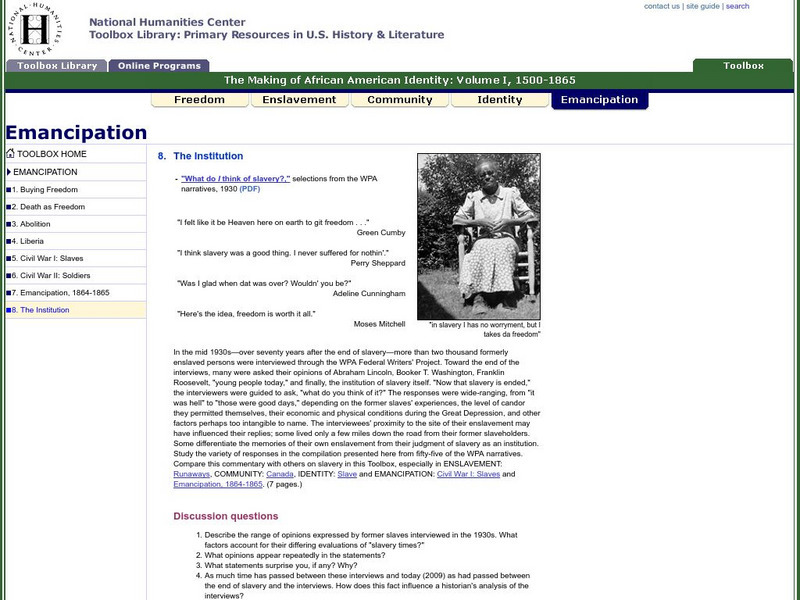
National Humanities Center: Toolbox Library: The Institution, Making of African American Identity: V. 1
Interviews from the 1930s that reflect on African Americans' experience of the institution of slavery. A narrative with firsthands accounts is linked within this resource.
PBS
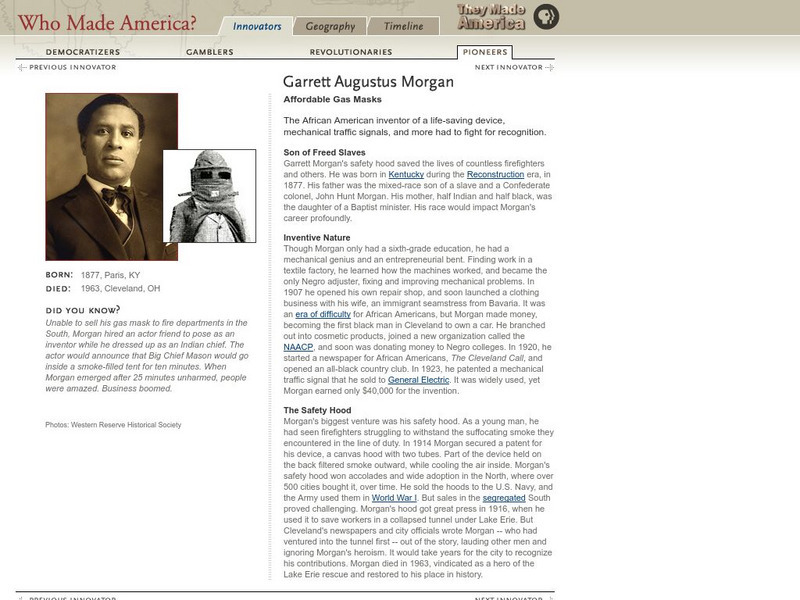
Pbs: Who Made America?: Innovators: Garrett Augustus Morgan
The African American inventor of a life-saving device, mechanical traffic signals, and more had to fight for recognition.

The History Cat
The History Cat: History of Colonial America: Jamestown Colony
Describes the struggles of the Jamestown Colony to survive in its first years. Many died from disease and starvation, and things only began to turn when the colonists started to grow tobacco. The use of indentured servants and later,...

Houghton Mifflin Harcourt
Harcourt: School Publishers: Jackie Robinson
America honors Jackie Robinson's first year in baseball's major leagues. This site has a brief biography of Jackie Robinson and how he broke the race barrier.
PBS
Pbs: Cet: Africans in America: The Growth of Slavery in North America
Discusses the economics of slavery in South Carolina and its importance to the profitable growing of rice. It continues with ways the slaves were controlled and punished in South Carolina and Georgia. Click on Teacher's Guide for teacher...

PBS
Pbs: Africans in America: Angelina Grimke Weld's Speech at Pennsylvania Hall
The text of a speech given by abolitionist Angelina Grimke Weld on May 17, 1838.
National Humanities Center
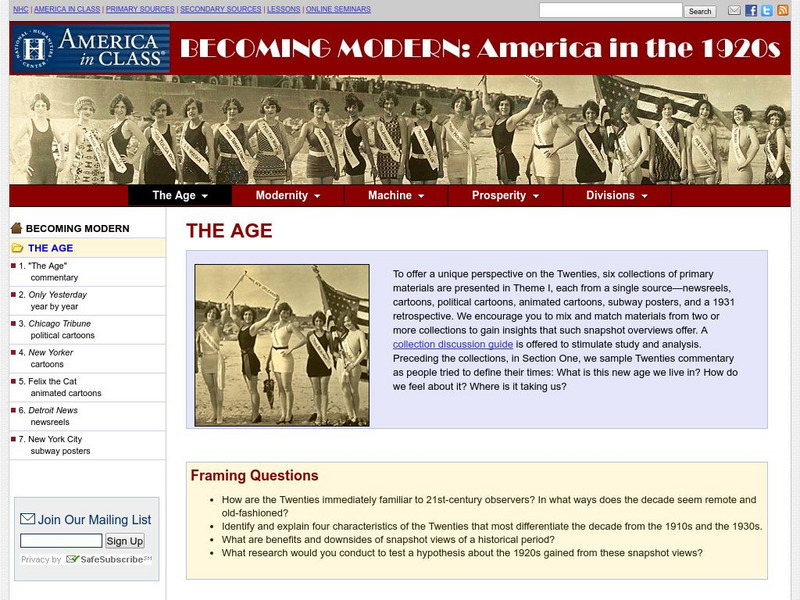
National Humanities Center: America in Class: Becoming Modern: America in the 1920s: The Age
A collection of primary source material from the modern age, explores the 1920s and how it relates to today. Section includes introductory notes, classroom discussion questions, and supplemental links to related resources.
PBS
Pbs: Africans in America: Shift From Indentured Servitude to Lifelong Slavery
This discussion by Prof. Peter Wood of Duke University explores what may have allowed the shift from indentured servitude to lifelong slavery for Africans and their children. Click on Teacher's Guide for teacher resources.
PBS
Africans in America: Virginia Looks Toward Africa for Labor
This website explains why Virginia needed laborers, why it led to the use of African labor and how it was justified by Christians. Hyperlinks to related topics on the site.
Smithsonian Institution
National Museum of American History: Lives on the Railroad: Salisbury, North Carolina 1927
Replica of the Salisbury, North Carolina railway station teaches about riding and working on the railroad in the 1920s when railroads were a central part of American life. Railroad lines crisscrossed the country. They carried people,...
PBS
Pbs: Africans in America: Harriet Tubman (1820 1913)
Here is a brief article from PBS on the life and accomplishments of abolitionist Harriet Tubman, who risked her life on several occasions to ensure the freedom of others. Links to a teacher's guide and primary sources are provided.
PBS
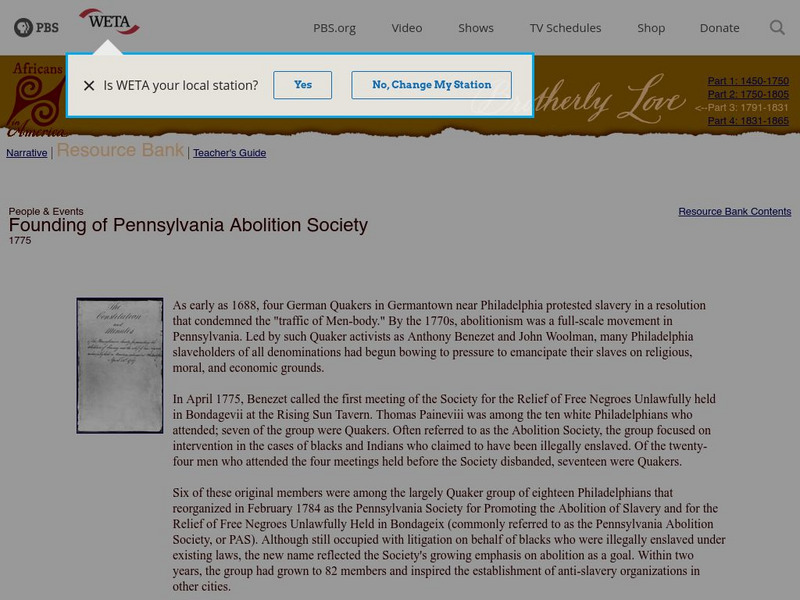
Africans in America: Founding of the Pennsylvania Abolition Society
A detailed account of the founding of the first Quaker abolitionist society in 1775 in Philadelphia by Anthony Benezet. The society became known as "PAS" or "Pennsylvania Abolition Society".

PBS
Pbs: Africans in America: David Walker (1796 1830)
At this site from PBS you can read about the life of David Walker. Born in the late 18th century as a free black, he was most known for his pamplet, entitled "Appeal," which advocated slave revolt.

National Humanities Center
National Humanities Center: Toolbox Library: Civil War I: Slaves, Making of African American Identity: V. 1
Photographs of slaves during the Civil War and war memories of former slaves during that conflict. Links to two separate resources can be found here, each focusing on the war memories of former slaves.
National Humanities Center
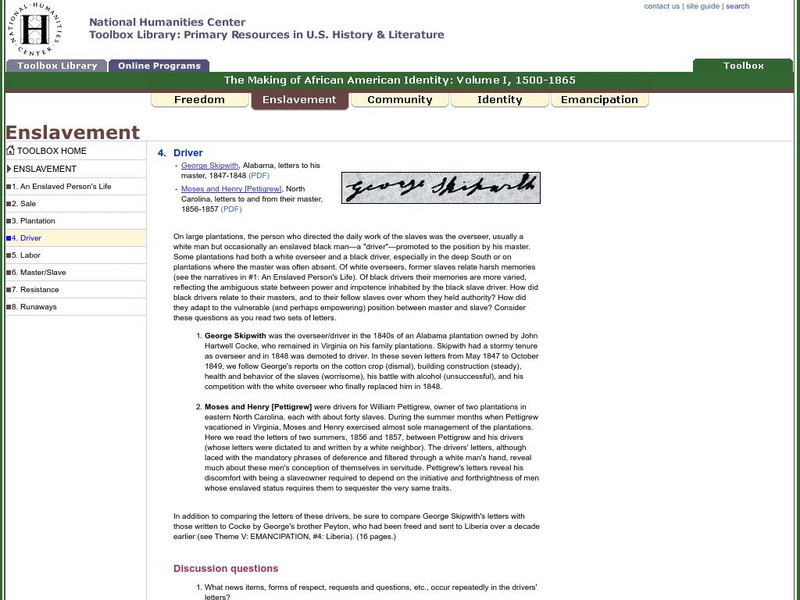
National Humanities Center: Toolbox Library: Driver, Making of African American Identity: V. 1
Unusual letters from black slave drivers, and in one case, letters in reply from the white slave owner, about crops, labor, and conditions on plantations in the mid-1850s.
Countries and Their Cultures
Countries and Their Cultures: Multicultural America: Eritrean Americans
Provides an overview of the traditional culture and lifestyle of Eritrean Americans. (Note: Content is not the most current.)