Hi, what do you want to do?





National Women's Hall of Fame
National Women's Hall of Fame
Women and men stood along side each other to form the United States. Use this resource to learn about different influential women in U.S. history.
Virginia Tech
Digital History Reader: u.s. History: A Revolution for Whom?
A module that addresses what changes in America came about as a result of the Revolutionary War. Who was impacted? How? Did it improve life in the new nation? Dive into the details of the changes through a collection of articles and...

PBS
Pbs Learning Media: Primary Source Set: Women in the Civil War
A collection of primary sources that explore women in the Civil War.
Independence Hall Association
U.s. History: Women's Suffrage at Last
Trace the history of the women's suffrage movement from its organized beginnings in 1848 with the Seneca Falls Convention to the final success with the adoption of the 19th Amendment, which constitutionally granted women the right vote.
Ohio State University
Opper Project: Using Editorial Cartoons to Teach History (Lesson Plans)
Two dozen lessons that focus on using political cartoons as primary source resources for teaching American history. Lessons cover a range of topics in U.S. history from the Civil War era forward and are linked to Ohio content standards.
Independence Hall Association
U.s. History: Religious Revival
The Second Great Awakening was transformative in ways beyond religion. Read about the new ideas about religion and see how they emphasized individual dignity and worth. This then reflected on the early ideas of women's suffrage, and the...
Independence Hall Association
U.s. History: The American Homefront
See how the people at home stepped up to support the war effort in World War II.
PBS
Pbs Learning Media: Primary Source Set: Women of the Antebellum Reform Movement
This collection uses primary sources to explore women in the antebellum reform movement.
Ohio State University
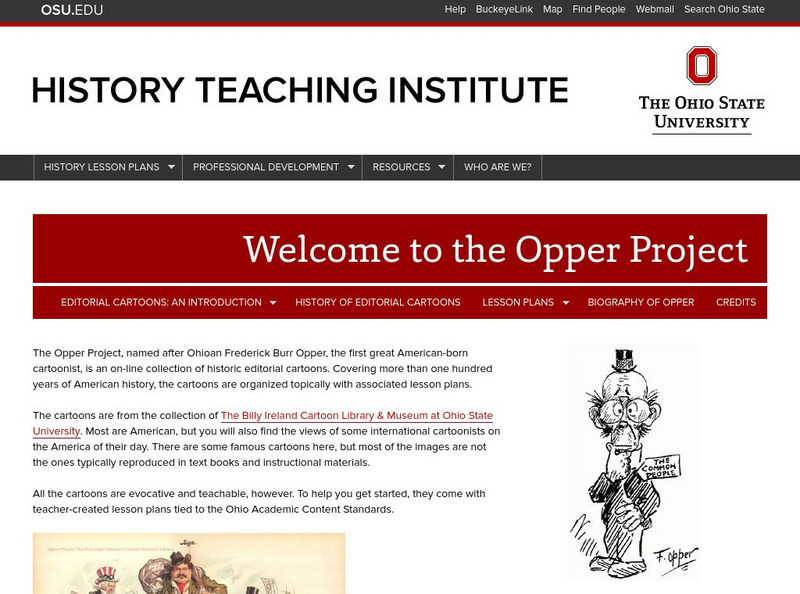
Opper Project: Using Editorial Cartoons to Teach History (Lesson Plans)
Two dozen lessons that focus on using political cartoons as primary source resources for teaching American history. Lessons cover a range of topics in U.S. history from the Civil War era forward and are linked to Ohio content standards.
Independence Hall Association
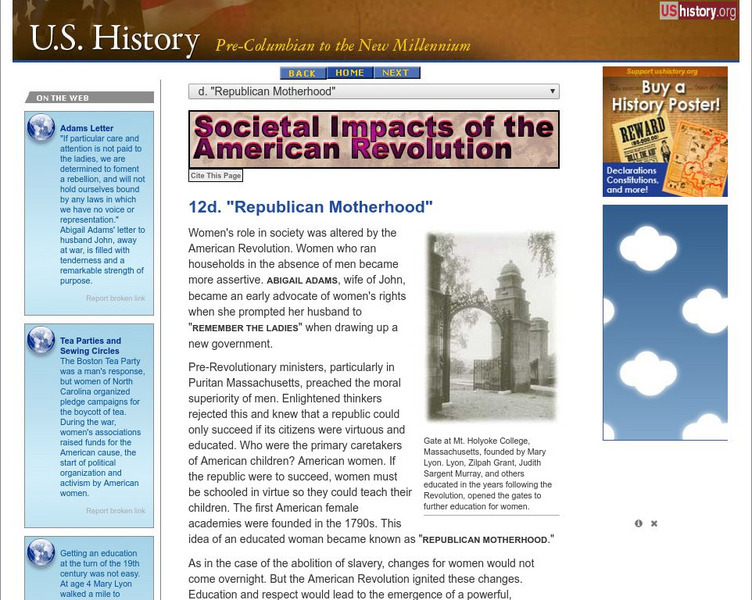
U.s. History: "Republican Motherhood"
Although brief, this article makes clear the change in the role and perception of women in the new United States. See why it was deemed important for women to have the chance to be educated.
Independence Hall Association
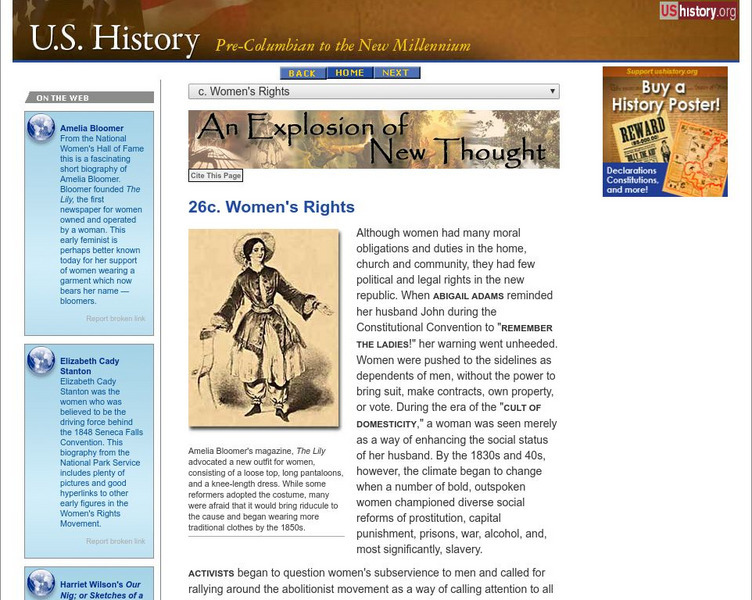
U.s. History: Women's Rights
Read about some outspoken women in the 1830s and 1840s, who began speaking out for reforms of many kinds, particularly on the issue of slavery and the rights of women to vote. The Seneca Falls Declaration pushed this idea of equality.
Independence Hall Association
U.s. History: The War Behind the Lines
The battlegrounds were not the only places affected by the Civil War. Read about how both the North and South carried out foreign diplomacy, the effect of the war on the economies of the two sides, and how the role of women in both the...
Independence Hall Association
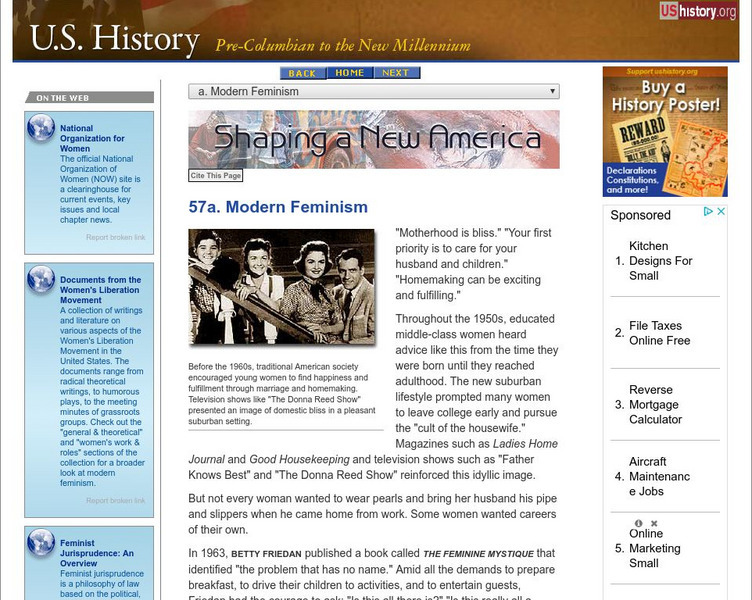
U.s. History: Modern Feminism
The beginning of the feminist movement in the early 1960s led to demands for equal treatment for women in many areas. Read about the literature, feminist leaders, and legislation that attempted to guide this movement.
Independence Hall Association
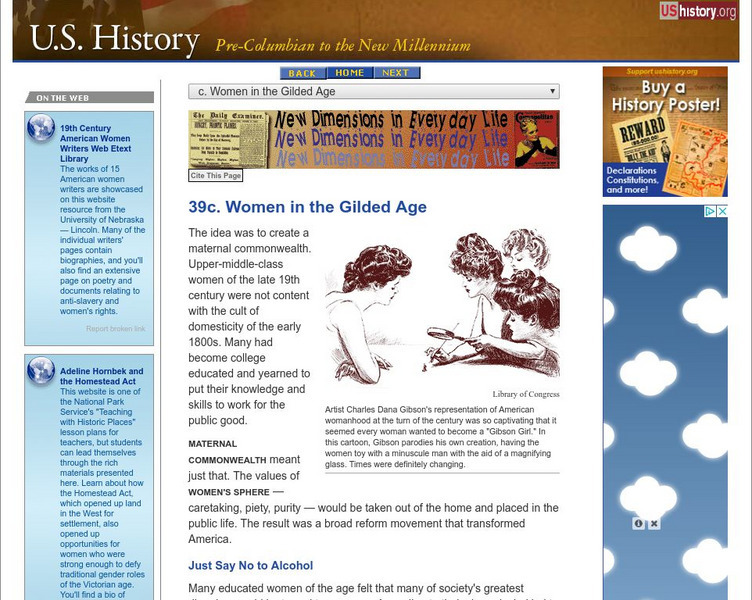
U.s. History: Women in the Gilded Age
The roles available to women increased during the urbanization of America. Find out how the women's sphere of the home expanded into the community. See what new jobs were availabe to single, middle-class women, and read about how...
Independence Hall Association
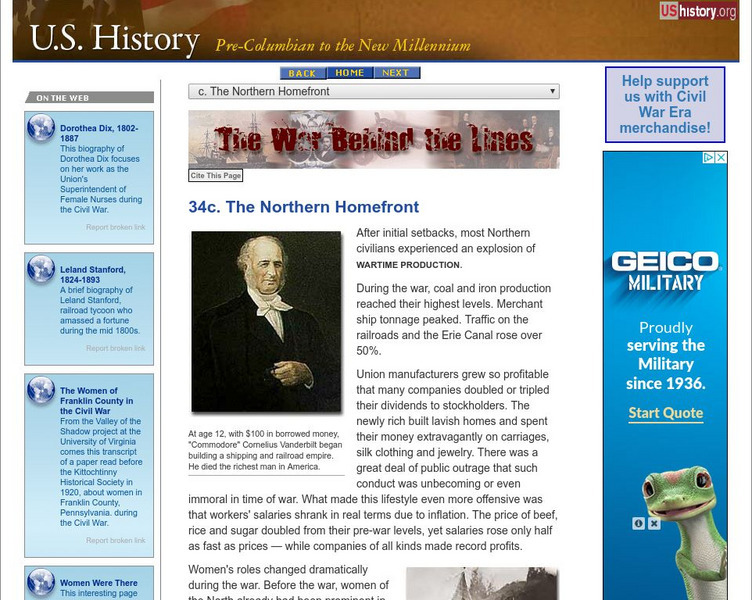
U.s. History: The Northern Homefront
The military-industrial complex thrived in the North during the Civil War, but read about how inflation affected the ordinary worker. See how the role of women expanded to fill in for men who were away fighting. Women also had an impact...
Independence Hall Association
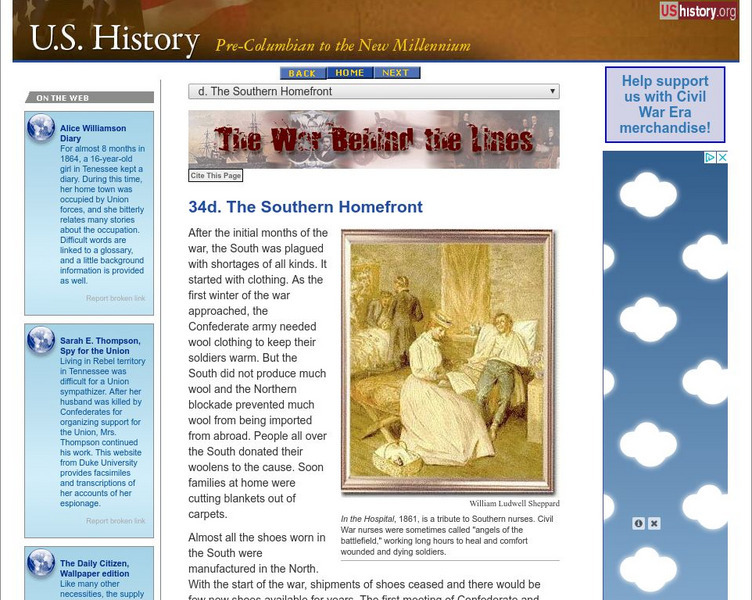
U.s. History: The Southern Homefront
Life in the Confederacy during the Civil War was one of shortages. Read about the shortages of food, and the unstable currency which resulted in rampant inflation. Women's roles expanded in many fields. See what occurred when the draft...

US National Archives
Our Documents: A National Initiative on American History, Civics, and Service
Our Documents is home to one hundred milestone documents that influenced that course of American history and American democracy. Includes full-page scans of each document, transcriptions, background information on their significance, and...
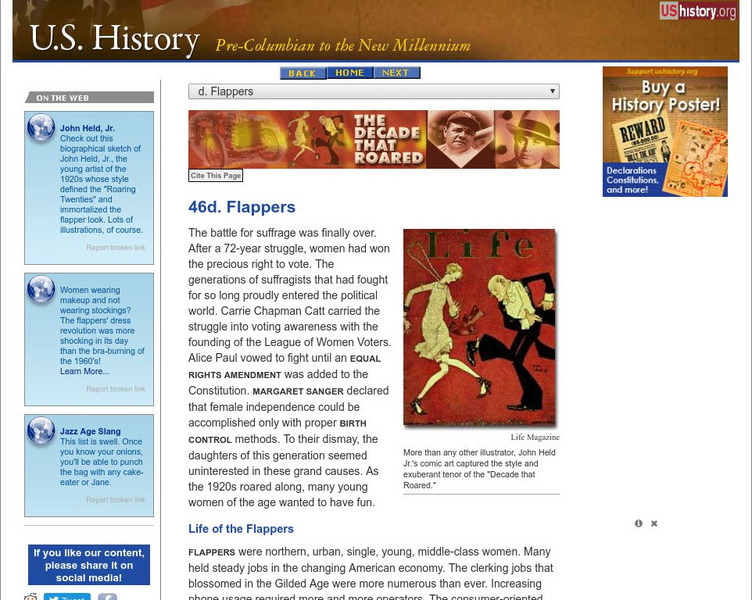
Independence Hall Association
U.s. History: Flappers
The liberation of women as expressed by the flappers of the 1920s was in stark contrast to the actions of women in the Victorian Age. Read about how flappers expressed their freedom in fashion, employment, and leisure activities.
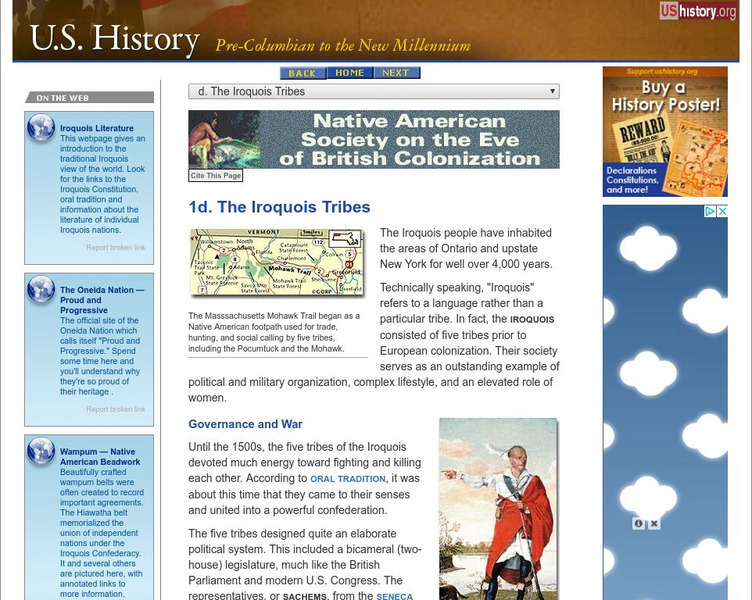
Independence Hall Association
U.s. History: The Iroquois Tribes
The Iroquois were a group of five tribes linked by their language and similar culture. Read about why the Iroquois were such a great example of the elevated role of women in the tribes, the complex lifestyle they had, and their political...

Independence Hall Association
U.s. History: The Emergence of "Women's Sphere"
The Cult of Domesticity and the Women's Sphere pertained to upper-middle class white women, but the ideals spread out into American culture. Read about how such women were supposed to behave, and see what privileges these women might...
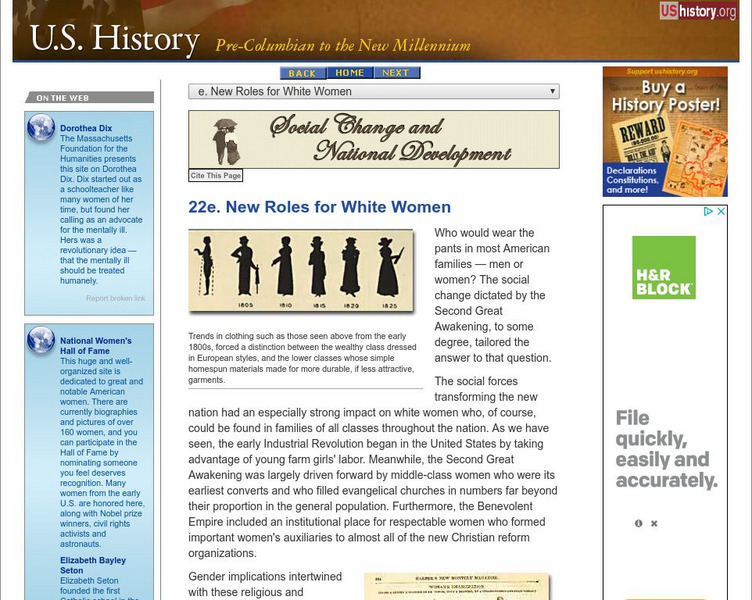
Independence Hall Association
U.s. History: New Roles for White Women
A look at the changes in the role of white, middle-class women as a result of the Second Great Awakening, among other social forces.
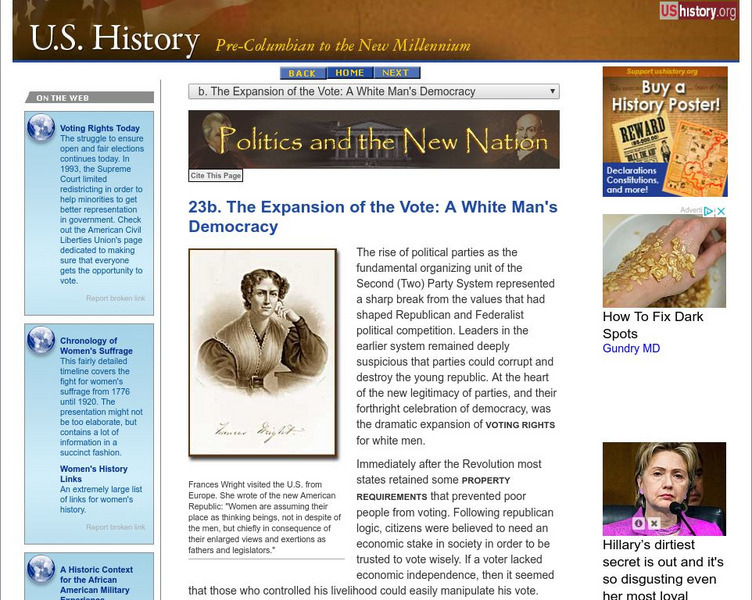
Independence Hall Association
U.s. History: The Expansion of the Vote: A White Man's Democracy
Read about how the ability to vote changed from requiring the ownership of property to almost complete enfranchisement of white males by 1840. There was disenfranchisment of women and free blacks in the same period of time.
Independence Hall Association
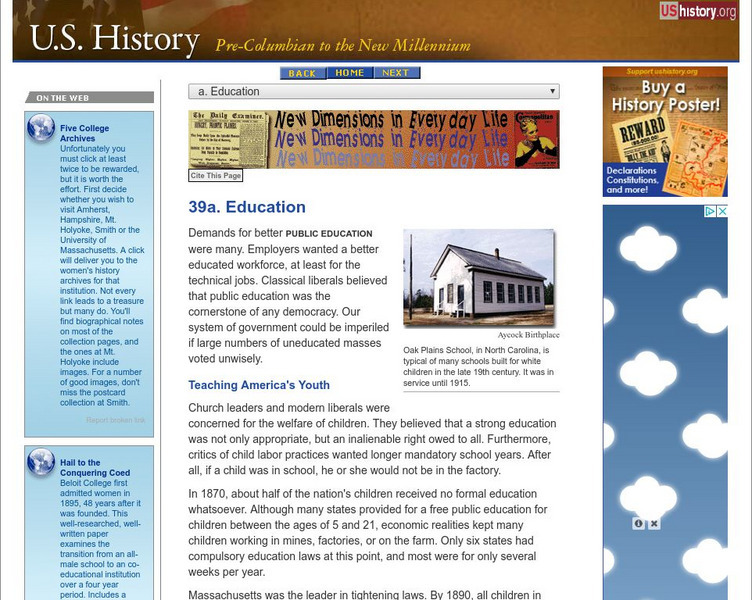
U.s. History: Education
A result of one of the social reforms that attacked child labor was the increase in public education. See how education for all was addressed in the late 19th century, and read about the increased availability of higher education for...
Independence Hall Association
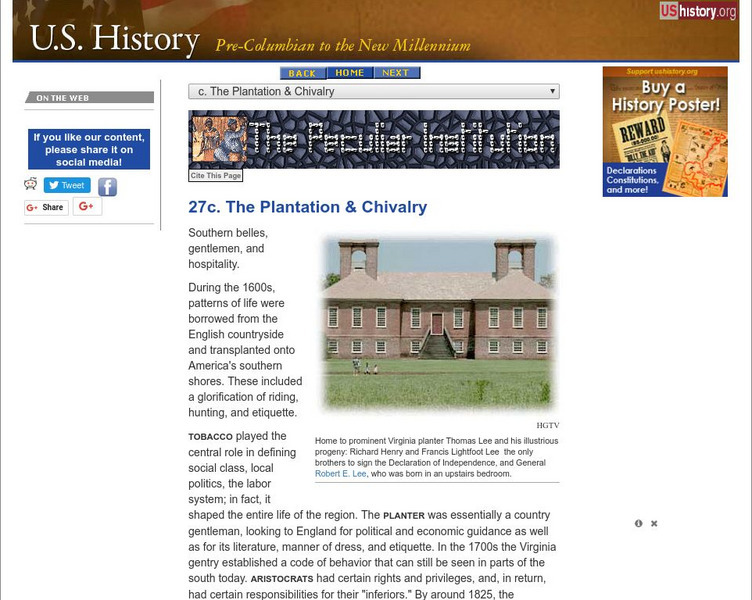
U.s. History: The Plantation and Chivalry
The Southern way of life fostered a social code of chivalry and genteelism. Read about what was considered honorable and proper for both aristocratic men and women.