Hi, what do you want to do?





American Museum of Natural History
American Museum of Natural History: O Logy: Ask a Scientist
A browsable collection of environment-related questions posed by elementary- and middle-school students to the scientists of the American Museum of Natural History in honor of Earth Day. Great questions and great answers.

University of Florida
Florida Museum of Natural History: About the Florida Everglades
Everything you always wanted to know about the Everglades! The Florida Museum of Natural History offers great photos and good information on the many habitat types to be found there.

Carnegie Museum of Natural History
Carnegie Museum of Natural History: Carnegie's Dinosaurs: Oviraptorosaur
Discover the Oviraptorosaur in this impressive field guide presented by the Carnegie Museum of Natural History.

University of Florida
Florida Museum of Natural History: Great Hammerhead
The Florida Museum of Natural History presents an in-depth look at the great hammerhead. Learn about the taxonomy, common names, geographical distribution, conservation, habitat, food habits, reproduction, importance and danger to...

University of Florida
Florida Museum of Natural History: Longsnout Seahorse
The Florida Museum of Natural History presents an in-depth look at the longsnout seahorse, an important species in the aquarium trade. Learn about the taxonomy, common names, geographical distribution, conservation, habitat, features,...

University of Florida
Florida Museum of Natural History: Blue Shark
The Florida Museum of Natural History presents an in-depth look at the blue shark, named for its distinctive blue color. Learn about the taxonomy, common names, geographical distribution, conservation, habitat, food habits, reproduction,...

University of Florida
Florida Museum of Natural History: Tiger Shark
The Florida Museum of Natural History presents an in-depth look at the tiger shark, named for its distinctive color pattern. Learn about the taxonomy, common names, geographical distribution, conservation, habitat, food habits,...

University of Florida
Florida Museum of Natural History: Bull Shark
The Florida Museum of Natural History presents an in-depth look at the bull shark that are found in both salt and fresh water. Learn about the taxonomy, common names, geographical distribution, conservation, habitat, food habits,...

University of Florida
Florida Museum of Natural History: Nurse Shark
The Florida Museum of Natural History presents an in-depth look at the nurse shark, nocturnal bottom-dwelling sharks. Learn about the taxonomy, common names, geographical distribution, conservation, habitat, food habits, reproduction,...

University of Florida
Florida Museum of Natural History: Whale Shark
The Florida Museum of Natural History presents an in-depth look at whale sharks, the largest fish in the sea. Learn about the taxonomy, common names, geographical distribution, conservation, habitat, food habits, reproduction, importance...

University of Florida
Florida Museum of Natural History: Basking Shark
The Florida Museum of Natural History presents an in-depth look at the basking shark, the second largest fish. Learn about the taxonomy, common names, geographical distribution, conservation, habitat, features, food habits, reproduction,...

University of Florida
Florida Museum of Natural History: Orange Clownfish
The Florida Museum of Natural History presents an in-depth look at orange clownfish, small reef fish. Learn about the taxonomy, common names, geographical distribution, conservation, habitat, food habits, reproduction, importance to...

University of Florida
Florida Museum of Natural History: Peacock Flounder
The Florida Museum of Natural History presents an in-depth look at the peacock flounder. Learn about the taxonomy, common names, geographical distribution, conservation, habitat, food habits, reproduction, importance to humans, and more.

University of Florida
Florida Museum of Natural History: Queen Angelfish
The Florida Museum of Natural History presents an in-depth look at the queen angelfish. Learn about the taxonomy, common names, geographical distribution, conservation, habitat, food habits, reproduction, importance to humans, and more.
Smithsonian Institution
National Museum of Natural History: Red Wolf
The Smithsonian National Museum of Natural History, in a section titled "North American Mammals," offers a general overview of the red wolf. Content includes a focus on this animal's conservation status, habitat and range, and other key...
Smithsonian Institution
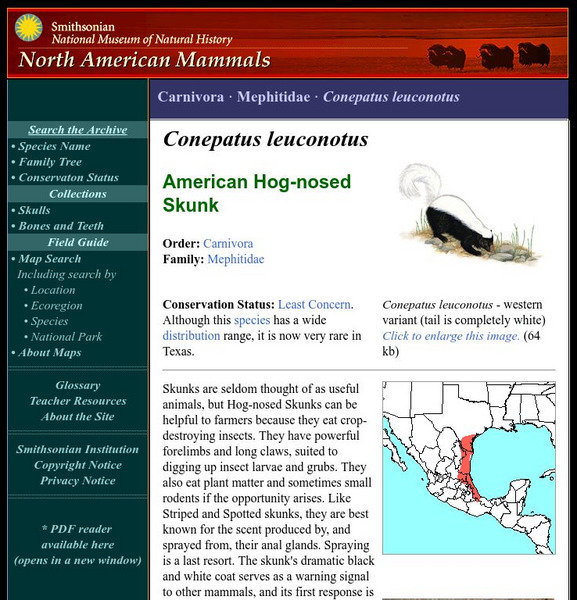
National Museum of Natural History: American Mammals: Hog Nosed Skunk
The Smithsonian Museum of Natural History, in a section titled "North American Mammals," offers a general overview of the North American hog-nosed skunk. Additional content includes detailed drawings, photographs, and a map showing the...
Carnegie Museum of Natural History
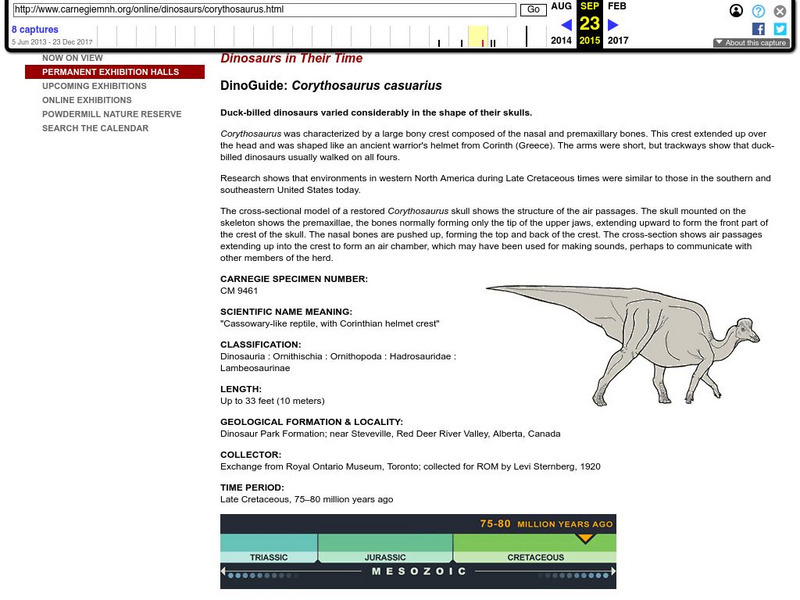
Carnegie Museum of Natural History: Carnegie's Dinosaurs: Dino Guide: Corythosaur
Study a Corythosaurus up close with this concise resource from the Carnegie Museum of Natural History.
Carnegie Museum of Natural History
Carnegie Museum of Natural History: Hillman Hall of Minerals and Gems
Hillman Hall of Minerals and Gems offers an opportunity to explore a variety of ores, metals, gems, and other specimens displayed at the Carnegie Museum of Natural History. This resource offers an excellent collection of photos for...
Smithsonian Institution
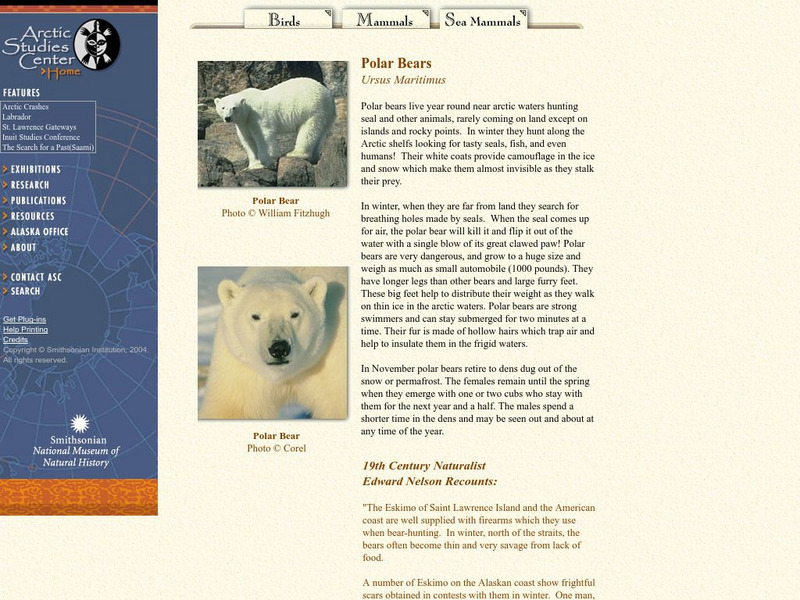
National Museum of Natural History: Arctic Studies Center: Polar Bear
The Smithsonian National Museum of Natural History, in a section titled "North American Mammals," offers a general overview of the polar bear. Additional content includes detailed drawings, photographs, and a map showing the polar bear's...
American Museum of Natural History
American Museum of Natural History: Case Study: Neutrino Observatories
Observatories allow for study of subatomic particles, neutrinos, which are found nearly everywhere in the universe are featured in this case presented by the American Museum of Natural History.
Smithsonian Institution
National Museum of Natural History: American Mammals: Hooded Skunk
The Smithsonian National Museum of Natural History, in a section titled "North American Mammals," offers a general overview of the hooded skunk. Content includes detailed drawings, photographs, specimens, and a map showing the skunk's...

University of Florida
Florida Museum of Natural History: Pterois Volitans: Red Lionfish
The Florida Museum of Natural History presents this informative article on the Red Lionfish which is native to reef habitats of the Indo-Pacific. General information including photographs and a habitat map.
Smithsonian Institution
National Museum of Natural History: Paleobiology: Absolute Dating
An explanation of radiometric or absolute dating of geological formations based on using the half-life of radioactive elements to figure out how old given rock layers are. A link on the left provides information about relative dating as...

University of Florida
Florida Museum of Natural History: Animals 2: Insects and Spiders
This teacher's guide focuses on the smaller animals that inhabit our world: insects and spiders. These fascinating creatures provide young children many hands-on opportunities to learn about the diversity of living things, how living...