Hi, what do you want to do?






Curated OER
Artificial Selection
The second lesson in the series begins with a starter activity discussing wild versus domesticated animals. Then, scholars play a card game, with optional variations, to emphasize artificial selection. Next, they attend a field trip to a...

Curated OER
Unit Plan for The Catcher in the Rye —A “Place-Based” Approach
"People never notice anything." As part of their study of The Catcher in the Rye, class members adopt Holden Caulfield's approach and spend time as quiet observers of their surrounding, recording their observations/reflections in a...

New York City Department of Education
Egypt
This six-week unit encompasses all subjects with a focus study on world history and the development of ancient civilizations. As gifted and talented students dive into the interesting yet challenging topic of Egypt, they...

Brooklyn Children’s Museum
Rocks and Minerals in Our Lives
Young geologists discover the important role that rocks and minerals play in our everyday lives through this series of hands-on activities. Starting off with a lesson that defines the difference between plants, animals, and...

Brooklyn Children’s Museum
Volcanoes!
Give young geologists an up close and personal look at volcanoes with a series of hands-on earth science lessons. Whether they are investigating the properties of igneous rocks, building their own volcanoes, or making...

Montana Natural History Center
Studying Grassland Ecosystems
At first glance, grassland ecosystems might seem dull and uninteresting, but once you start to explore it's amazing the things you'll find! Through this series of engaging lessons, activities, and experiments, elementary students examine...
Smithsonian Institution
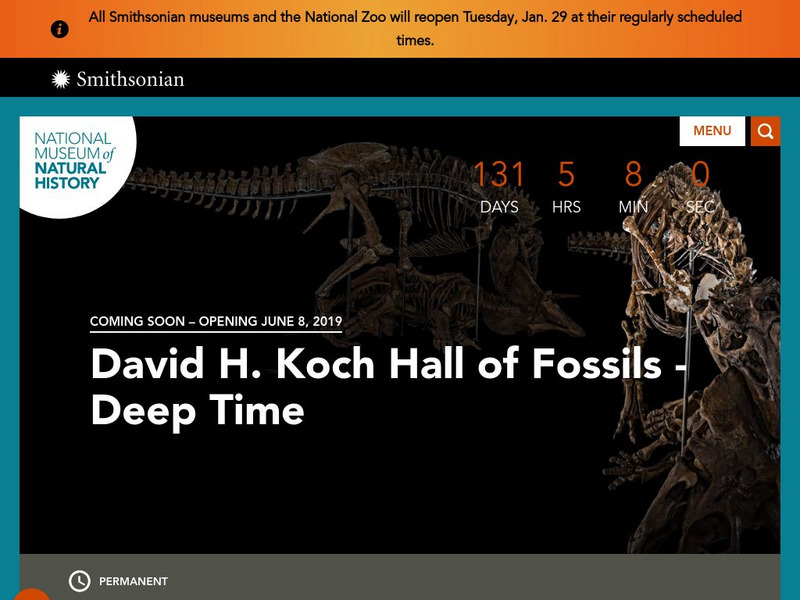
National Museum of Natural History: David H. Koch Hall of Fossils: Deep Time
The Smithsonian Institution provides a virtual tour of the new "Deep Time" exhibit at the National Museum of Natural History.
American Museum of Natural History
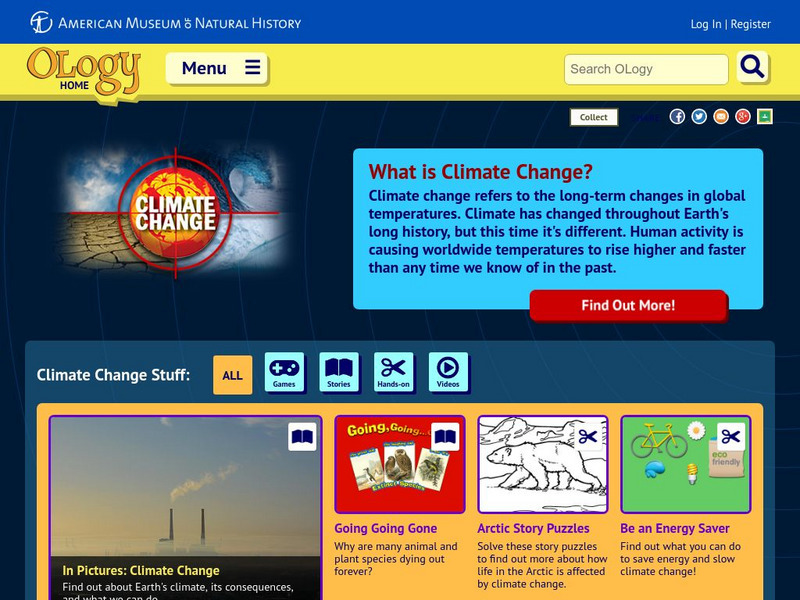
American Museum of Natural History: Ology: Rising Co2! What Can We Do?
With this resource, students learn how much fossil fuel emissions have increased since 1600 by exploring a graph showing carbon dioxide in our atmosphere. Then answer questions and read facts about climate change over the centuries....

Smithsonian Institution
National Museum of Natural History: Lewis and Clark Mapping the West
Understand the importance of the mapping done by Lewis and Clark as you work through these learning exercises and learn mapmaking skills yourself.
American Museum of Natural History
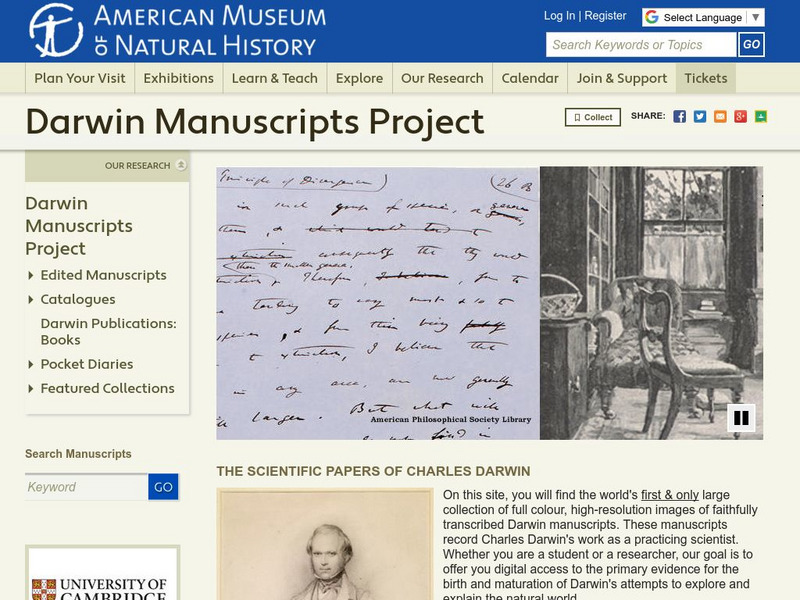
American Museum of Natural History: Darwin Digital Library of Evolution
This American Museum of Natural History project is a valuable resource for anyone with an interest in studying evolution. They have created a digital library of Darwin's notes, publications, and manuscripts. The information is presented...
American Museum of Natural History
American Museum of Natural History: Oology: Expeditions
This student module includes short, informational text, images, interactive games, and quizzes about ocean exploration.
American Museum of Natural History
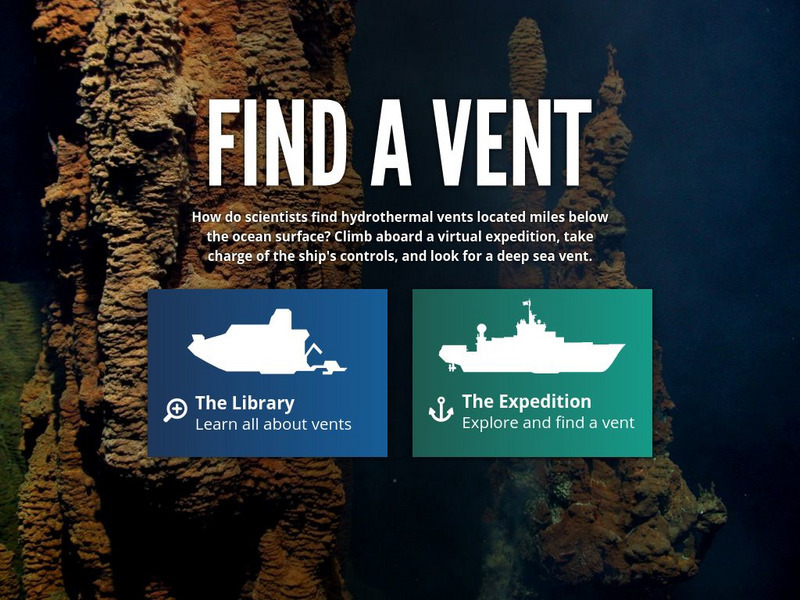
American Museum of Natural History: Find a Vent
Learn all about hydrothermal vents deep in the ocean and how scientists locate them. Then take a virtual expedition to the Juan de Fuca Ridge in the north Pacific and see if you can discover a new deep sea vent.
Science Education Resource Center at Carleton College
Serc: American Museum of Natural History Resources for Learning
This site presents a collection of scientific learning resources for educators, parents, kids, after-school coordinators, informal learning center staff, and anyone else interested in teaching or learning about science. The site provides...
Smithsonian Institution
National Museum of American History: Jamestown, Quebec, Santa Fe: Three North American Beginnings
Explore the origins of Canada and the United States as Jamestown, Quebec, and Santa Fe celebrate their 400th anniversary.
University of Oxford (UK)
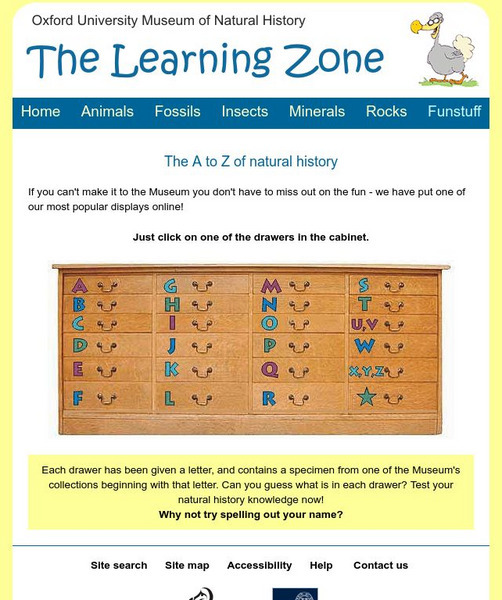
Oxford University Museum of Natural History: A to Z of Natural History
Each drawer has been given a letter, and contains a specimen from one of the Museum's collections beginning with that letter. Can you guess what is in each drawer? Test your natural history knowledge now!
American Museum of Natural History
American Museum of Natural History: O Logy: Light, Matter, Energy
Learn how Einstein revolutionized how we think about light, matter, and energy by asking challenging questions and questioning old ideas.

TED Talks
Ted: Ted Ed: The Hidden Worlds Within Natural History Museums
When you think of natural history museums, you might picture exhibits filled with ancient lifeless things, like dinosaurs or meteorites. But behind that educational exterior, there are hidden laboratories where scientific breakthroughs...
American Museum of Natural History
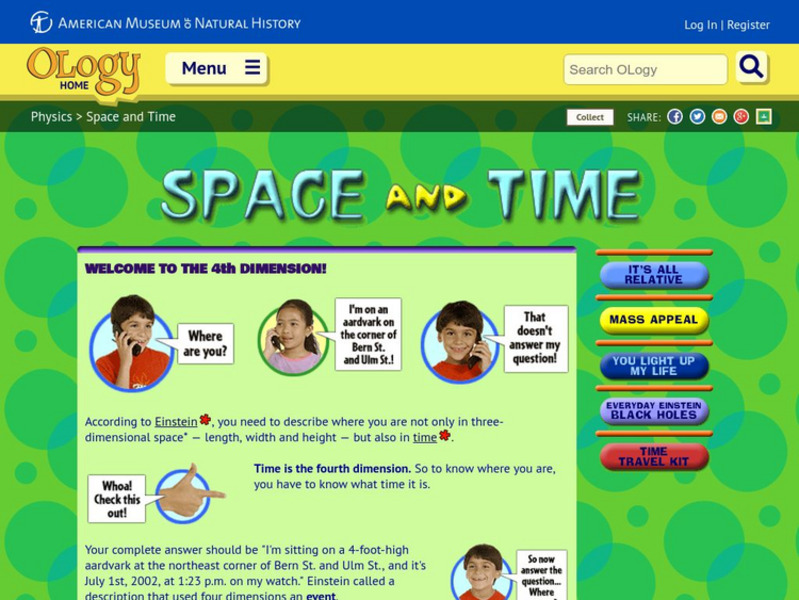
American Museum of Natural History: O Logy: It's All Relative
Learn about the 4th dimensions and the theory of relativity.There is no absolute, or "same," time and space. This means time and space are different for everyone! How you experience events in time and space depends on two important...
Smithsonian Institution
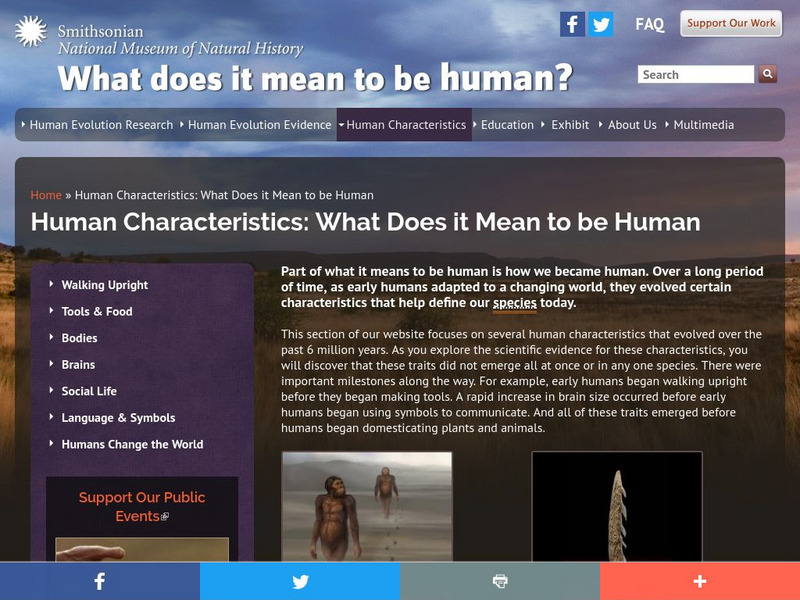
National Museum of Natural History: What Does It Mean to Be Human, Human Characteristics
Explore walking upright, tools and food, bodies, brains, social life, language and how humans ultimately changed the world. Excellent charts, pictures and videos accompany easy-to-understand text on the earliest humans.

Smithsonian Institution
National Museum of Natural History: Homo Habilis
This resource provides graphics, as well as explanation, of the remains of Homo habilis.
Read Works
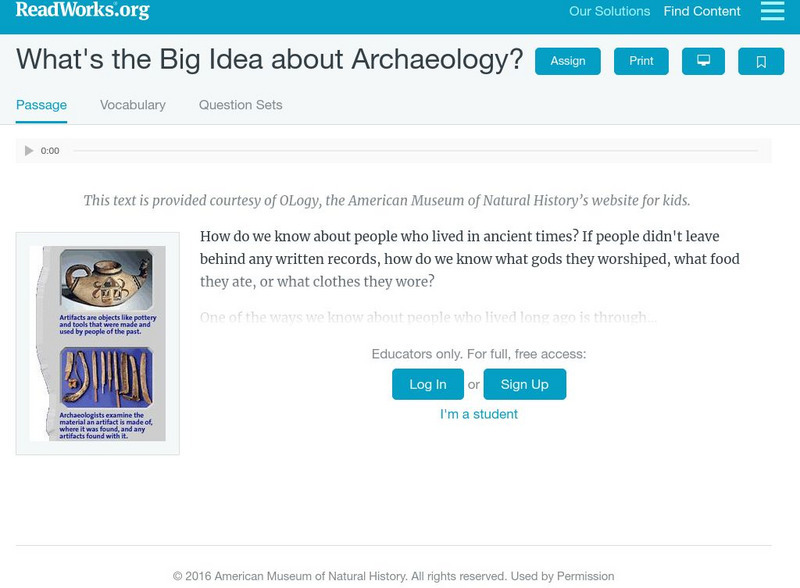
Read Works:what's the Big Idea About Archaeology?
[Free Registration/Login Required] This ReadWorks reading from the American Museum of Natural Anthropology's website called OLogy explains what archaeologists do. A paired passage entitled "Meet the Ologist-Chuck Spencer" is provided in...

TED Talks
Ted: Ted Ed: The History of Museums
Museums have been a part of human history for over 2,000 years- but they weren't always like the ones we visit today. J.V. Maranto uncovers the evolution of museums, from the first museum in 530 BC (curated by a princes) to PT Barnum's...
Natural History Museum
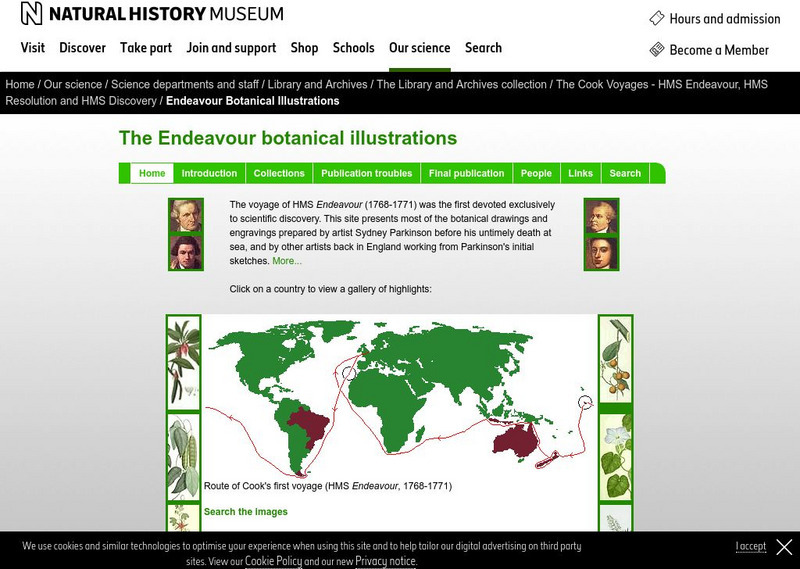
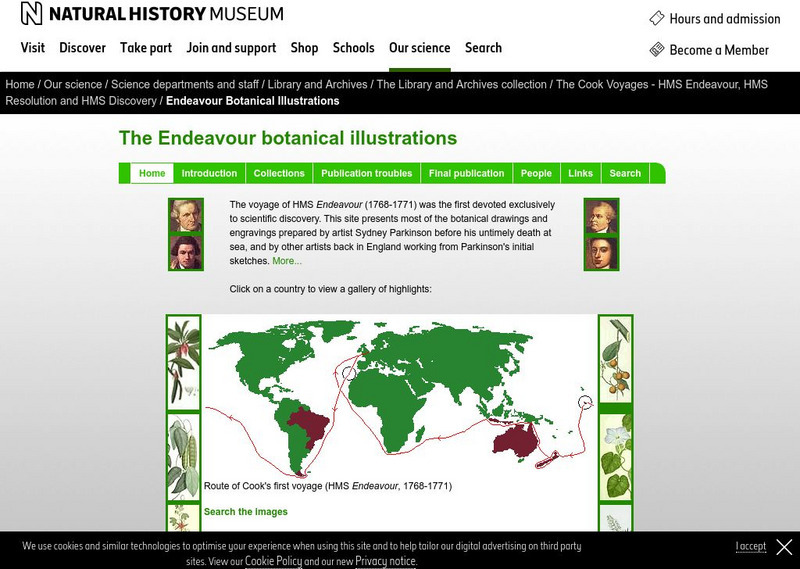
Natural History Museum: The Endeavor Botanical Illustrations
A detailed collection of plant paintings by Sydney Parkinson, whose work on the HMS Endeavour helped further scientific discovery.
Natural History Museum
Natural History Museum (London): The Endeavour Botanical Illustrations
A series of articles and online exhibits that gives information on the various specimens, plants and animals that were collected and illustrations were then made. Cook led the world's first scientific naval expedition to the South Pacific.