Hi, what do you want to do?






Curated OER
The Effect of Natural Selection on Genes, Traits and Individuals
Rotating through five stations, evolutionary biologists explore the question of how changes in DNA facilitate the changes in a population over time. High-quality, colorful cards of animals, skeletons, skulls, and DNA sequences can all be...

American Museum of Natural History
Mesozoic Museum
Mini museum curators create an exhibit that showcases the Mesozoic era. Pupils use their knowledge of dinosaurs to make informative posters, drawings, and dioramas. Following three steps to complete the hands-on activity, scholars read...

National Park Service
The Young Naturalist
Beginning with a brief history of our 26th president, Theodore Roosevelt, then followed by a discussion of his interest in nature, young scientists take to the outdoors to locate and observe local plants and insects....

Early Childhood Learning and Knowlege Center
My Body My Senses
In a comprehensive unit of activities, learners explore the five senses. Youngsters discover the many different body parts and their functions that allow humans to have sense of sight, touch, smell, taste, and hearing. The best way to...

K-State Research and Extensions
You Ol’ Fossil
Geologists are gneiss, tuff, and a little bit wacke. The fifth chapter of seven includes ten activities at four different levels. The hands-on activities cover fossils including how they are formed, vertebrates, invertebrates,...

American Museum of Natural History
Draw a Monarch
Five steps walk scholars through the process of drawing a Monarch butterfly. Participants research the insect, make observations, trace, then color.

American Museum of Natural History
Create a Coral Reef
Scholars create a diorama to showcase a vibrant coral reef. Six steps walk pupils through setting up the diorama box, crafting four different types of marine life, and putting it all together.

American Museum of Natural History
Draw a Monarch Butterfly: Scientific Illustrations
One doesn't have to be an artist to appreciate nature. A thorough resource shows pupils how to create detailed illustrations of a monarch butterfly. The lesson highlights the benefits of creating scientific drawings as opposed to simply...

American Museum of Natural History
Create Your Own Time Capsule
The corona virus pandemic is indeed a historic event. A time capsule activity permits young historians to document these days of social distancing, remote learning, and quarantine by collecting artifacts that capture what their lives are...
American Museum of Natural History
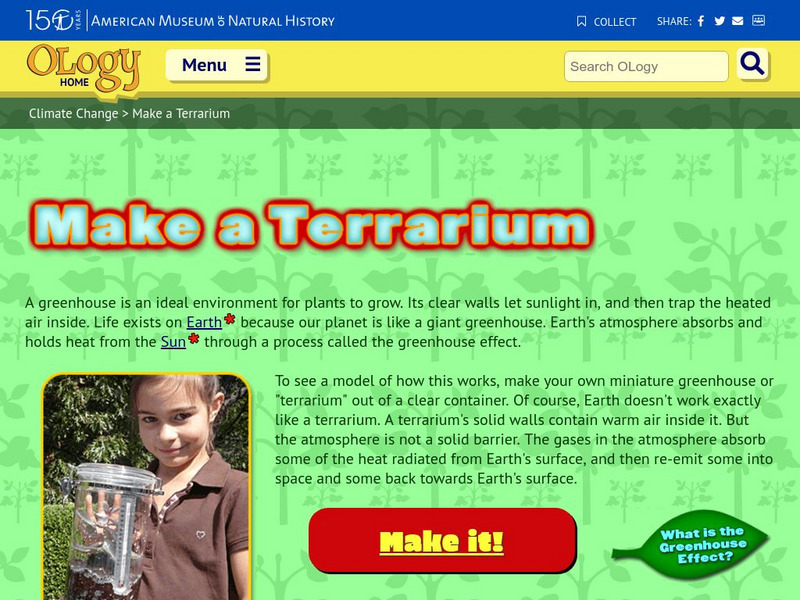
American Museum of Natural History: Greenhouse Effect: Make a Terrarium
Capture the essence of life within your own miniature greenhouse, or terrarium.

American Museum of Natural History
American Museum of Natural History: How Lou Got the Flu
Illustrated storybook description of how the influenza virus spreads from animals to humans.
American Museum of Natural History
American Museum of Natural History: Living Large
This engaging game about dinosaurs allows students to analyze and interpret fossil data, as well as engage in argument from evidence. The game helps students to understand that fossils provide evidence about the types of organisms that...
American Museum of Natural History
American Museum of Natural History: Draw a Monarch Butterfly
Learn how to create a scientific illustration of a monarch butterfly in a few easy steps.
American Museum of Natural History
American Museum of Natural History: Grow Rock Candy
Students can carry out an investigation using sugar and water to determine whether heating or cooling a substance may cause changes that can be observed. This activity reinforces the ideas that the properties of materials can change when...
American Museum of Natural History
American Museum of Natural History: Map Your World
Students can follow these easy steps to develop a model (drawing) of their room and the things in it. Then they can broaden the drawing to include their entire floor, apartment, or house.
American Museum of Natural History
American Museum of Natural History: Find My Plankton Baby Picture
By observing photos of plankton at different life stages, students can obtain information that will allow them to construct evidence-based accounts of how parents and offspring don't always look alike.
American Museum of Natural History
American Museum of Natural History: Make Your Own Weather Station
Students can plan and carry out investigations of local weather patterns by building their own weather stations to collect observations of various weather conditions: rainfall, wind direction, and air pressure.
American Museum of Natural History
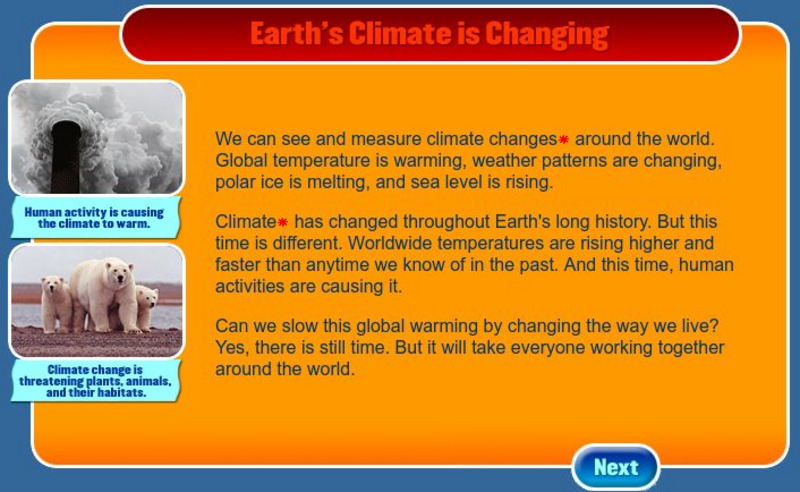
American Museum of Natural History: O Logy: What's the Big Idea? Climate Change
What do people around the world need to do in order to slow the process of climate change? This resource dives into the dangers of change and proposes solutions.
University of Oxford (UK)
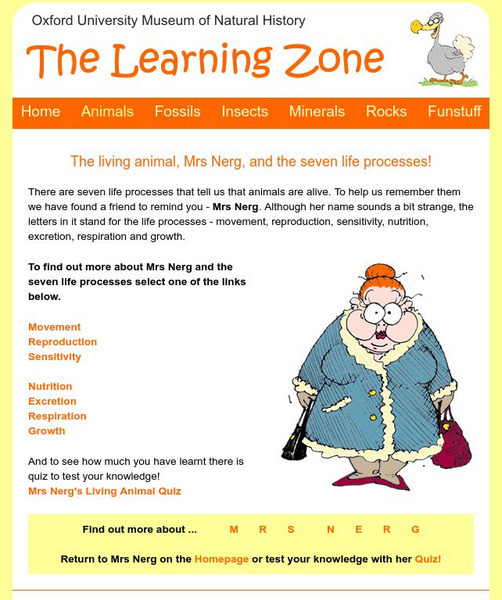
Oxford University Museum of Natural History: Seven Life Processes
Explore the seven life processes that describe whether an animal is alive or not. Each characteristic is defined with examples and pictures. Also included is a living animal quiz to test how much you have learned.
American Museum of Natural History
American Museum of Natural History: Ology: See the Light
Reflection, refraction, and the colors that make up white light is explored through lab activities after reading a brief background about light energy.
American Museum of Natural History
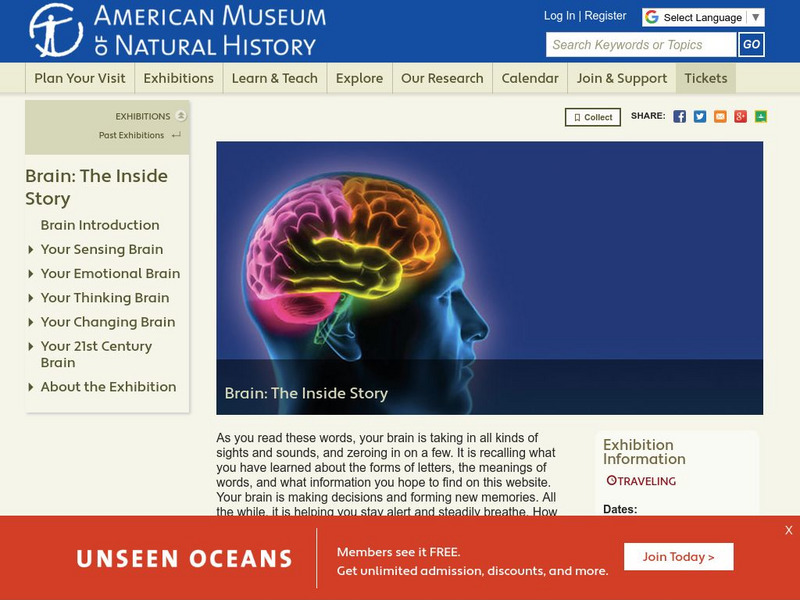
American Museum of Natural History: Brain: The Inside Story
This exhibition documents how our brains sense, think, process emotions, and grow and change.
American Museum of Natural History
American Museum of Natural History: Make Your Own Mythic Mask or Puppet
Create your own masks and puppets and bring the mythic creatures to life.
American Museum of Natural History
American Museum of Natural History: If Trash Could Talk
What does your trash say about you? Take a close look inside your trash can and think about the clues it offers about your life.
American Museum of Natural History
American Museum of Natural History: Create Your Own Time Capsule
By making time capsules, we can decide what message to send to the future about our own lives. If it were discovered years from now, what would the objects say about you and the time you lived in?