Hi, what do you want to do?






American Museum of Natural History
American Museum of Natural History: Play With Color and Light
See what happens when you mix different colors of lights.

American Museum of Natural History
American Museum of Natural History: Vertebrate O Logy Card
Flip this interactive OLogy card to find a definition, fast facts, questions and answers, and other bite-size pieces of information about the characteristics of vertebrates.
American Museum of Natural History
American Museum of Natural History: O Logy: If Rocks Could Talk: Limestone
A simple explanation of how limestone rock is formed.

American Museum of Natural History
American Museum of Natural History: Europa O Logy Card
Flip this interactive card to start learning about Europa, one of Jupiter's largest moons. Answer multiple-choice and fact-or-fiction questions and review some fast facts about Europa.

American Museum of Natural History
American Museum of Natural History: Jurassic Period O Logy Card
Learn a few facts about the Jurassic period from this interactive Ology card that also includes questions that can be answered. There is some information about Pangaea and dinosaurs.
American Museum of Natural History
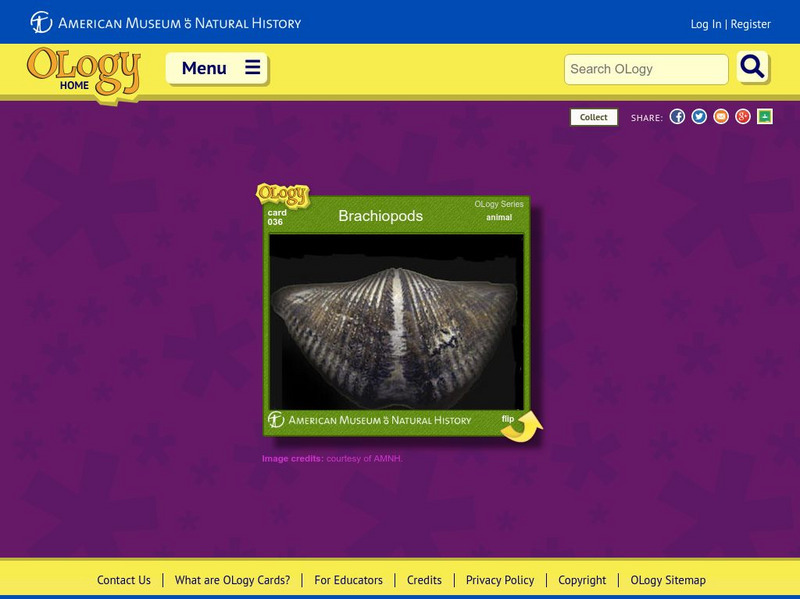
American Museum of Natural History: Brachiopods O Logy Card
Flip this interactive card to start learning about Brachiopods. Answer multiple-choice and fact-or-fiction questions and review some fast facts about this shelled animal that's been around for over 500 million years.
American Museum of Natural History
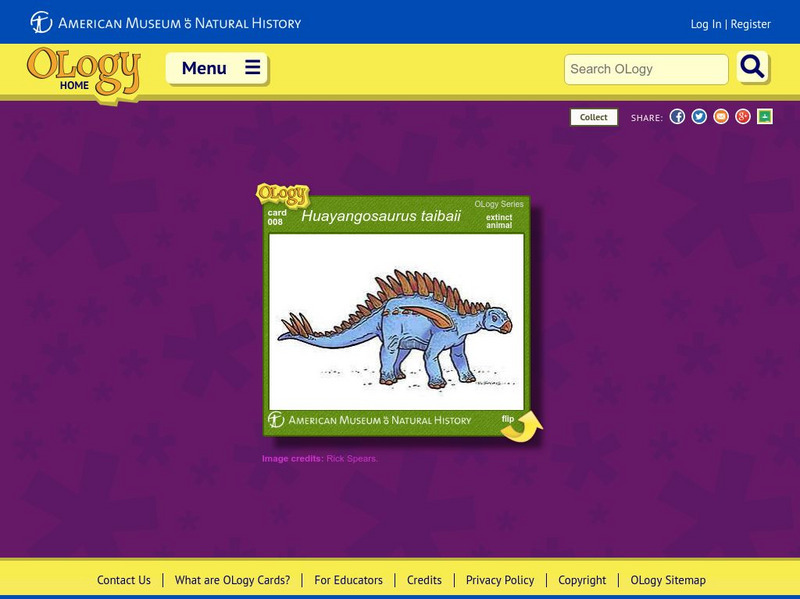
American Museum of Natural History: Huayangosaurus Taibaii O Logy Card
Flip this interactive card to start learning about the dinosaur, Huayangosaurus Taibaii. Answer multiple-choice and fact-or-fiction questions and review some fast facts about this primitive stegosaur.
American Museum of Natural History
American Museum of Natural History: Read With Your Fingers
Use braille to create a message for a friend.

American Museum of Natural History
American Museum of Natural History: O Logy: It's All Relative
Learn about the 4th dimensions and the theory of relativity.There is no absolute, or "same," time and space. This means time and space are different for everyone! How you experience events in time and space depends on two important...
Smithsonian Institution
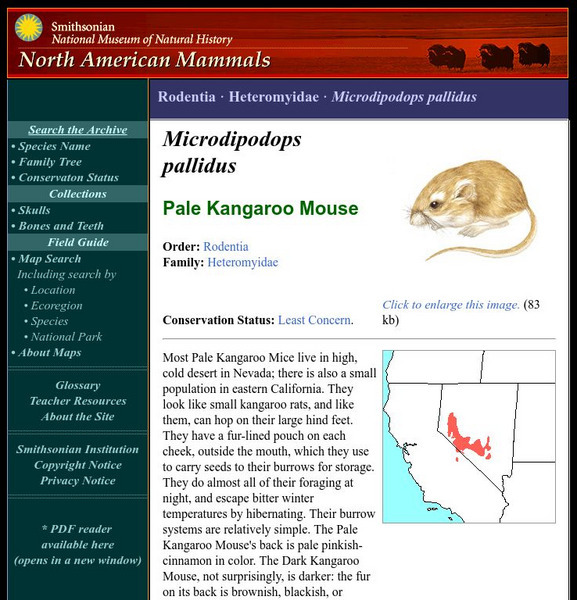
National Museum of Natural History: American Mammals: Pale Kangaroo Mouse
Most Pale Kangaroo Mice live in high, cold desert in Nevada; there is also a small population in eastern California. They look like small kangaroo rats, and like them, can hop on their large hind feet. Learn more about the Microdipodops...
Smithsonian Institution
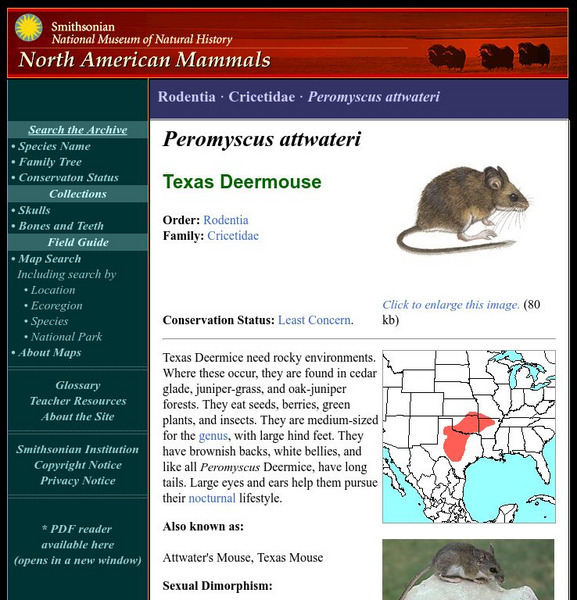
National Museum of Natural History: American Mammals: Texas Mouse
Texas Mice need rocky environments. Where these occur, they are found in cedar glade, juniper-grass, and oak-juniper forests. Learn more about the Peromyscus attwateri, more commonly known as a Texas Mouse, in this easy-to-read species...
Smithsonian Institution
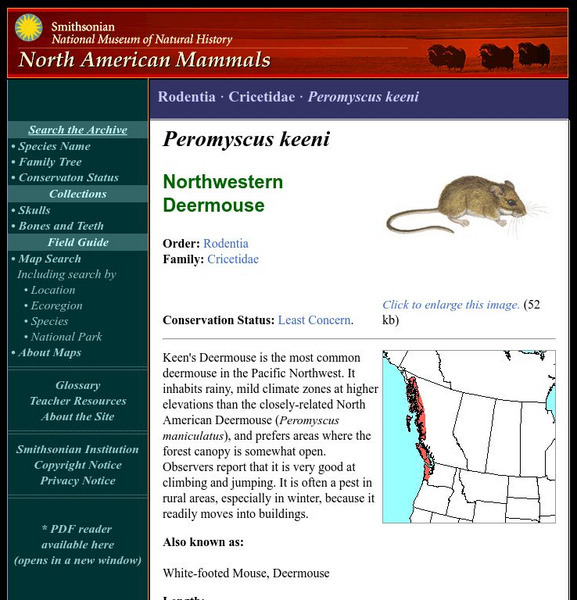
National Museum of Natural History: American Mammals: Northwestern Deermouse
Keen's Deermouse is the most common deermouse in the Pacific Northwest. It inhabits rainy, mild climate zones at higher elevations than the closely-related Deermouse (Peromyscus maniculatus), and prefers areas where the forest canopy is...
Smithsonian Institution
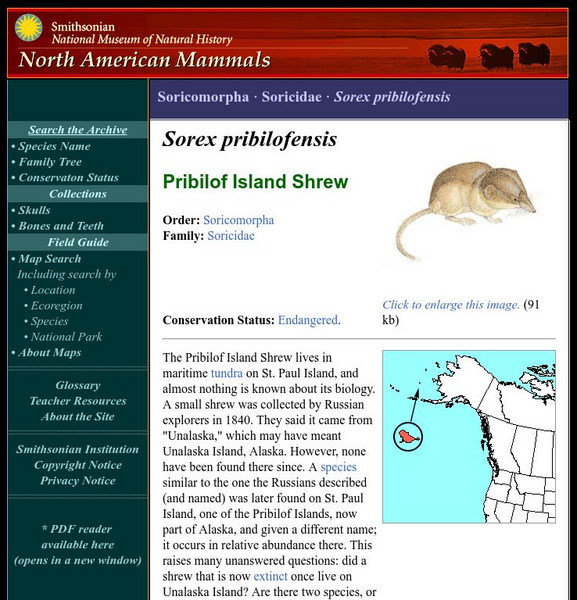
National Museum of Natural History: American Mammals: Pribilof Island Shrew
The Pribilof Island Shrew lives in maritime tundra on St. Paul Island, and almost nothing is known about its biology. Learn more about the Sorex pribilofensis, more commonly known as a Pribilof Island Shrew, in this easy-to-read species...
Smithsonian Institution
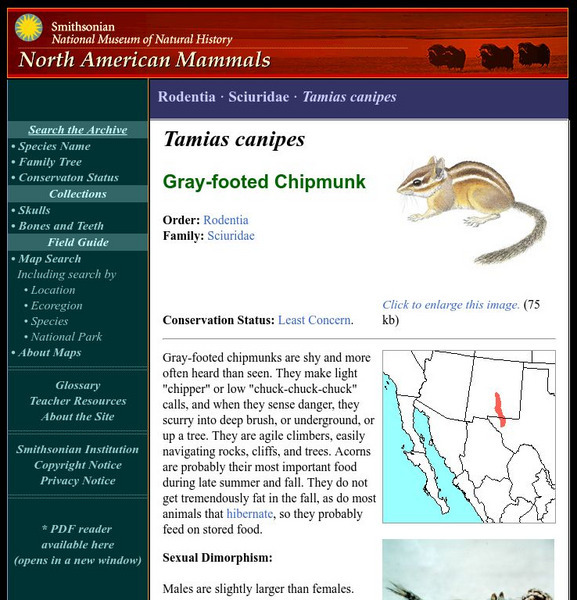
National Museum of Natural History: American Mammals: Gray Footed Chipmunk
Gray-footed chipmunks are shy and more often heard than seen. They make light "chipper" or low "chuck-chuck-chuck" calls, and when they sense danger, they scurry into deep brush, underground, or up a tree. Learn more about the Tamias...
Smithsonian Institution
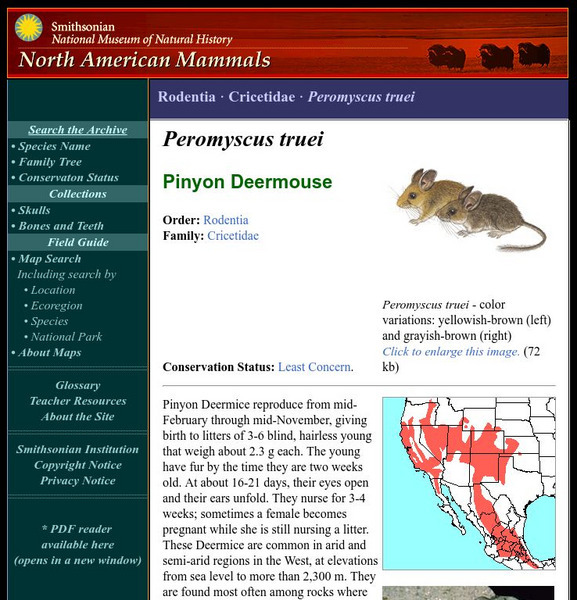
National Museum of Natural History: American Mammals: Pinyon Deermouse
Pinyon Deermice reproduce from mid-February through mid-November, giving birth to litters of 3-6 blind, hairless young that weigh about 2.3 g each. Learn more about the Peromyscus truei, more commonly known as a Pinyon Mouse, in this...
Smithsonian Institution
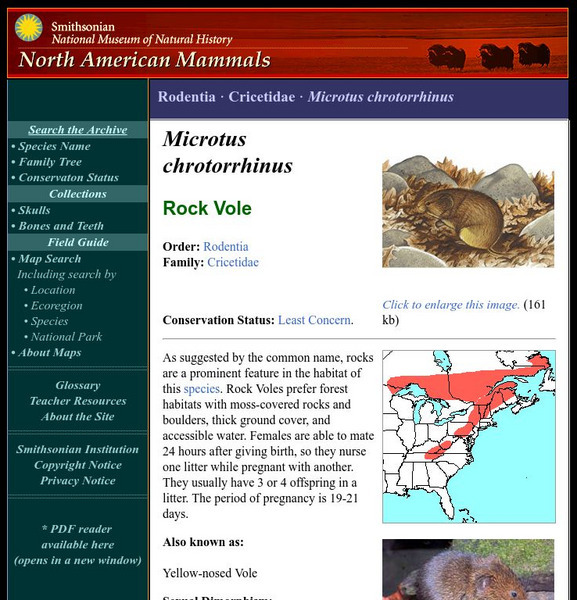
National Museum of Natural History: American Mammals: Rock Vole
As suggested by the common name, rocks are a prominent feature in the habitat of this species. Rock Voles prefer forest habitats with moss-covered rocks and boulders, thick ground cover, and accessible water. Learn more about the...
Smithsonian Institution
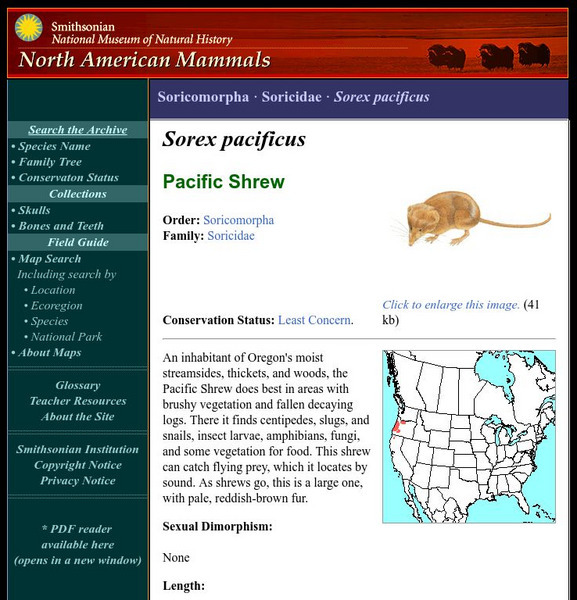
National Museum of Natural History: American Mammals: Pacific Shrew
An inhabitant of Oregon's moist streamsides, thickets, and woods, the Pacific Shrew does best in areas with brushy vegetation and fallen decaying logs. There it finds centipedes, slugs, and snails, insect larvae, amphibians, fungi, and...
Smithsonian Institution
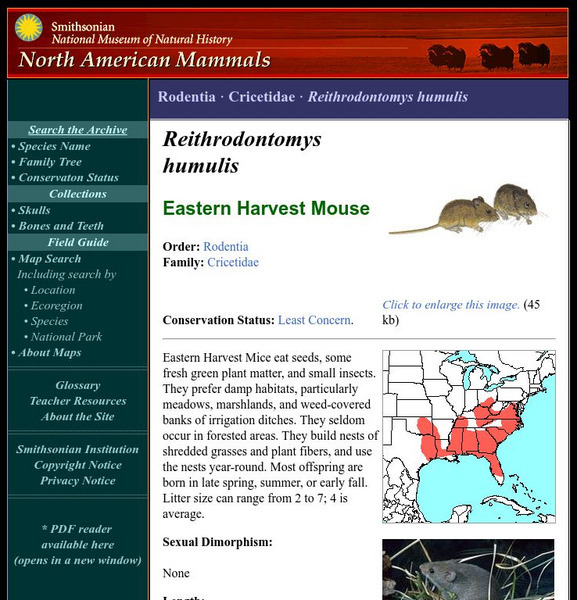
National Museum of Natural History: American Mammals: Eastern Harvest Mouse
Eastern Harvest Mice eat seeds, some fresh green plant matter, and small insects. They prefer damp habitats, particularly meadows, marshlands, and weed-covered banks of irrigation ditches. Learn more about the Reithrodontomys humulis,...
Smithsonian Institution
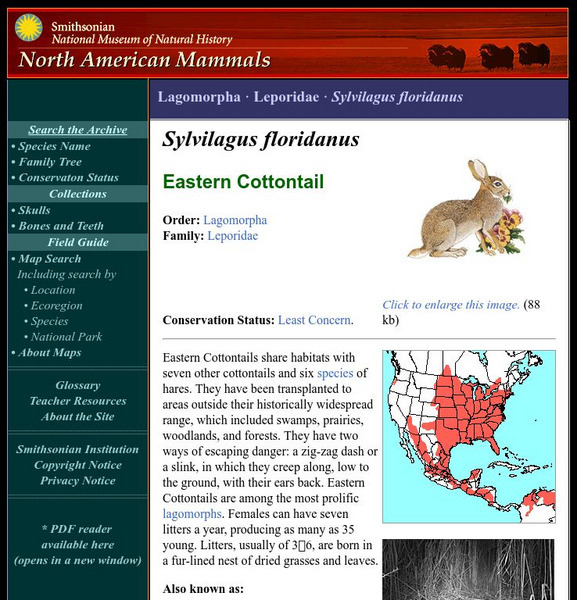
National Museum of Natural History: American Mammals: Eastern Cottontail
Eastern Cottontails share habitats with seven other cottontails and six species of hares. They have been transplanted to areas outside their historically widespread range, which included swamps, prairies, woodlands, and forests. Learn...
Smithsonian Institution
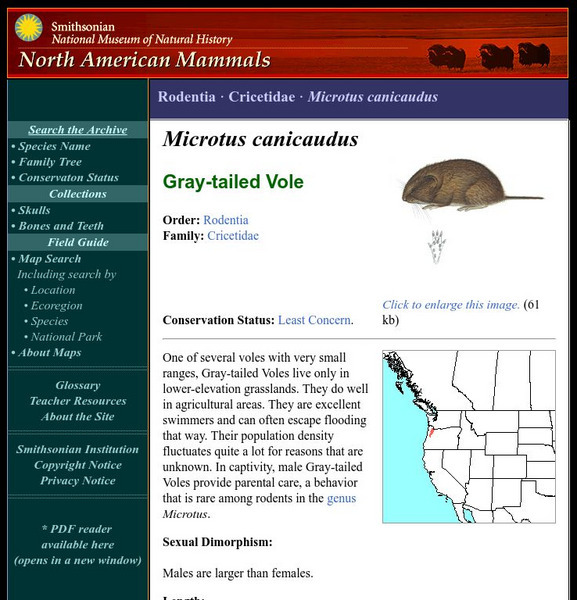
National Museum of Natural History: American Mammals: Gray Tailed Vole
One of several voles with very small ranges, Gray-tailed Voles live only in lower-elevation grasslands. They do well in agricultural areas. Learn more about the Microtus canicaudus, more commonly known as a Gray-tailed Vole, in this...
Smithsonian Institution
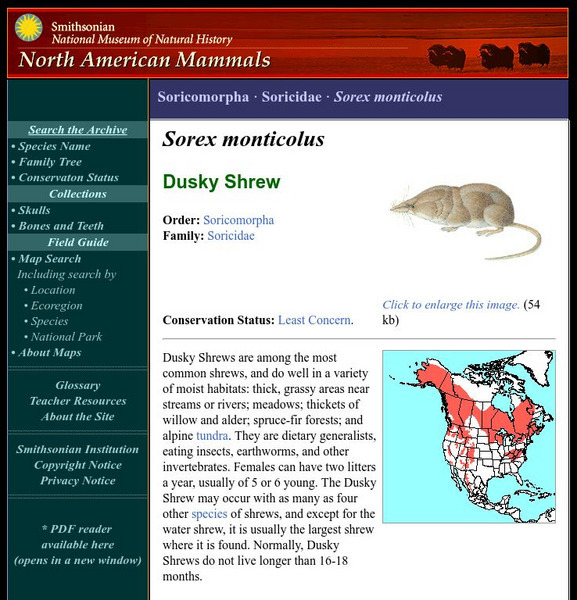
National Museum of Natural History: American Mammals: Montane Shrew
Montane Shrews are among the most common shrews, and do well in a variety of moist habitats: thick, grassy areas near streams or rivers; meadows; thickets of willow and alder; spruce-fir forests; and alpine tundra. They are dietary...
Smithsonian Institution
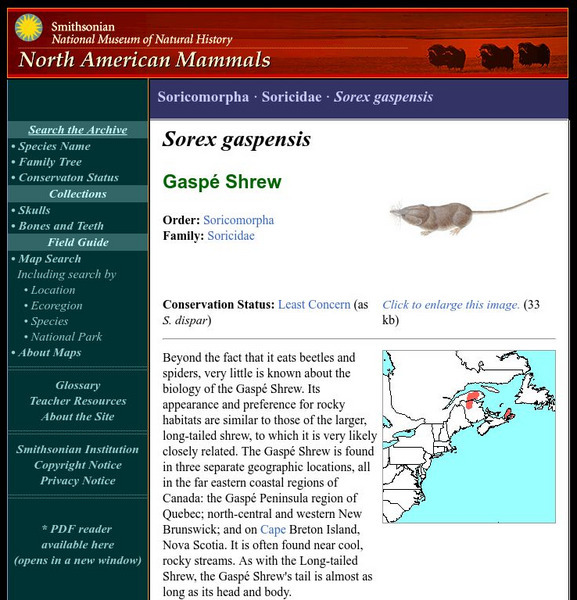
National Museum of Natural History: American Mammals: Gaspae' Shrew
Beyond the fact that it eats beetles and spiders, very little is known about the biology of the Gaspe Shrew. Its appearance and preference for rocky habitats are similar to those of the larger, long-tailed shrew, to which it is very...
Read Works
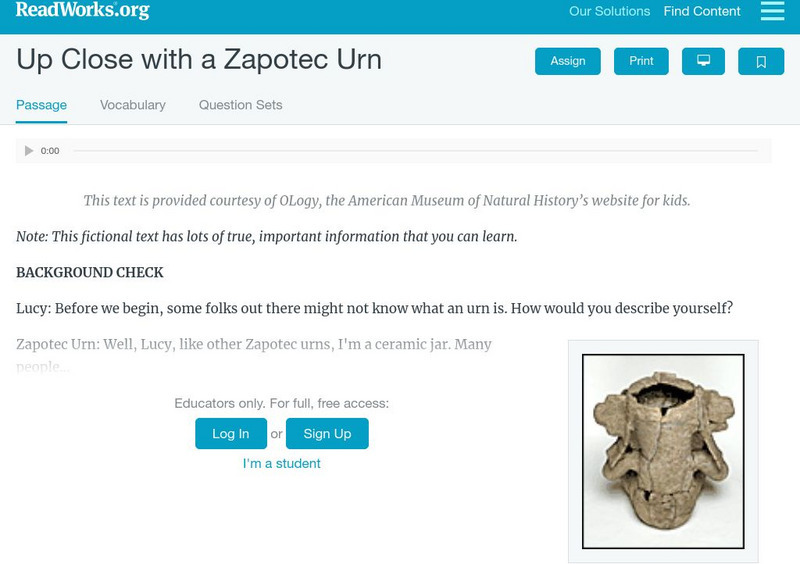
Read Works: Up Close With a Zapotec Urn
[Free Registration/Login Required] This ReadWorks reading from the American Museum of Natural Anthropology's website called OLogy provides a curator's interview with an Zapotec urn. Visual cues are provided to support the passage, and...