Hi, what do you want to do?






Ducksters
Ducksters: Kids Science: Uses of Electricity
Kid's learn about the uses electricity. Where is it used and how does it help us in our daily lives.

ClassFlow
Class Flow: Electricity
[Free Registration/Login Required] Students can use this Flipchart to learn and apply Ohm's law to basic circuitry problems. Students are introduced to the relationship among voltage, current, and resistance, and then apply their newly...
Other
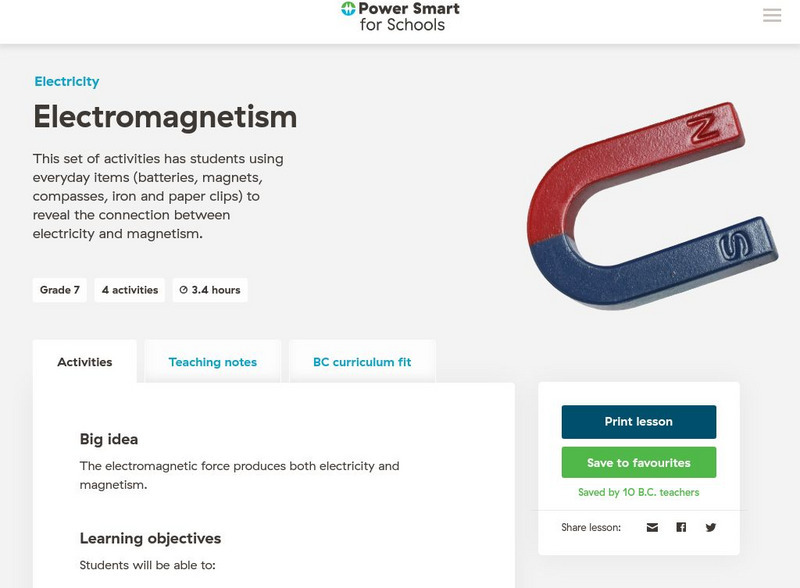
Bc Hydro: Power Smart for Schools: Electromagnetism
This set of activities has students using everyday items (batteries, magnets, compasses, iron and paper clips) to reveal the connection between electricity and magnetism. Ideally, students will already have experience building simple...
TeachEngineering
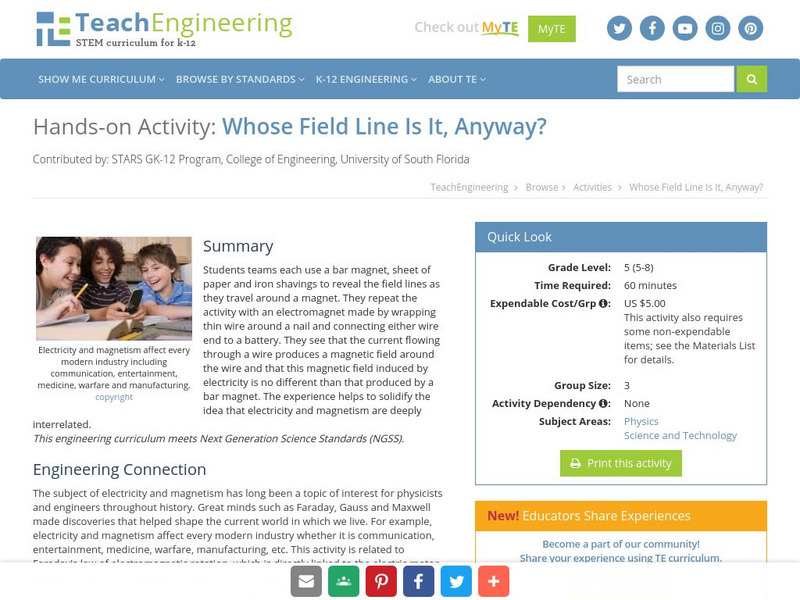
Teach Engineering: Whose Field Line Is It, Anyway?
Students teams each use a bar magnet, sheet of paper and iron shavings to reveal the field lines as they travel around a magnet. They repeat the activity with an electromagnet made by wrapping thin wire around a nail and connecting...
Concord Consortium
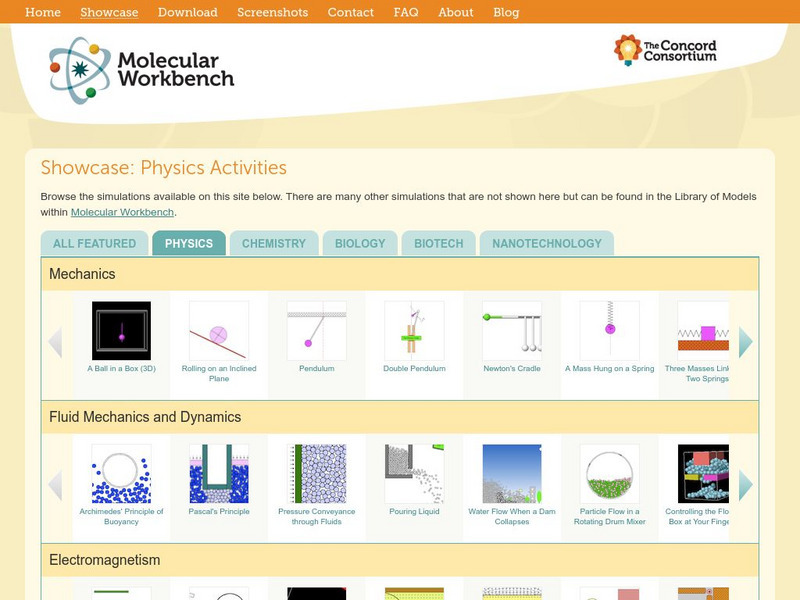
Concord Consortium: Molecular Workbench Showcase: Physics, Electromagnetism
Students can use these simulations to understand concepts in electromagnetism. Simulations are available on the following concepts: Lorentz Force, The Hall Effect, capacitor, conductor, transistor, cyclotron, static electricity....
TeachEngineering
Teach Engineering: Both Fields at Once?!
This lesson discusses the result of a charge being subject to both electric and magnetic fields at the same time. It covers the Hall effect, velocity selector, and the charge to mass ratio. Given several sample problems, learners learn...
Science Museum, London
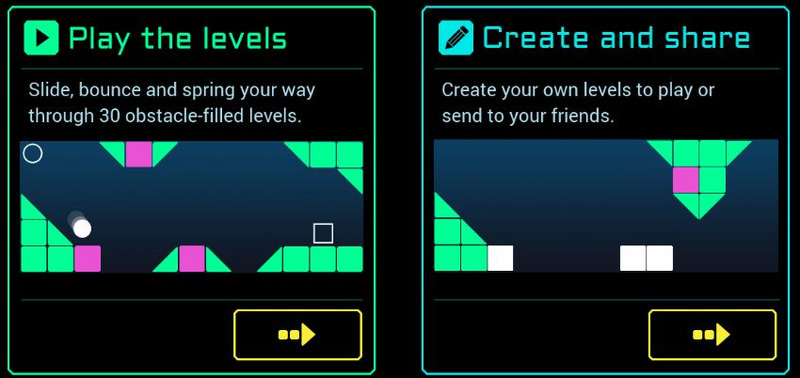
Science Museum: Launchpad Online: Launchball
Use your knowledge of physics concepts like electricity, reflection, magnetism, etc. to complete interactive online puzzles.
Science Buddies
Science Buddies: Solar Cell Power Output vs. Temperature
Solar cells provide a clean way of making electricity directly from sunlight. In this project you will build a simple circuit and experimental setup to investigate whether the power output of a solar cell changes with ambient temperature.
University of Colorado
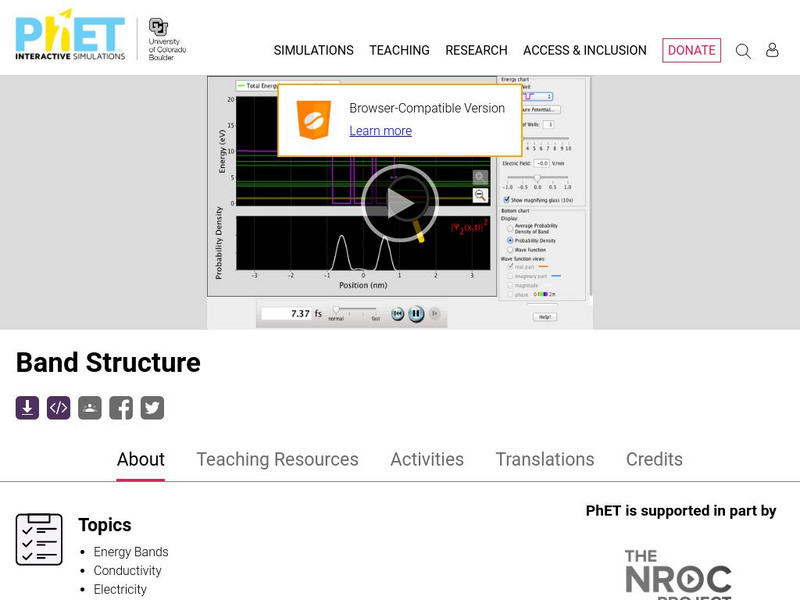
University of Colorado: Ph Et Interactive Simulations: Band Structure
Explore the origin of energy bands in crystals of atoms. The structure of these bands determines how materials conduct electricity. Java required.
DOGO Media
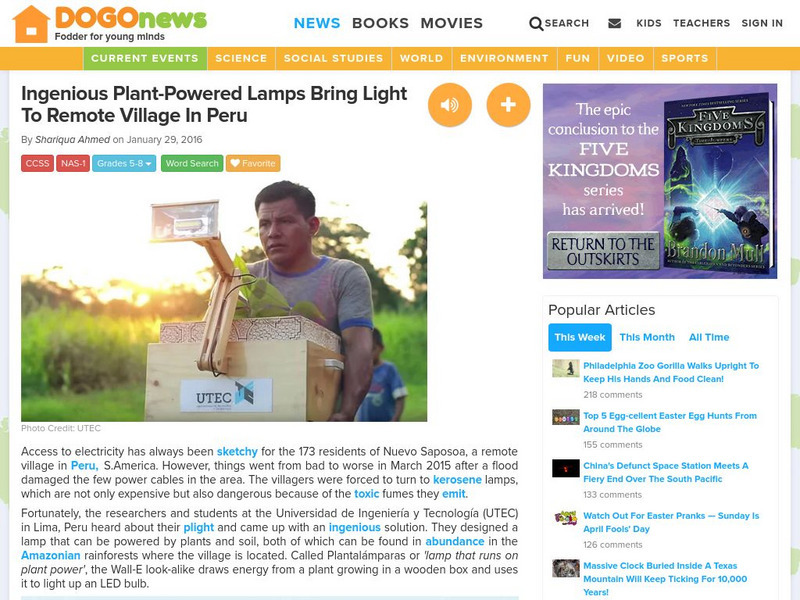
Dogo News: Plant Powered Lamps Bring Light to Village in Peru
Read about the amazing development of plant-powered lamps that are bringing electricity to a village in remote Peru. Includes video.

Other
Stile: 2.1 Lesson: Electromagnetism (Part 1)
This is a sample lesson on electromagnetism. It includes animated diagrams, interactive exercises, an audio option for reading the text, and comprehension questions throughout where students can type their answers or pick from...
TeachEngineering
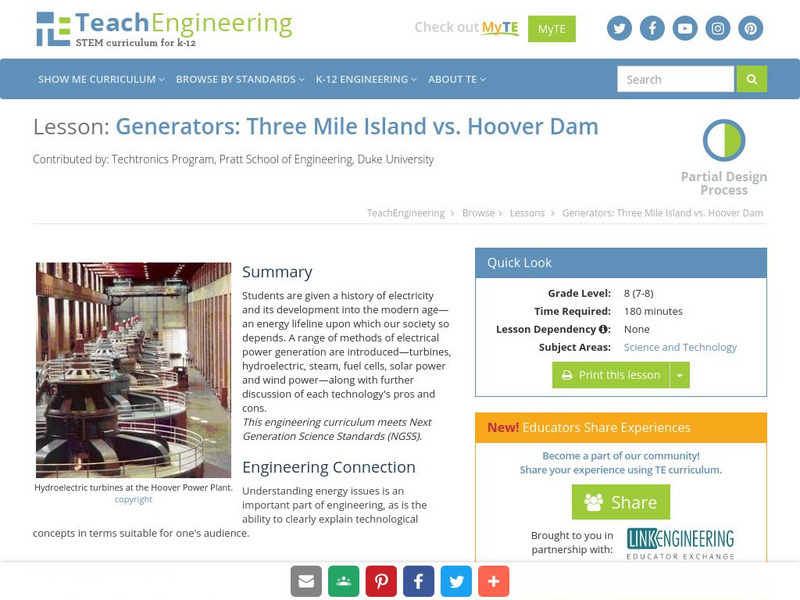
Teach Engineering: Generators: Three Mile Island vs. Hoover Dam
Learners are given a history of electricity and its development into the modern age lifeline upon which we so depend. The methods of power generation are introduced, and further discussion of each technology's pros and cons follows.
University of Florida
University of Florida: Episodes in Romantic Science
One of the "Episodes in Romantic Science," this is as complete as a biography gets without being a book. Includes great information about Oersted and his electromagnetic work, The definitive source. Heavily footnoted with many additional...
Cuemath
Cuemath: Vectors
Explore the world of vectors, by finding answers to questions like what are vectors, what are scalars, what is the difference between scalar and vectors, the magnitude of a vector, operations on vectors, and properties of a vector.
Science and Mathematics Initiative for Learning Enhancement (SMILE)
Smile: Introduction to Magnets (Classroom Unit)
A teacher unit which includes several hands-on activities about types of magnets, magnetism, and electrostatics. An activity designed to suit all grade levels. Many parts of the activity would be easily adaptable as a student project.
Physics Aviary
Physics Aviary: Thomson's Cathode Ray Tube Lab
This lab is designed to have students look at the deflection of a cathode ray beam using magnetic fields and electric fields.

National High Magnetic Field Laboratory
Magnet Academy: Duchenne Machine 1850
French physician Guillaume Benjamin Amand Duchenne invented a device that electrically stimulates muscles. The apparatus gave him new insight into neuromuscular disorders, earned him the epitaph of "father of electrotherapeutics," and...
Orpheus Books
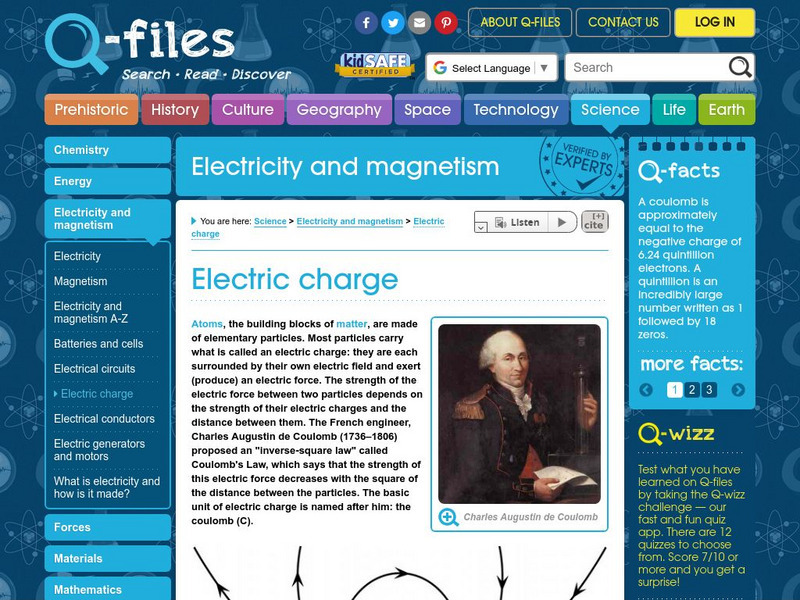
Q Files: Electricity and Magnetism: Electric Charge
Learn how electric charges work and about Coulomb's Law, which is used to calculate the strength of an electric force.

National High Magnetic Field Laboratory
Magnet Academy: Arc Lamp 1876
Fire lighted the night for many centuries. Then came Sir Humphry Davy and the birth of the arc lamp, an invention built upon in the years that followed by many.

National High Magnetic Field Laboratory
Magnet Academy: Magnetometer 1832
The Earth, the moon, the stars and just about everything in between has a magnetic field, and scientists use magnetometers when they need to know the strength of those fields.

National High Magnetic Field Laboratory
Magnet Academy: Bell Telephone 1876
Acoustics, variable resistance and allegations of foul play contribute to the exciting story of the invention of the telephone.

National High Magnetic Field Laboratory
Magnet Academy: Coaxial Cable 1929
As more and more American households acquired telephones, the pressure was on to create a better cable to accommodate the increasing demand. Engineers Lloyd Espenschied and Herman Affel answered the call.
Science4Fun
Science4 Fun: How Electricity Is Made
Read this brief article to gain an understanding of the principle of electromagnetism, how electricity is generated, and the problem with fossil fuels.
Mocomi & Anibrain Digital Technologies
Mocomi: What Is Electromagnetism?
Explains electromagnetism, the difference between a permanent magnet and an electromagnet, uses of electromagnetism, and steps for making a simple electromagnet.