Hi, what do you want to do?






Annenberg Foundation
Annenberg Learner: Earth & Space Science
This course is composed of eight sessions, each with a one-hour video program addressing a topic area in Earth and Space Science that emphasizes the science content that is likely to be part of any elementary school science curriculum.
Science Buddies
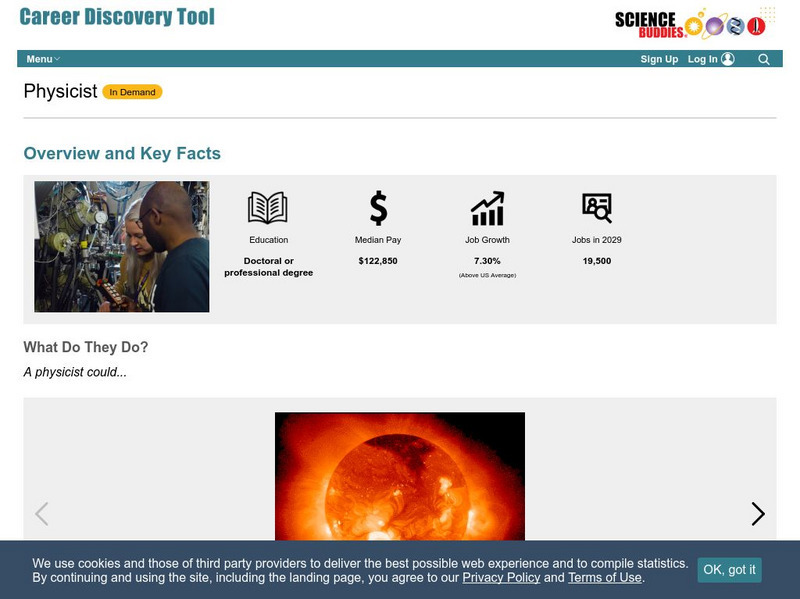
Science Buddies: Career Profile: Physicist
Physicist as a career is a very broad spectrum. This site from Science Buddies relates the general requirements and education needed to be a physicist and lists the many sub-fields in which physicists can specialize. Included is a video...

Society for Science and the Public
Science News for Students: So Many 'Earths'
Article reports on the recent discovery that many suns in the universe host "Earth-like" planets. Includes a vocabularly list.
Other
Lunar and Planetary Institute: Explore! Discover Earth
A variety of hands-on activities, investigations, and explorations designed to engage learners in discovering planet Earth.
CK-12 Foundation
Ck 12: Earth Science: Satellites, Shuttles, and Space Stations Study Guide
[Free Registration/Login may be required to access all resource tools.] This study guide provides a brief overview of satellites, shuttles, rockets, and space stations. Includes a few questions to check for understanding.
Seeker
Seeker: Week of 1 6 14: Is Earth Surrounded by Dark Matter?
Article reports on a presentation that suggests that the Earth is surrounded by dark matter.
Other
Elementary Science Program: Astronomy, Gr. 5 8
"Astronomy is the science that studies the Earth, the Moon and other objects in space. It has helped us discover our place in the physical universe. It is still making discoveries." This landing page gives options for students and...
Other
American Film Institute: Top Ten Science Fiction Films
Explore this top ten list of the greatest science fiction movies as picked by the results of a poll taken of leaders from the creative community. Number one is "2001: A Space Odyssey" which was released in 1968.
Society for Science and the Public
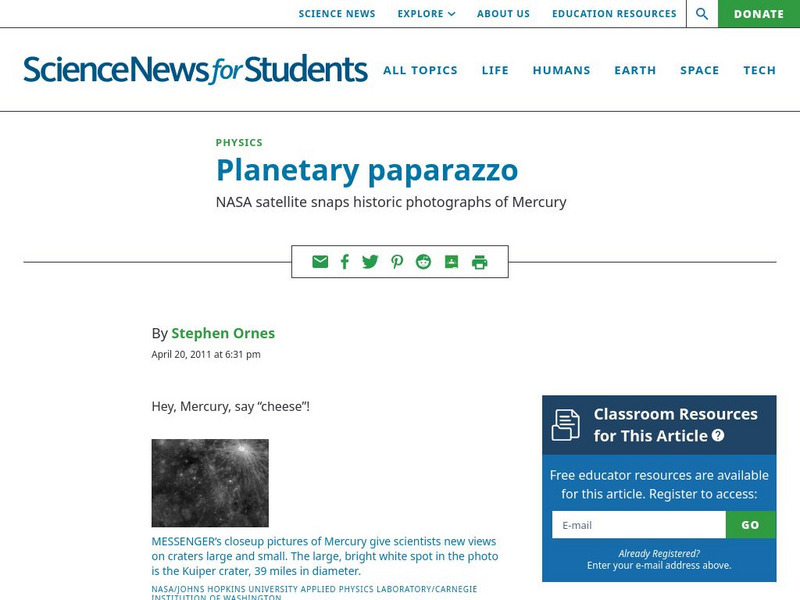
Science News for Students: Planetary Paparazzo
Discusses the information from the NASA spacecraft Messenger as it orbits Mercury and transmits photographs of the planet's surface to Earth.
NASA
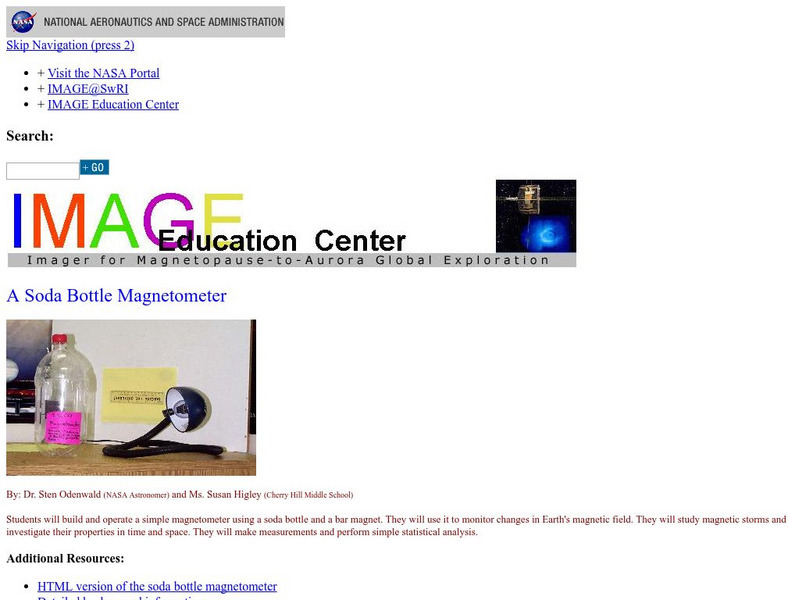
Nasa: Image Science Center: Soda Bottle Magnetometer
Help students explore Earth's magnetic field with this soda bottle magnetometer activity. Follow links to other space projects for the classroom.
PBS
Pbs Learning Media: Bringing the Universe to America's Classrooms
WGBH in collaboration with NASA presents digital media resources you can use to teach topics in K-12 Earth and Space Science. These free resources are organized into four grade bands. Each resource emphasizes engaging students in...

TED Talks
Ted: Ted Ed: Could Comets Be the Source of Life on Earth?
While comets were historically thought to be ill omens of war and famine, recent science has revealed that these celestial wonders actually contain amino acids, the building blocks of life on Earth. Justin Dowd explores the implications...
Annenberg Foundation
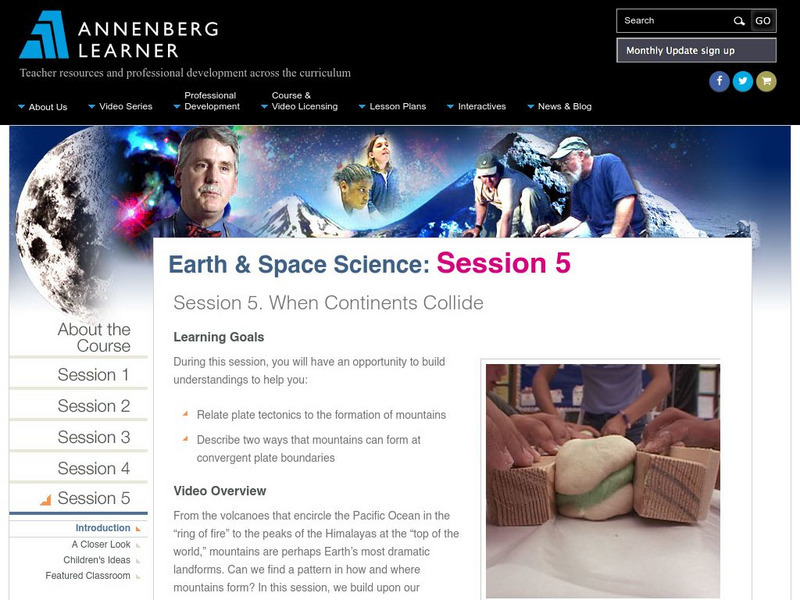
Annenberg Learner: Earth and Space Science: When Continents Collide
Material to begin an exploration of plate tectonics and mountain formation. An hour-long video is accompanied by learning goals, an outline and overview, details on metamorphic rocks and mountain building, and ideas for teaching this...
CK-12 Foundation
Ck 12: Earth Science: Other Celestial Bodies Study Guide
Review celestial bodies using this study guide.
CK-12 Foundation
Ck 12: Earth Science: Planet Orbits in the Solar System Study Guide
Review planets orbiting in the solar system using this study guide.
Extreme Science
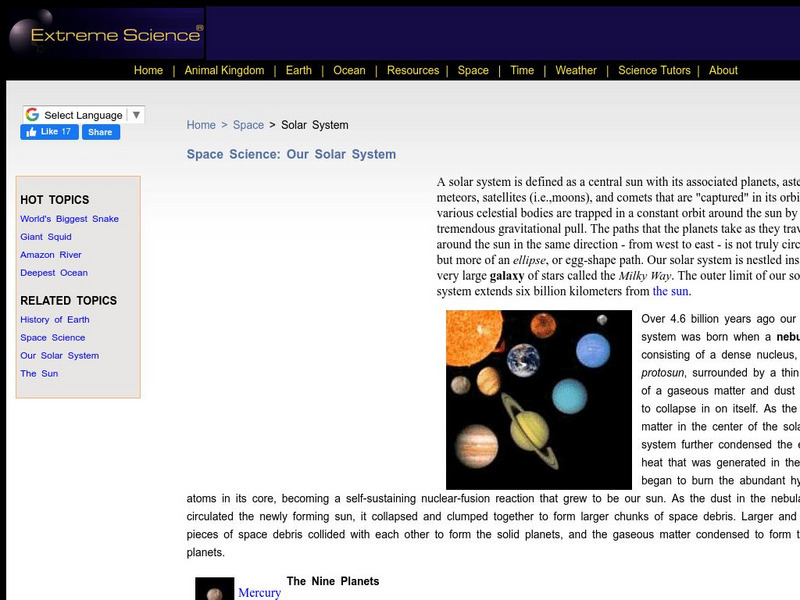
Extreme Science: Space Science: Our Solar System
Read about our solar system and its formation over 4.6 billion years ago. Find out about the planets, asteroids, meteors, satellites, and comets. More in-depth planet background can be accessed through links.
Australian Broadcasting Corporation
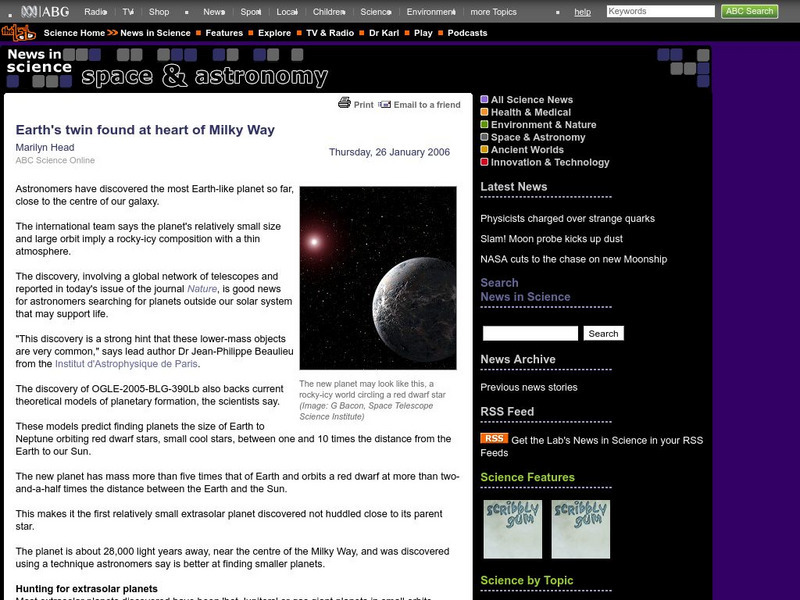
Australian Broadcasting Corporation: News in Science: Earth's Twin Found at Heart of Milky Way
From ABC News in Science, Marilyn Head's article centers on research behind the discovery of the planet in the Milky Way which most closely resembles the planet Earth.
CK-12 Foundation
Ck 12: Earth Science: Universe Study Guide
[Free Registration/Login may be required to access all resource tools.] This study guide summarizes the key points of the Universe. Includes a few questions to check for understanding.
CK-12 Foundation
Ck 12: Earth Science: Milky Way Study Guide
[Free Registration/Login may be required to access all resource tools.] This study guide summarizes key points about the Milky Way. Includes a few questions to check for understanding.
US Environmental Protection Agency
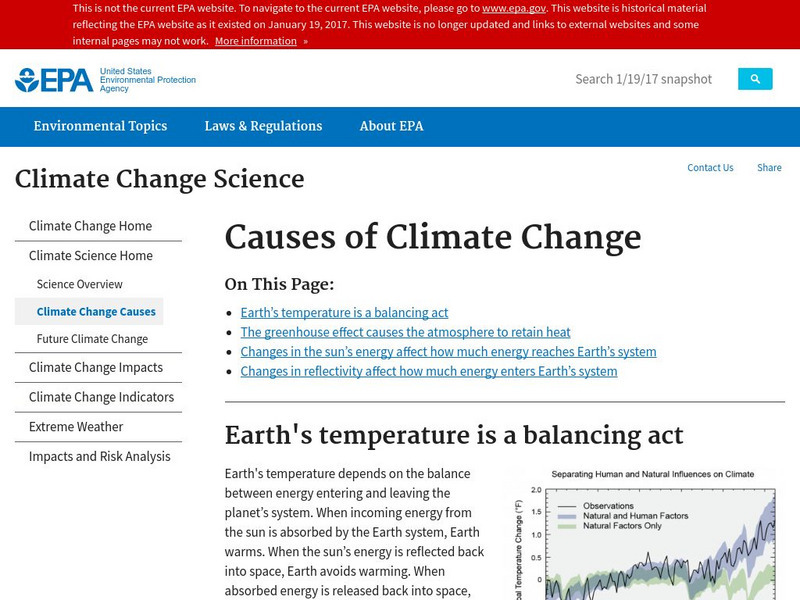
Epa: Causes of Climate Change
Earth's temperature depends on the balance between energy entering and leaving the planet's system . When incoming energy from the sun is absorbed by the Earth system, Earth warms. When the sun's energy is reflected back into space,...

Society for Science and the Public
Science News for Students: Small but Wise
Describes the WISE Project, which has an infrared telescope orbiting the Earth taking photographs of never before seen areas of space.
University of Washington
Earth and Space Sciences: The December 26, 2004 Sumatran Tsunami
Brief discussion of the 2004 tsunami disaster. Find links to other resources on the tsunami that rocked South Asia in 2004.
TED Talks
Ted: Ted Ed: Could We Stop an Asteroid?
Bill Nye, the science guy, joins AsapSCIENCE, to talk about asteroids. Specifically, he looks at why asteroids can be so deadly to the Earth, as well as how we detect them and how we possibly stop them. [7:07]
PBS
Pbs Learning Media: Exploring Environmental Change
Students explore the connections that can exist in a natural environment, and examine how changes to the environment, particularly those caused by human activity, can affect those connections.