Hi, what do you want to do?






Core Knowledge Foundation
Colonial America Tell It Again!™ Read-Aloud Anthology
A read-aloud anthology explores Colonial America. Third graders listen to informational texts, discuss what they heard, and participate in extension activities and writing. Take-home materials, assessments, and remediation opportunities...

Annenberg Foundation
Colonial Designs
The adventures of the New World came at a cost for Native Americans. Scholars investigate the economic side of settling the European colonies. Using video clips, statistical evidence, and primary sources, they create hypotheses and...

Jamestown-Yorktown Foundation
Colonial Tobacco Economy
Tobacco as money? Middle schoolers investigate how eighteenth-century Virginia farmers used tobacco as a cash crop to buy tools, livestock, and household goods. They also examine the connection between tobacco production and the slave...

Student Achievement Partners
You've Been Lied To: The REAL Christopher Columbus
Looking for resources that explore alternative perspectives of the Christopher Columbus story? Check out the images, videos, cartoons, primary source documents, and other texts in a packet designed to spark...
McGraw Hill
Mc Graw Hill: Colonial Economy and Patterns of Society
Although tied to pages from a specific text, these AP study questions allow anyone to consider aspects of colonial economics. (Answers to some of the questions are located at the following link:...
National Humanities Center
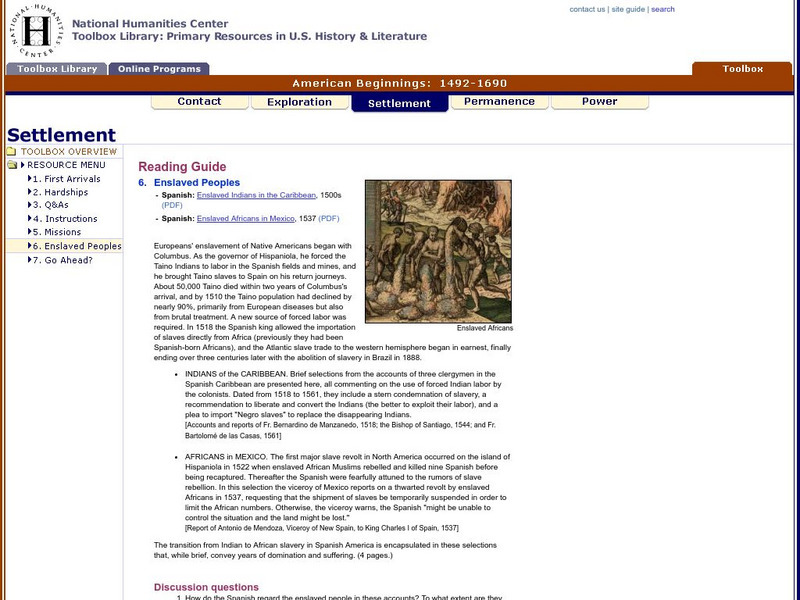
National Humanities Center: Toolbox Library: Enslaved Peoples, American Beginnings: 1492 1690
Two Spanish accounts of enslaved Indians in the Caribbean and enslaved Africans in Mexico and statements of the difficulty of maintaining slavery and the lurking threat of a slave revolt.
National Humanities Center
National Humanities Center: Toolbox Library: Prosperity, American Beginnings: 1492 1690
Four original source accounts, and four related maps, of successful English, French, and Spanish settlements in North America and the Caribbean that explain the qualities of these settlements and their reasons for permanence and prosperity.
National Humanities Center
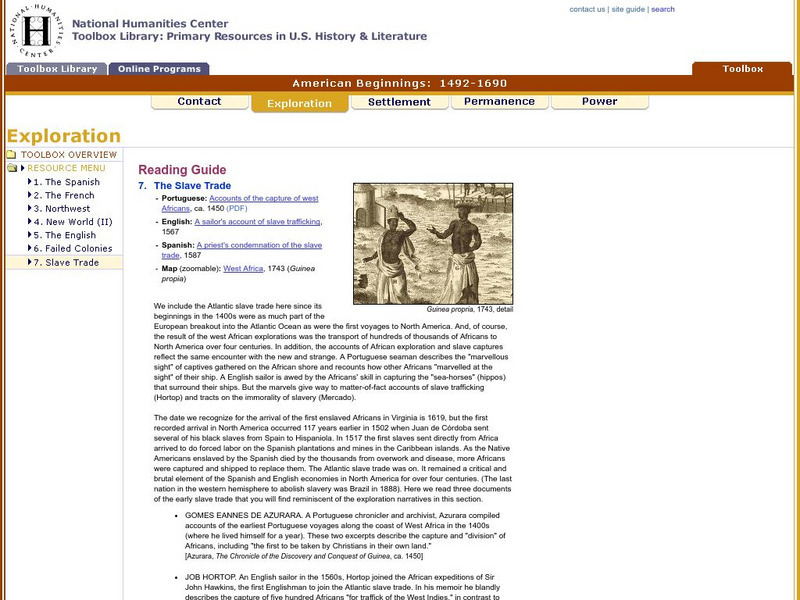
National Humanities Center: Toolbox Library: Slave Trade, American Beginnings: 1492 1690
A West African map and three accounts of the development of slave acquisition display the process and the brutality of the Atlantic slave trade.