Hi, what do you want to do?





Other
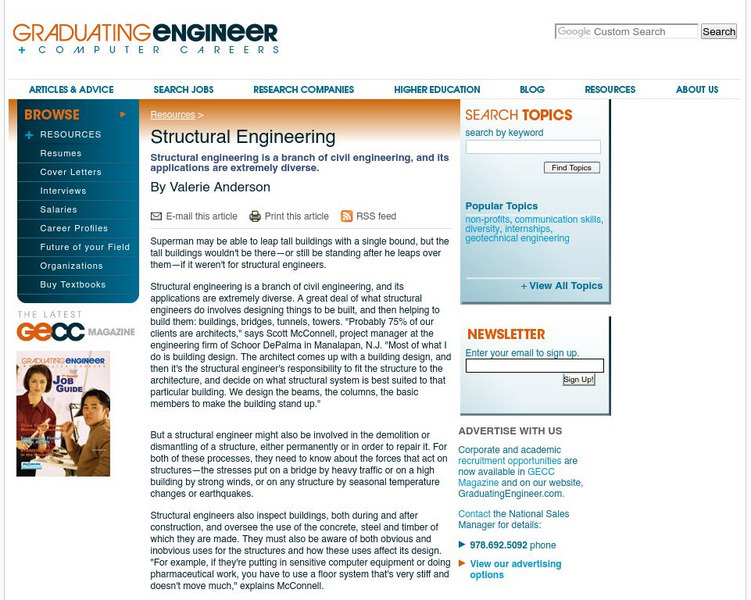
Graduating Engineer and Computer Careers Magazine: Structural Engineering
Structural engineering is a branch of civil engineering, and its applications are extremely diverse. A career as a structural engineer is profiled .. education, salary, job description .. are included.
TeachEngineering
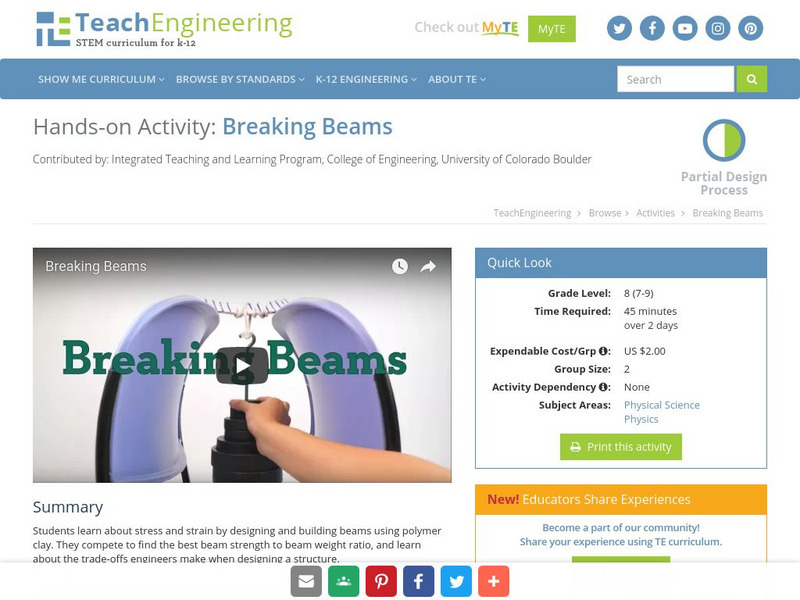
Teach Engineering: Breaking Beams
Students learn about stress and strain by designing and building beams using polymer clay. They compete to find the best beam strength to beam weight ratio, and learn about the trade-offs engineers make when designing a structure.
TeachEngineering
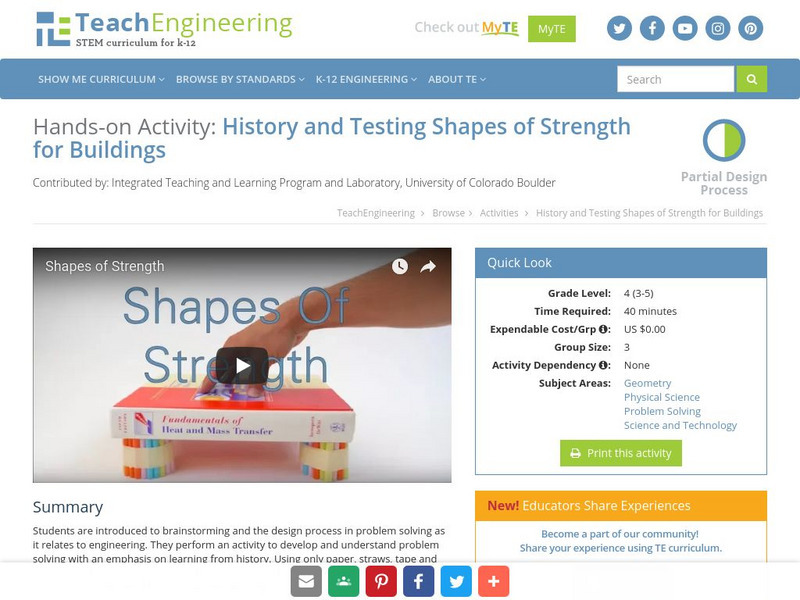
Teach Engineering: Shapes of Strength
Students are introduced to brainstorming and the design process in problem solving as it relates to engineering. They perform an activity to develop and understand problem solving with an emphasis on learning from history. Using only...

TeachEngineering
Teach Engineering: Survive That Tsunami!
Students use a table-top-sized tsunami generator to observe the formation and devastation of a tsunami. They see how a tsunami moves across the ocean and what happens when it reaches the continental shelf. Students make villages of model...

Other
The American Society of Civil Engineers
Contains online civil engineering journals, as well as civil engineering news. It also has a bookstore where additional civil engineering materials can be purchased.
TeachEngineering
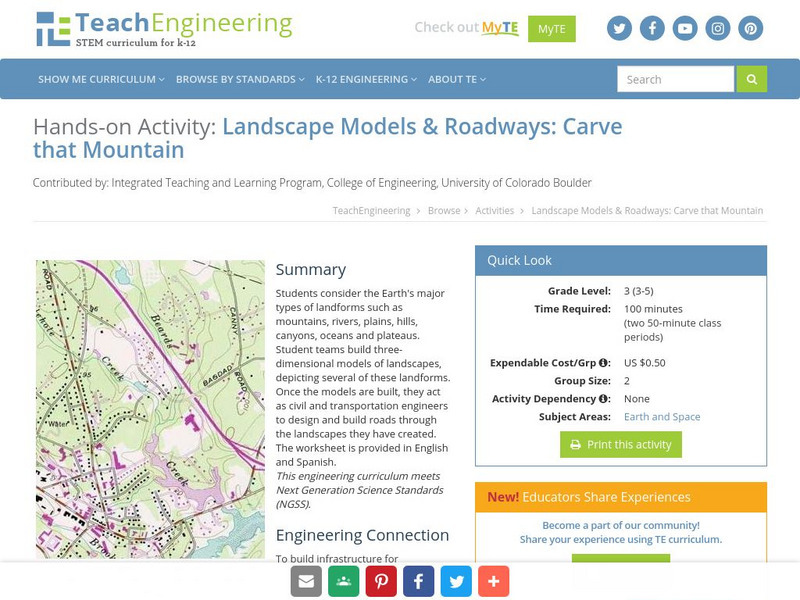
Teach Engineering: Carve That Mountain
In this activity, students further investigate major landforms (e.g., mountains, rivers, plains, hills, oceans and plateaus). They build a three-dimensional model of a landscape depicting several of these landforms. Once they have built...
TeachEngineering
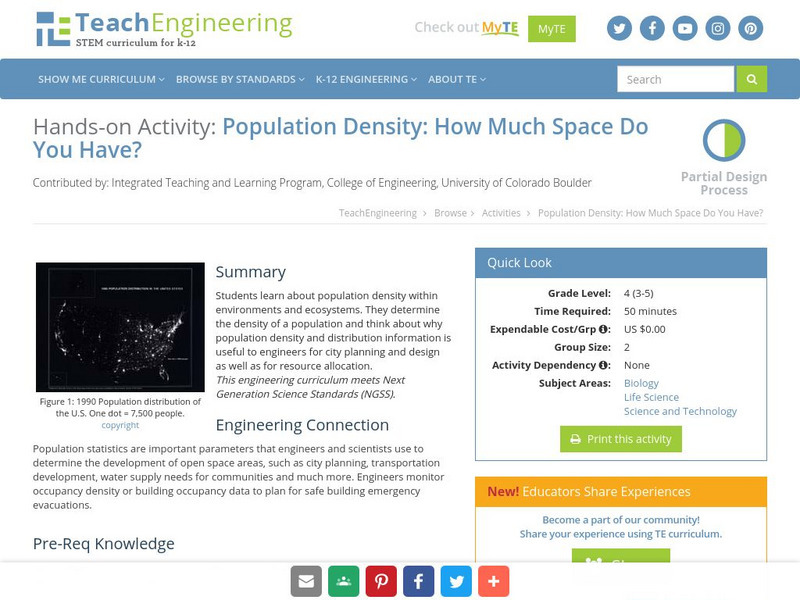
Teach Engineering: Population Density: How Much Space Do You Have?
Students learn about population density within environments and ecosystems. They determine the density of a population and think about why population density and distribution information is useful to engineers for city planning and...
TeachEngineering
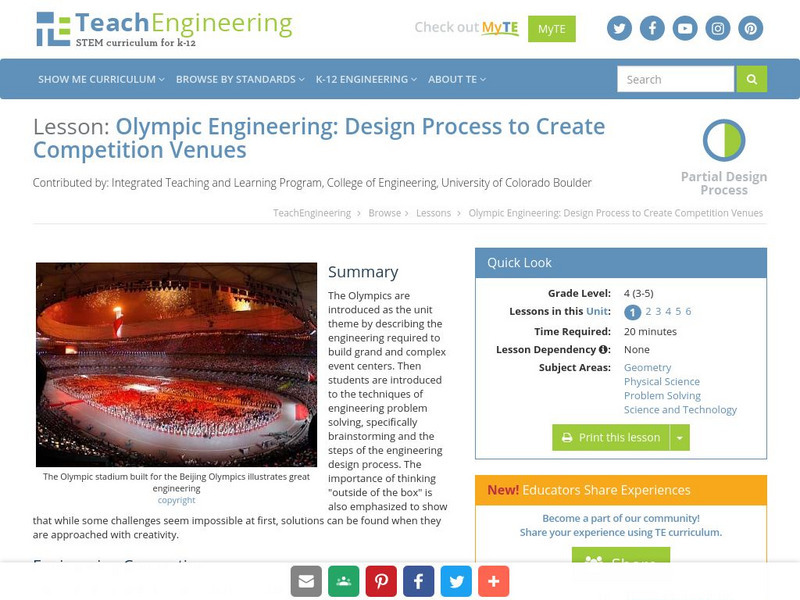
Teach Engineering: Olympic Engineering
The lesson begins by introducing Olympics as the unit theme. The purpose of this lesson is to introduce students to the techniques of engineering problem solving. Specific techniques covered in the lesson include brainstorming and the...
TeachEngineering
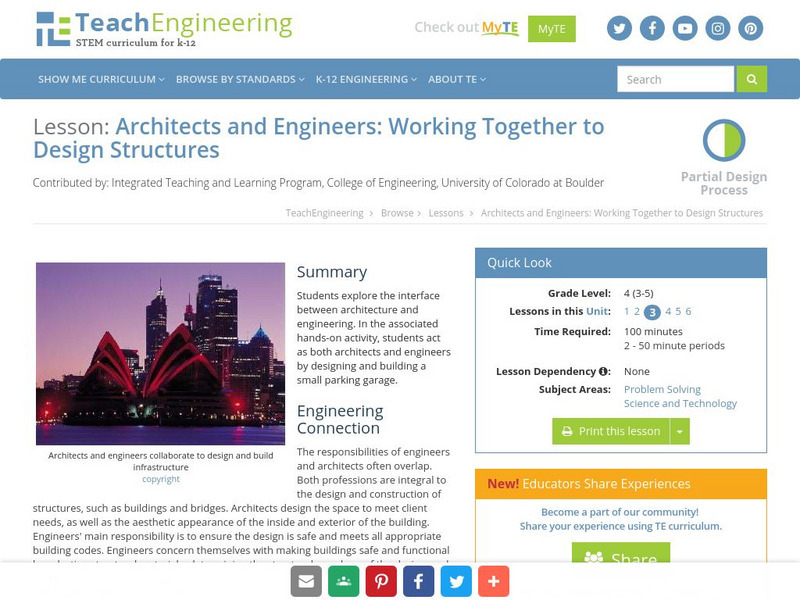
Teach Engineering: Architects and Engineers
Students explore the interface between architecture and engineering. In the associated hands-on activity, students act as both architects and engineers by designing and building a small parking garage.
TeachEngineering
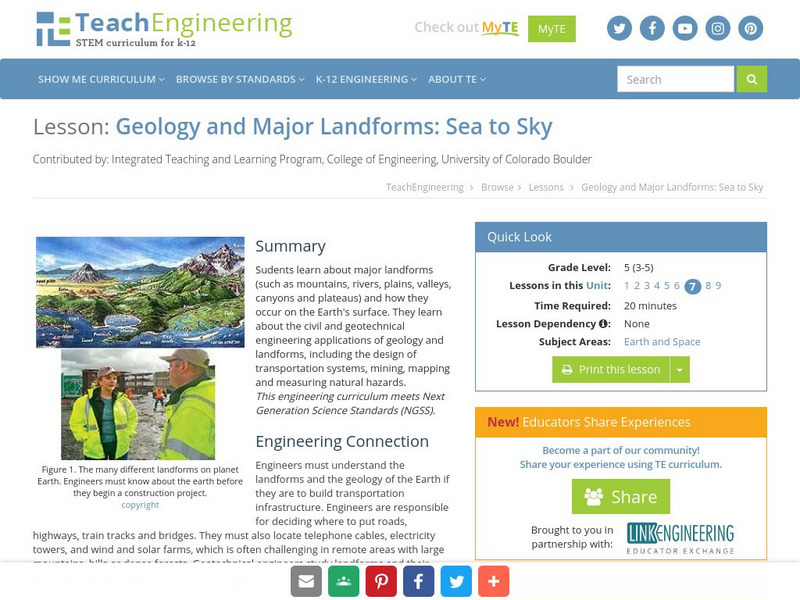
Teach Engineering: Sea to Sky
In this lesson, students learn about major landforms (e.g., mountains, rivers, plains, valleys, canyons and plateaus) and how they occur on the Earth's surface. They learn about the civil and geotechnical engineering applications of...
TeachEngineering
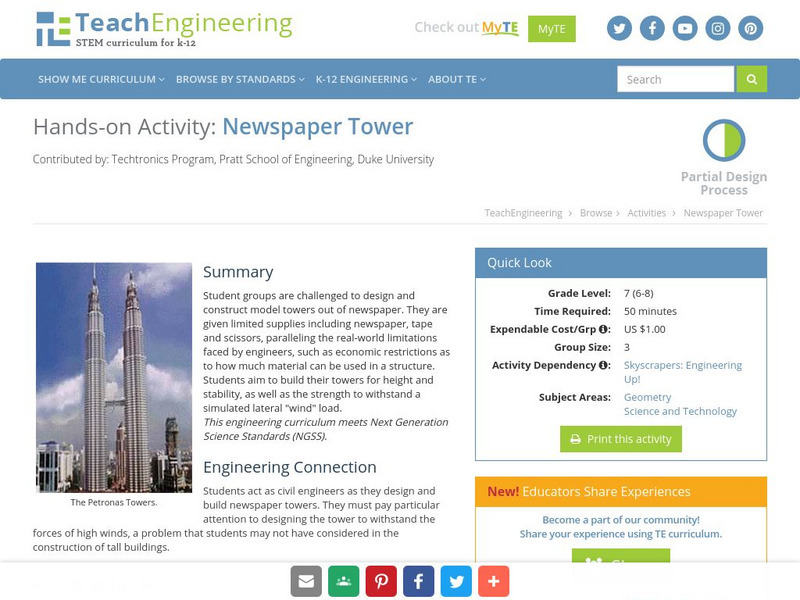
Teach Engineering: Newspaper Tower
Students will be challenged to design and construct a tower out of newspaper. They will have limited supplies including newspaper, tape, and scissors since engineers are often restricted by economic reasons as to how much material they...
TeachEngineering
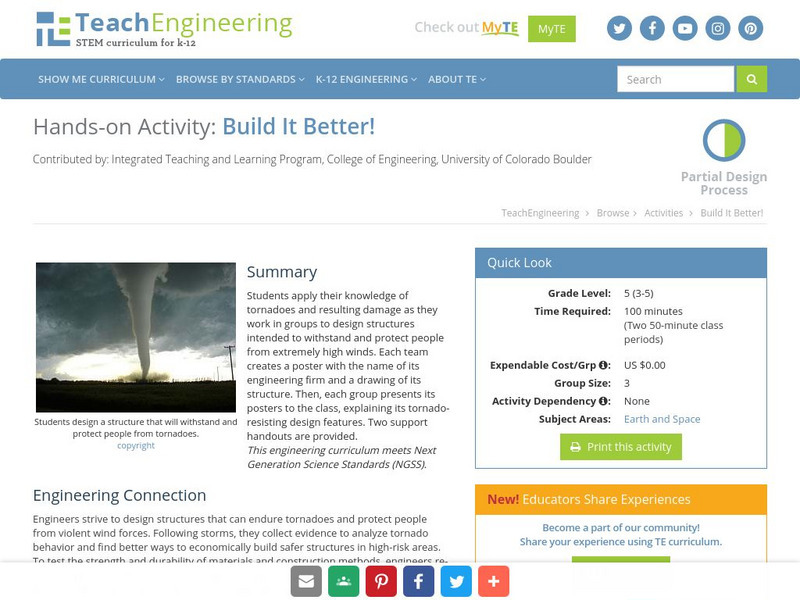
Teach Engineering: Build It Better!
Students learn about tornados and how engineers design structures to better withstand them. Students then design and draw a house that will better withstand a tornado. Students also learn about the Fujita Tornado Damage Score.
TeachEngineering
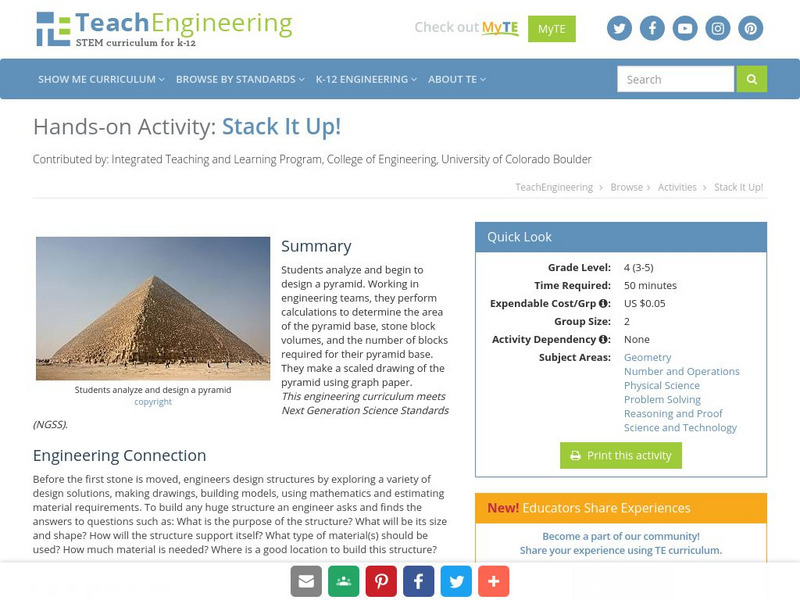
Teach Engineering: Stack It Up!
Students analyze and begin to design a pyramid. Working in engineering teams, they perform calculations to determine the area of the pyramid base, stone block volumes, and the number of blocks required for their pyramid base. They make a...
TeachEngineering
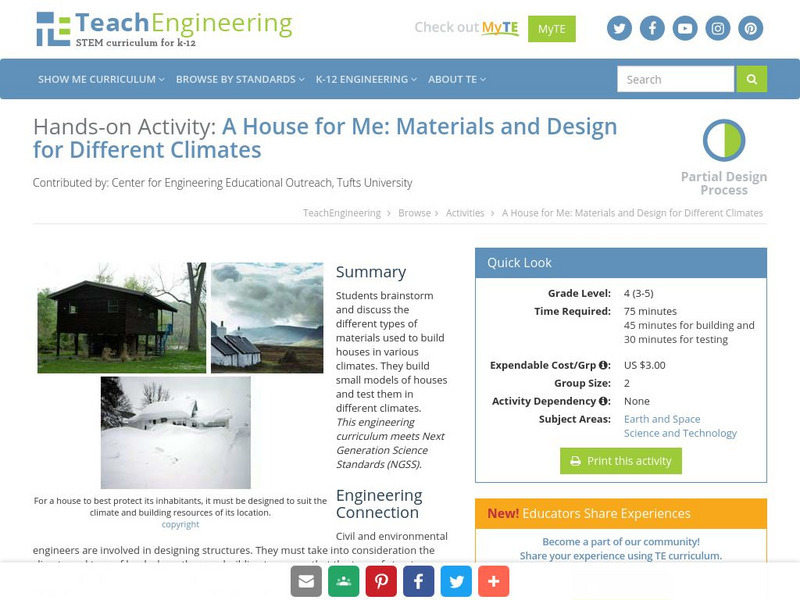
Teach Engineering: A House Is a House for Me
Students brainstorm and discuss the different types of materials used to build houses in various climates. Small models of houses are built and tested against different climates.
TeachEngineering
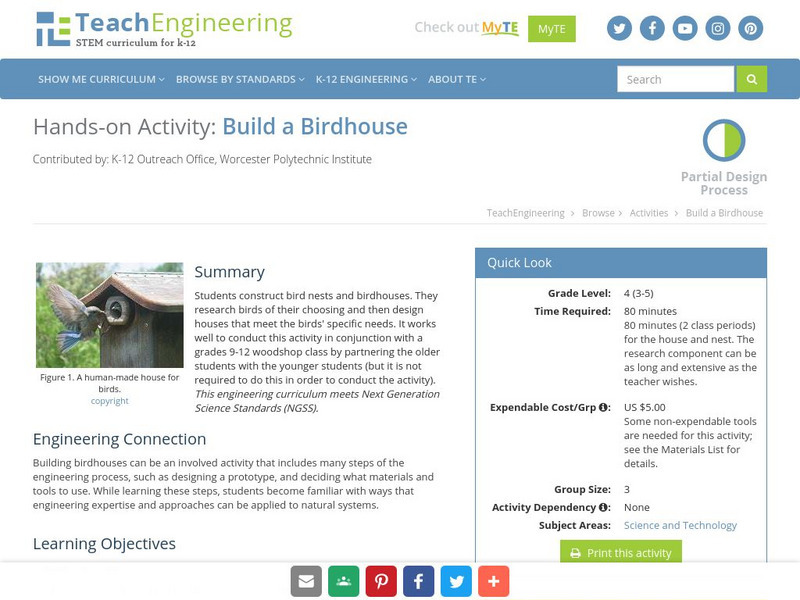
Teach Engineering: Build a Birdhouse
Students learn about different types of birds and their differing needs for nests and bird houses. Students then build a bird house.
TeachEngineering
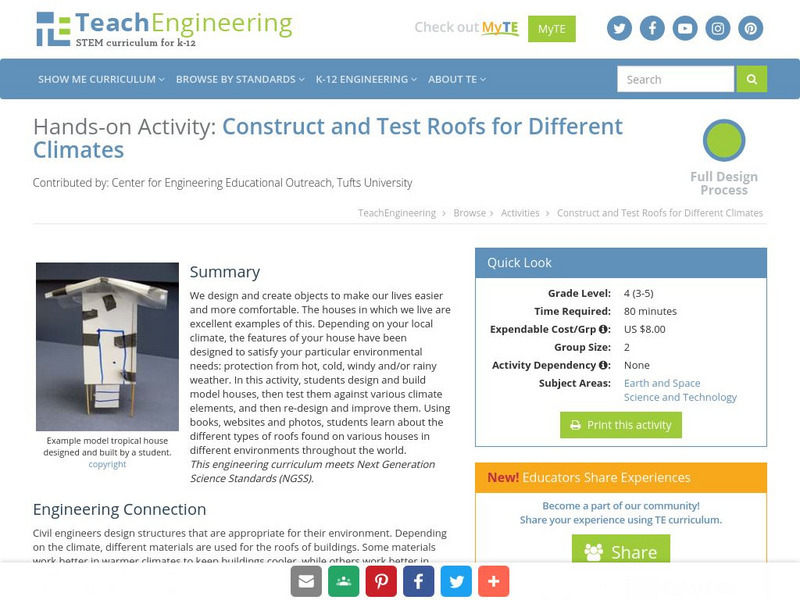
Teach Engineering: Construct and Test Roofs for Different Climates
We design and create objects to make our lives easier and more comfortable. The houses in which we live are an excellent example of this. Depending on your local climate, the features of your house will be different to satisfy your...
TeachEngineering
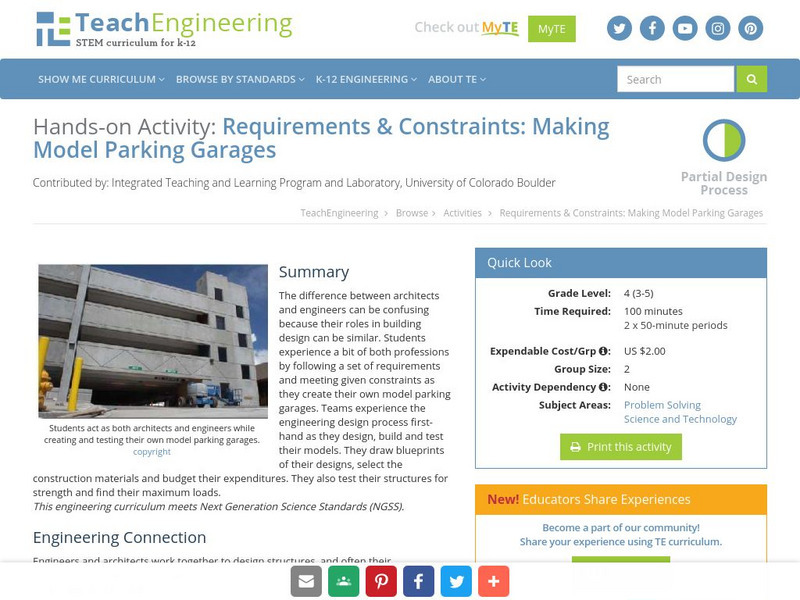
Teach Engineering: Requirements & Constraints: Making Model Parking Garages
The difference between an architect and an engineer is sometimes confusing because their roles in building design can be similar. Students experience a bit of both professions by following a set of requirements and meeting given...
TeachEngineering
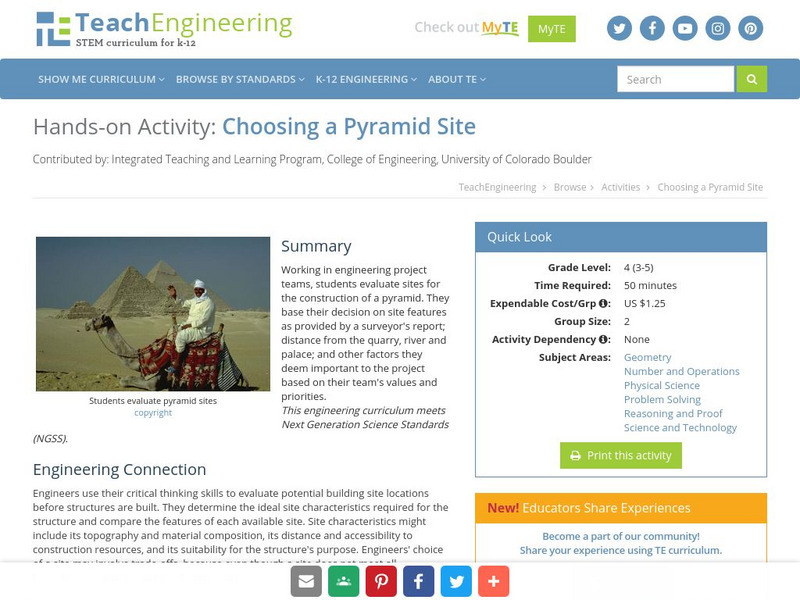
Teach Engineering: Choosing a Pyramid Site
Working in engineering project teams, students evaluate sites for the construction of a pyramid. They base their decision on site features as provided by a surveyor's report; distance from the quarry, river and palace; and other factors...
TeachEngineering
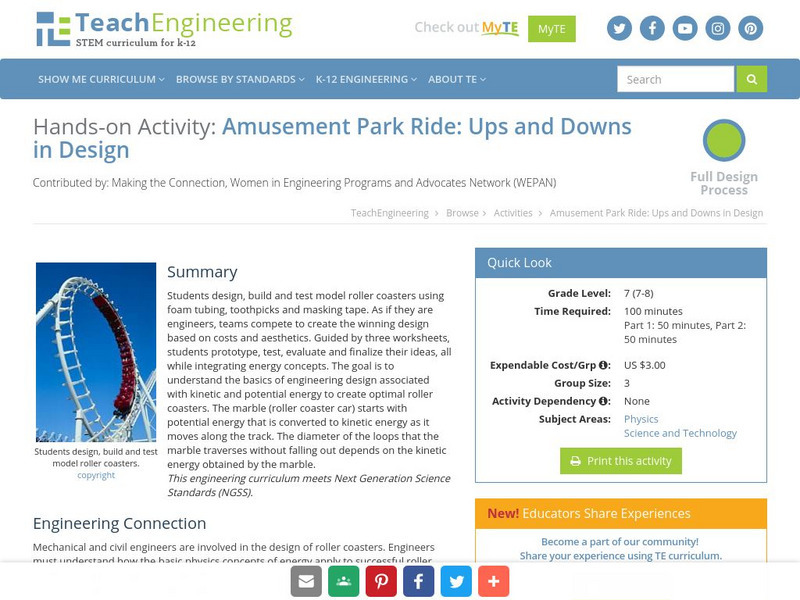
Teach Engineering: Amusement Park Ride: Ups and Downs in Design
This unit has students design and build foam tubing roller coasters. The design process integrates energy concepts as they test and evaluate their designs that address the task as an engineer would. The goal is for students to understand...
TeachEngineering
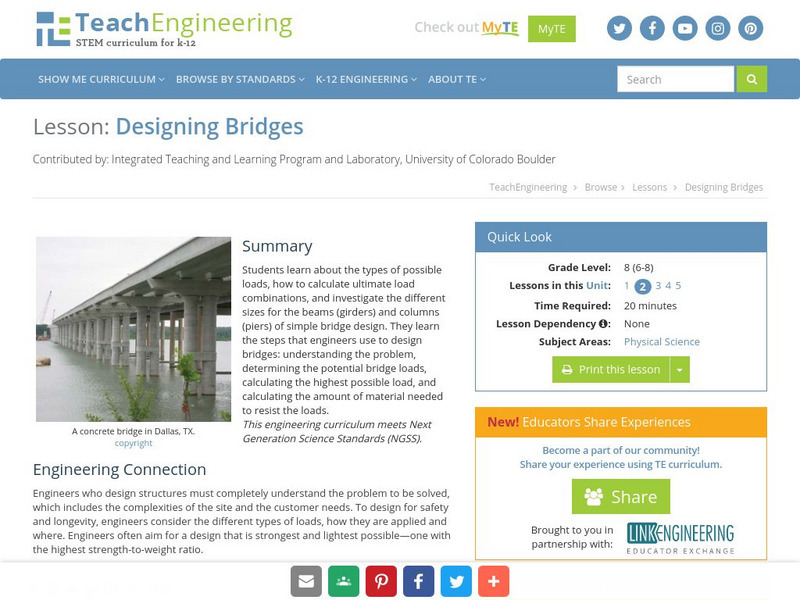
Teach Engineering: Designing Bridges
Learners learn about the types of possible loads, how to calculate ultimate load combinations, and investigate the different sizes for the beams (girders) and columns (piers) of simple bridge design. Students learn the steps that...
Science Buddies
Science Buddies: Solving a 'Windy' Problem
The wind is a powerful force, enough to erode whole hillsides over time. Building structures in windy environments challenge civil engineers with special safety concerns. A wall in a windy area can either shield you from the cold or fall...
TeachEngineering
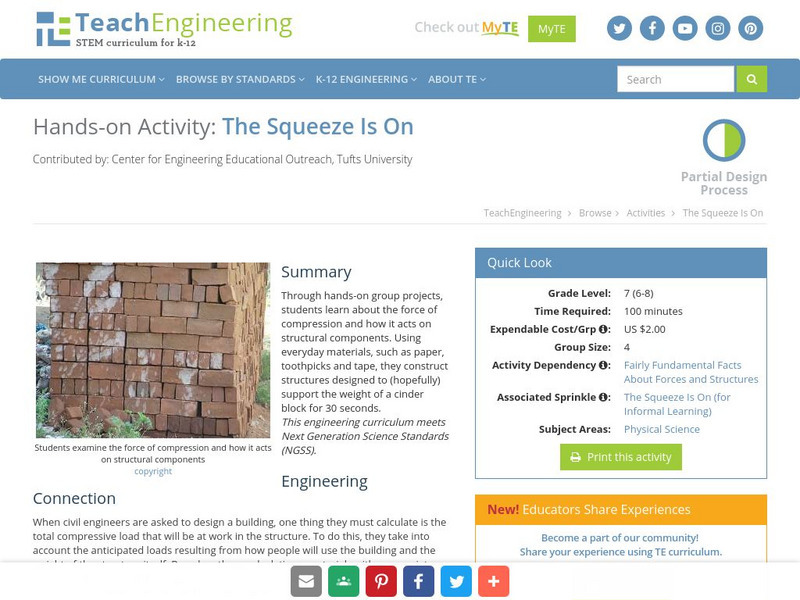
Teach Engineering: The Squeeze Is On
Students will learn about the force of compression and how it acts on structural components through a hands-on group project. Using everyday products such as paper, toothpicks, and tape they will construct a structure that will support...
TeachEngineering
Teach Engineering: Strong as the Weakest Link
To introduce the two types of stress that materials undergo - compression and tension - learners examine compressive and tensile forces and learn about bridges and skyscrapers. They construct their own building structure using...
TeachEngineering
Teach Engineering: Earthquakes Rock!
Young scholars learn the two main methods to measure earthquakes, the Richter Scale and the Mercalli Scale. They make a model of a seismograph - a measuring device that records an earthquake on a seismogram. Students also investigate...
Other popular searches
- Civil Engineering Books
- Civil Engineering Jobs
- Career in Civil Engineering
- Civil Engineering Worksheet
- Civil Engineering Debate
- Diploma in Civil Engineering
- Civil Engineering Bill