Hi, what do you want to do?





Teachnology
Teachnology: Science Lesson Plans
Great lesson plans covering a wide-range of science-related subjects. A wonderful resource for wonderful teachers!
Science Buddies
Science Buddies: The Big Dig
Even though many cities have recycling programs, a lot of trash still ends up in the dump. Find out which materials will break down and which materials won't. Will the results of this experiment change which products you often buy?
CK-12 Foundation
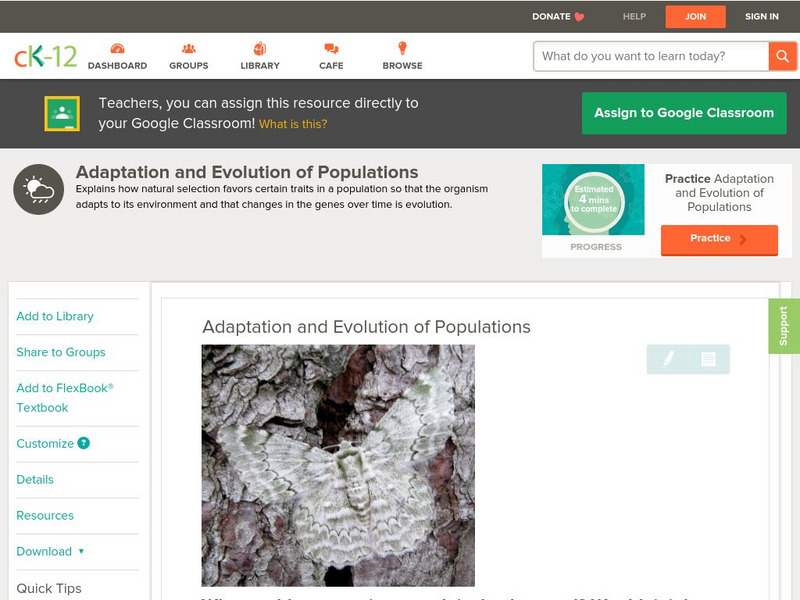
Ck 12: Earth Science: Adaptation and Evolution of Populations
Overview of the basic concepts behind evolution, such as gene variation and adaptations.[Free Registration/Login may be required to access all resource tools.]
American Geosciences Institute
American Geosciences Institute: Earth Science Week: Mystery Mollusc
Students become marine biologists, and their goal is to characterize the biological communities that live on or near the seamount in the Monterey Bay area. There, they must identify a mystery mollusk.
Science Buddies
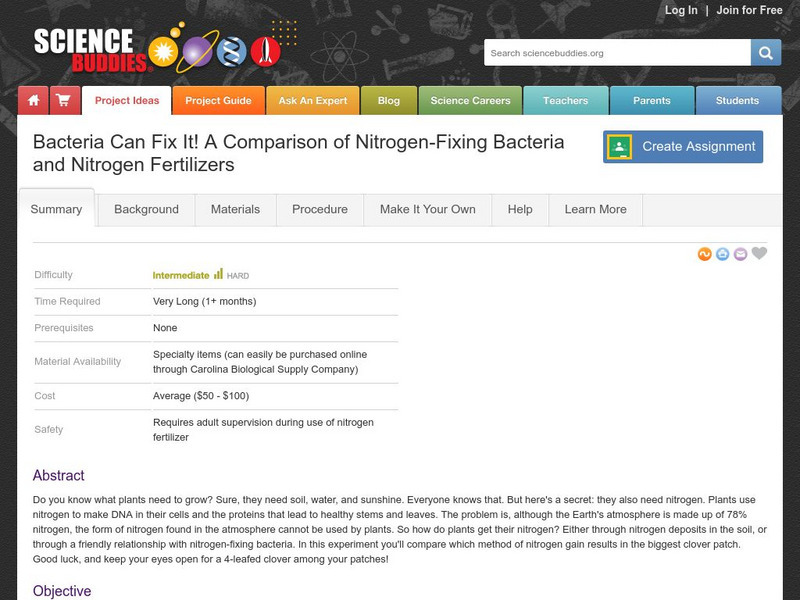
Science Buddies: Nitrogen Fixing Bacteria and Nitrogen Fertilizers
Plants need nitrogen to build proteins and nucleic acids to grow healthy stems and leaves. Though the Earth's atmosphere is made up of 79% nitrogen, the form of nitrogen found in the atmosphere cannot be used by plants. In this...
TeachEngineering
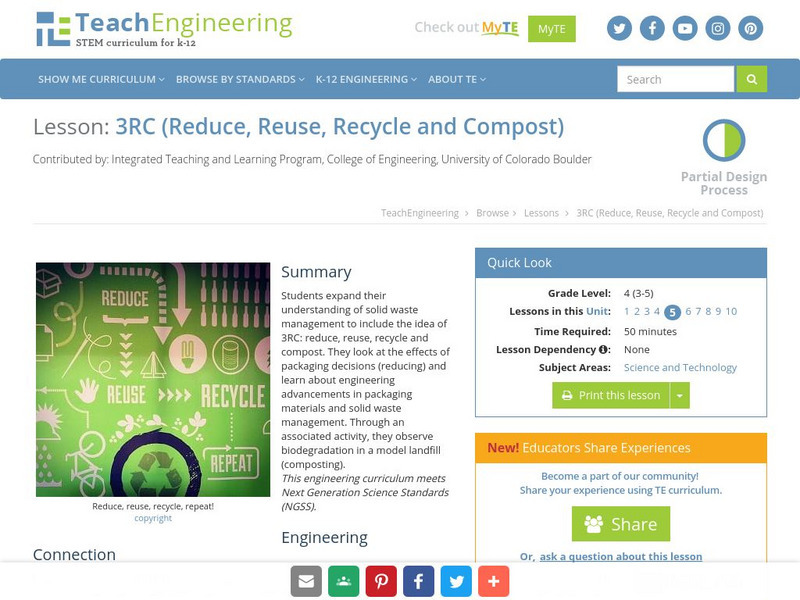
Teach Engineering: 3 Rc (Reduce, Reuse, Recycle and Compost)
In this instructional activity, students expand their understanding of solid waste management to include the idea of 3RC (reduce, reuse, recycle and compost). They will look at the effects of packaging decisions (reducing) and learn...
Science Buddies
Science Buddies: Growing, Growing, Gone! An Experiment on Nitrogen Fertilizers
Plants need nitrogen to build proteins and nucleic acids to grow healthy stems and leaves. Though the Earth's atmosphere is made up of 79% nitrogen, the form of nitrogen found in the atmosphere cannot be used by plants. In this...
CK-12 Foundation
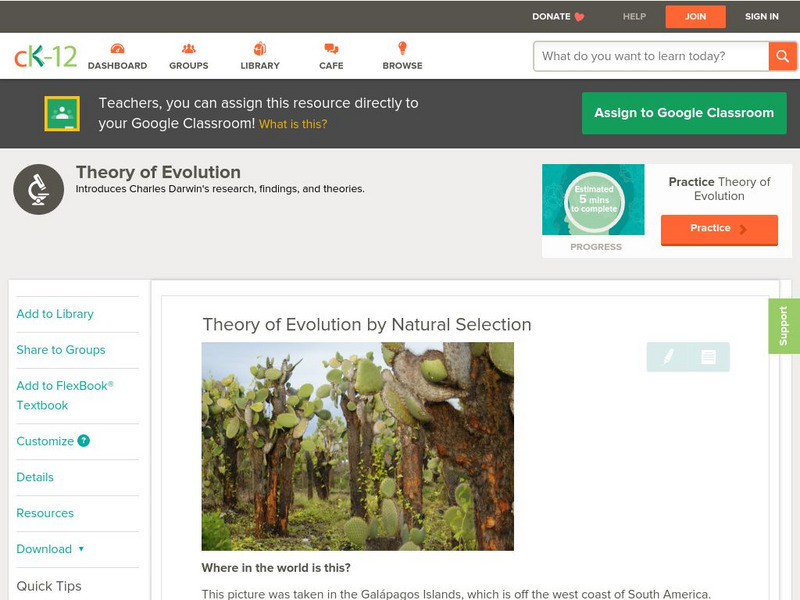
Ck 12: Life Science: Theory of Evolution by Natural Selection
[Free Registration/Login may be required to access all resource tools.] Do you ever wonder why some birds are big like ostriches and some birds are small like robins? Or why a lion has a mane while a leopard has spots? In the 19th...
Estrella Mountain Community College
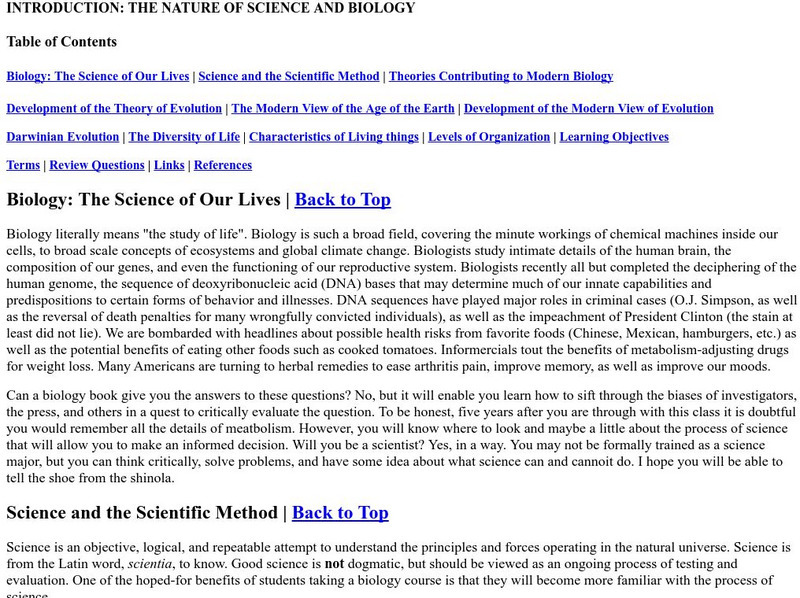
Online Biology Book: The Nature of Science and Biology
Use the scientific reasoning and critical thinking to take an in-depth look at the basics of biology.

Open Curriculum
Open Curriculum: Water and Water Cycle
An illustrated article helps learners understand the water cycle and the distribution of Earth's water.
Untamed Science
Untamed Science: Biology: World Biomes: Mediterranean Climates: Chaparral Biome
Make learning about Earth's biomes fun and easy with video clips. Learn about the unique Chaparral climate characterized by mild, wet winters and warm, dry summers.
Untamed Science
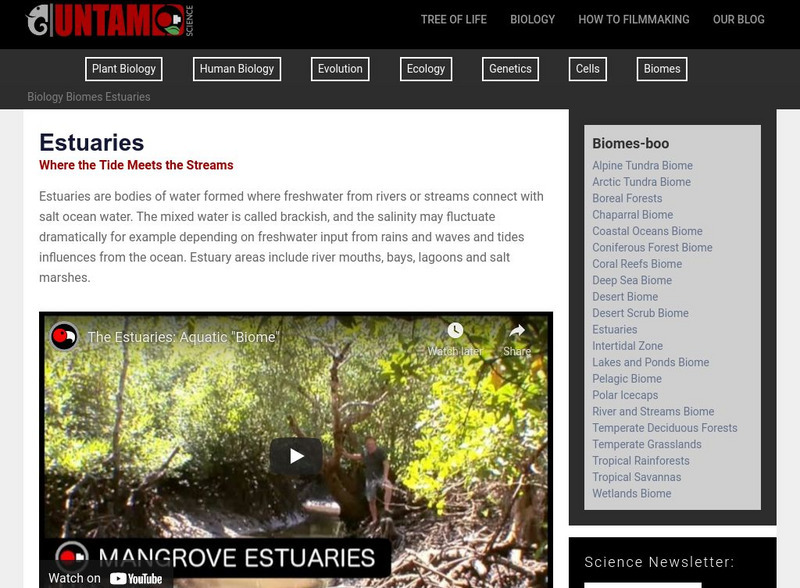
Untamed Science: Biology: World Biomes: Estuaries Biome
Make learning about Earth's biomes fun and easy with video clips, photographs, and diagrams. Learn about estuaries, the water environments formed where freshwater from rivers or streams mix salt ocean water. [6:38]
TeachEngineering
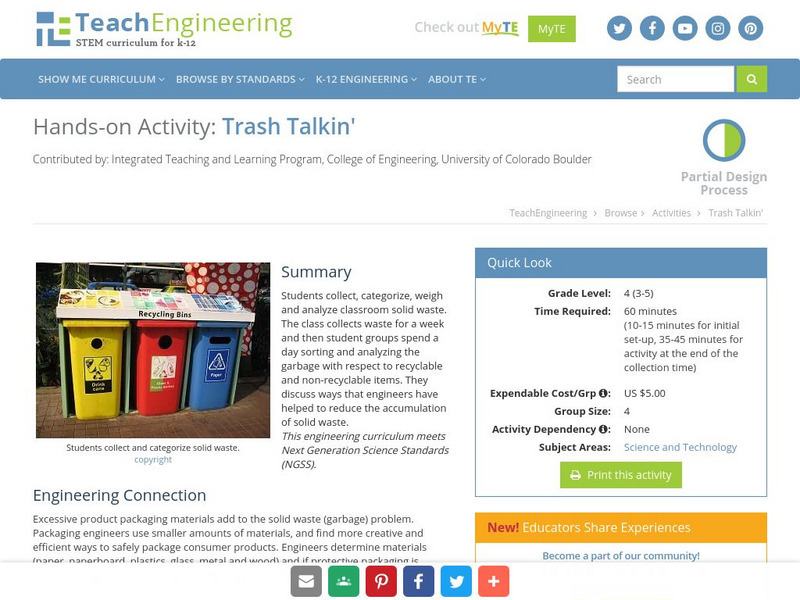
Teach Engineering: Trash Talkin'
In this activity, students collect, categorize, weigh and analyze classroom solid waste. The class collects waste for a week and then student groups spend a day sorting and analyzing the garbage with respect to recyclable and non...
TeachEngineering
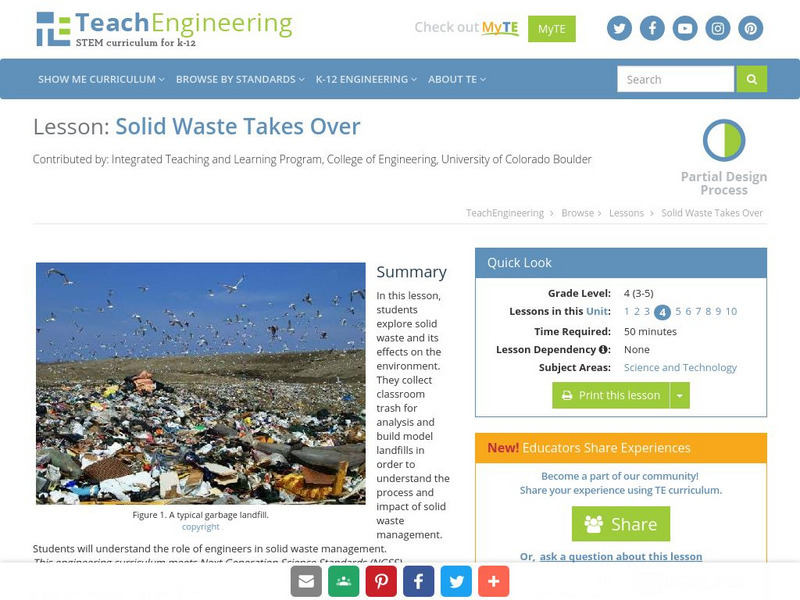
Teach Engineering: Solid Waste Takes Over
In this instructional activity, students explore solid waste and its effects on the environment. They will collect classroom trash for analysis and build model landfills in order to understand the process and impact of solid waste...
TeachEngineering
Teach Engineering: How Should Our Gardens Grow?
In this lesson, students will learn about types of land use by humans and evaluate the ways land is used in their local community. They will also consider the environmental effects of the different types of land use. Students will assume...
TeachEngineering
Teach Engineering: Bury Your Trash!
This activity will allow students to bury various pieces of trash in a plotted area of land outside. After approximately two to three months, the trash will be uncovered to allow the students to investigate what types of materials...