Hi, what do you want to do?






Smithsonian Institution
Smithsonian: National Museum of the American Indian: Queen of America
Pocahontas is that rare historical figure who captivated people in her own time and in every generation that followed. Take a closer look at the story of Pocahontas and Captain John Smith in this Frieze of American History from the...
National Humanities Center
National Humanities Center: Toolbox Library: People: Assimilation and the Crucible of the City: Exclusion
This lesson examines government reports that urged restrictions on immigration to America at the turn of the nineteenth century.
University of Florida
Baldwin Library: The People of America
A scanned copy of the 1853 publication of The People of America, a nonfiction book for children.

Other
The People's Paths: Remarks Concerning the Savages of North America
Written in 1784, this piece by Benjamin Franklin, considers the relative meaning of civilization and manners while he recalls several anecdotes of interaction between the European settlers and the Natives of North America.
University of Florida
Baldwin Library: True Stories of Famous Men and Women of America for Young
A scanned copy of the 1898 publication of True Stories of Famous Men and Women of America for Young by John Stevens Cabot Abbott, a nonfiction book for children.

American Rhetoric
American Rhetoric: Edward M. Kennedy: "Faith, Truth and Tolerance in America"
This is the text, audio, and video [4:27] of Senator Ted Kennedy's speech "Faith, Truth and Tolerance in America" delivered on October 3, 1983, at the Liberty Baptist College (Liberty University), in Lynchburg, Virginia.
Curated OER
History Matters: "The Republic Is Imperiled": John L. Lewis Warns of Ignoring Laboring People
Excerpts from Senate testimony given by John L. Lewis in 1933, when he was President of the United Mine Workers of America.

Other
Karpeles Manuscript Library: Constitution of the Confederate States of America
Students can see the actual first page of the Constitution for the Confederacy. Of interest is an explanation of who "We, the People" included.
Calisphere: University of California Libraries
University of California: Calisphere: 1870 1900: Everyday Life and People
Primary source photos depicting what life was like out west and in California in the late 19th century.
National Humanities Center
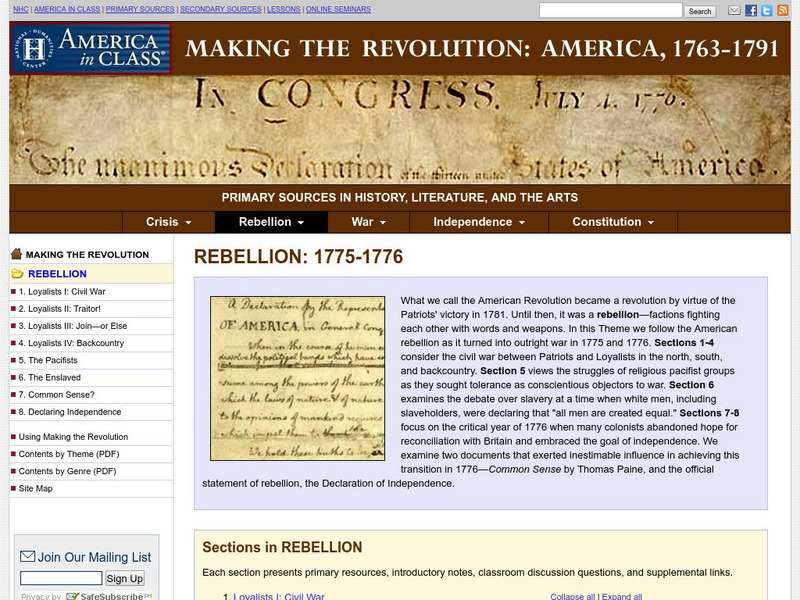
National Humanities Center: America in Class: Making the Revolution: Rebellion: 1775 1776
Primary source material with introductory notes, classroom discussion questions, and supplemental links focussing on thoughts and events of rebellion in the colonies between 1775-1776 preceding the American Revolution.
National Humanities Center
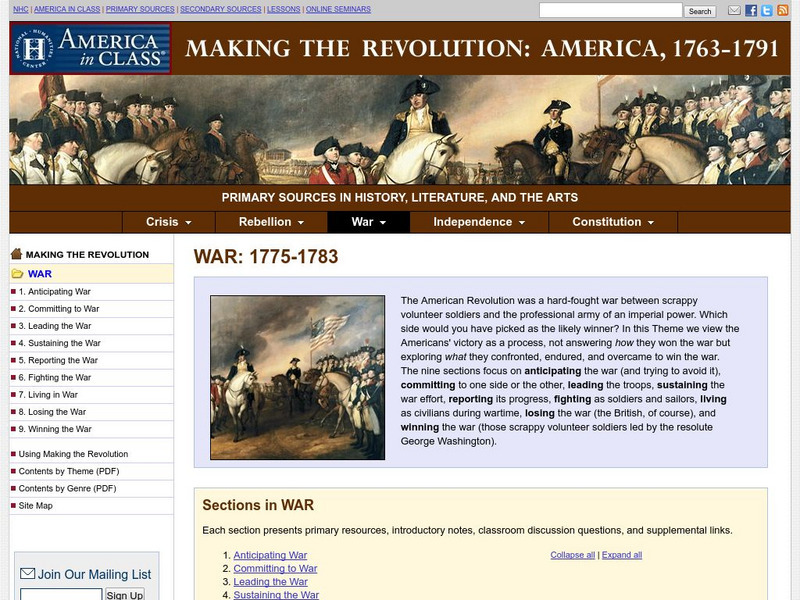
National Humanities Center: America in Class: Making the Revolution: War, 1775 1783
Contains 9 sections of primary resource material, introductory notes, classroom discussion questions, and supplemental links to resources on the American Revolutionary War era from 1775 to 1783.
PBS
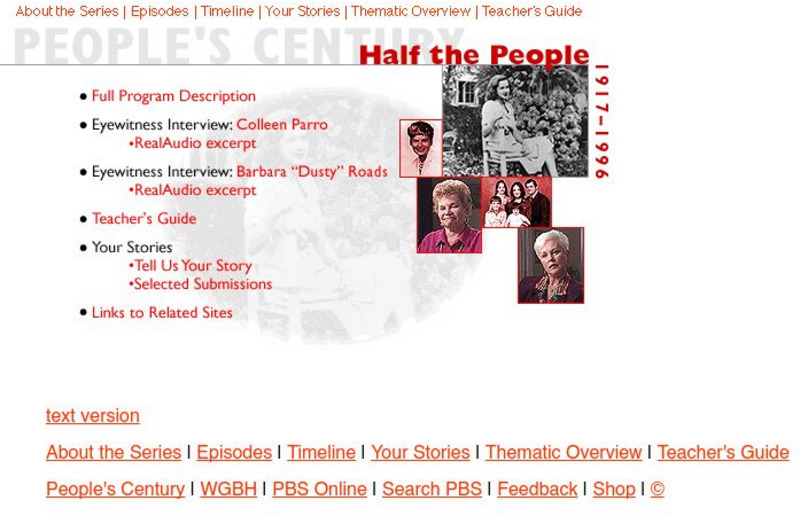
Pbs: Half the People
An overview of the continuation of the women's movement - the spread of the ideas to mainstream America. Women were beginning to feel the freedom of equality. Read two interviews from women who rode the wave of change.
Bill of Rights Institute
Bill of Rights Institute: Constitution of the United States of America (1787)
The Constitution was written in the summer of 1787 in Philadelphia, Pennsylvania, by delegates from 12 states, in order to replace the Articles of Confederation with a new form of government. It created a federal system with a national...
National Humanities Center
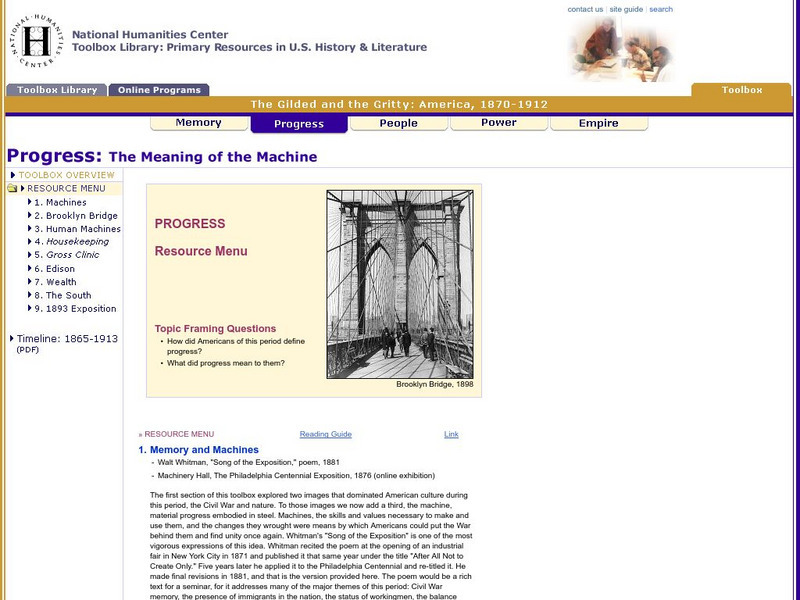
National Humanities Center: Toolbox Library: The Gilded and the Gritty: 1870 1912: Progress: The Meaning of the Machine
Nine primary source resources describing the way people thought about progress during the Gilded Age, 1870-1912. Includes guided reading, links to supplemental material, and timeline.
Library of Congress
Loc: Religion & the American Revolution
This essay discusses how religion influenced people in regards to fighting the British during the American Revolution. There are several primary sources to examine in this site.
Other
Early America: Paris Peace Treaty of 1783
This article from Early America provides a brief introduction to the events and people surrounding The Paris Peace Treaty of 1783 including photos of the original document with a link to the text.
National Humanities Center
National Humanities Center: Toolbox Library: Contact, American Beginnings: 1492 1690
Thirty one primary sources including historical documents, literary texts, and visual images from which to explore European reactions to the land and the people of the New World and the Natives' responses to European contact and conquest.
National Humanities Center
National Humanities Center: Toolbox Library: The French, American Beginnings: 1492 1690
Three maps reflecting French exploration along rivers in North America and three French explorers' accounts of the astonishing hardships they endured and the possibilities for trade with natives they opened.
National Humanities Center
National Humanities Center: Toolbox Library: Settlement, American Beginnings: 1492 1690
Thirty primary sources-historical documents, literary texts, and visual images-that explore motivations, visions, patterns, goals, challenges, and relationships with indigenous peoples offered by Europeans in their settlement of the New...
National Humanities Center
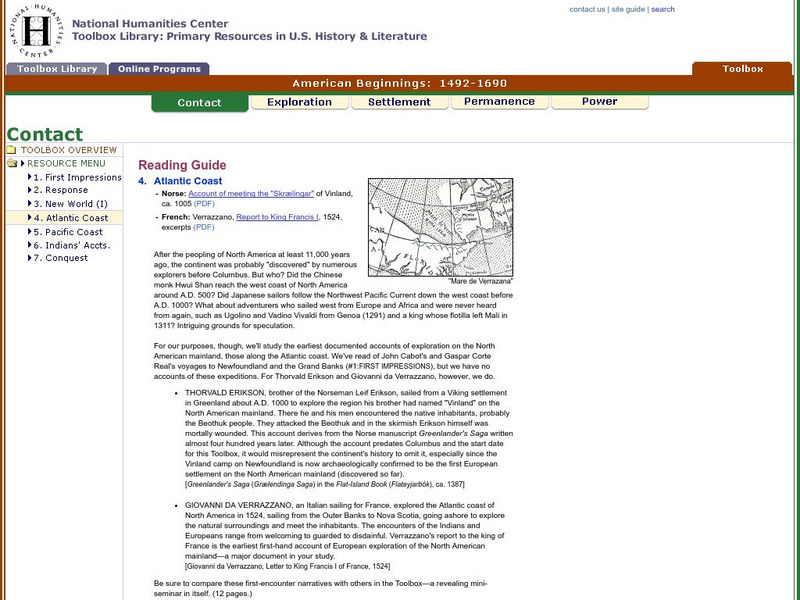
National Humanities Center: Toolbox Library: Atlantic Coast, American Beginnings: 1492 1690
Primary resources for U.S. history and literature offer a French and a Norse account of the earliest documented exploration on the Atlantic coast of North America and encounters with native peoples. Includes questions for discussion.
National Humanities Center
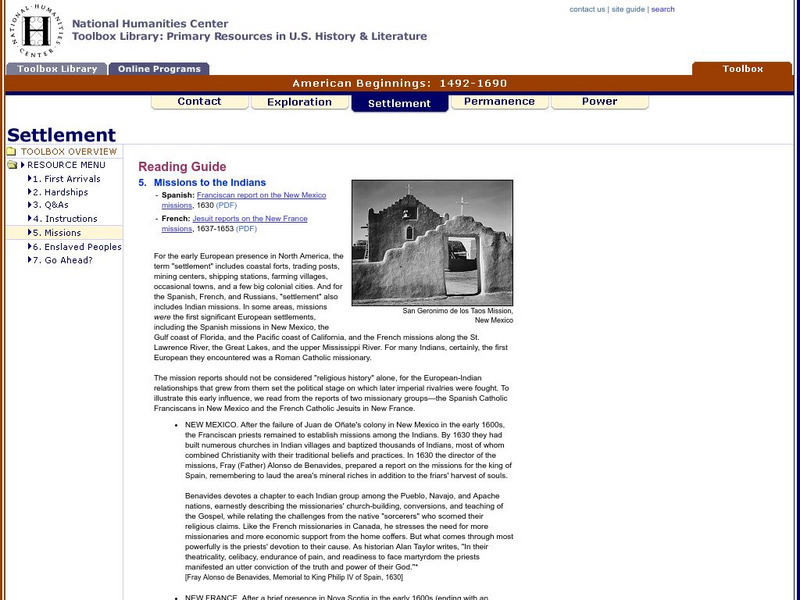
National Humanities Center: Toolbox Library: Missions, American Beginnings: 1492 1690
A Spanish Franciscan and a French Jesuit report on the reciprocal relationship between natives and Catholic missionaries as Europeans settled New France and New Spain.
National Humanities Center
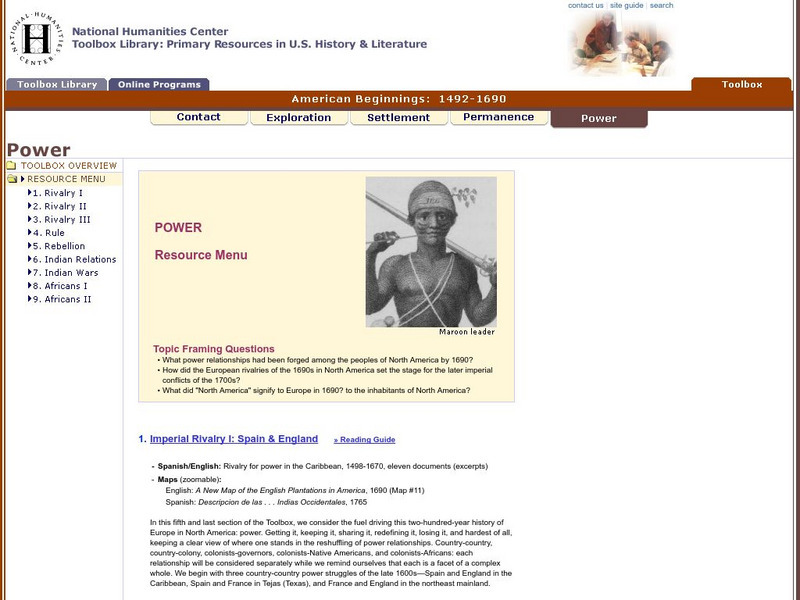
National Humanities Center: Toolbox Library: Power, American Beginnings: 1492 1690
Fifty seven primary sources-historical documents, literary texts, and visual images-and one secondary historical account that explore imperial conflict, European economic rivalry, and the impact of colonial rule on native peoples.
Digital Public Library of America
Dpla: The Panic of 1837
This set uses primary sources to explore the financial practices that contributed to the Panic of 1837 and the impact of the crisis on America's politics, economy, and people.
This Nation
This nation.com: Declaration of the Causes and Necessity of Their Taking Up Arms
This site provides the declaration by the representatives of the United Colonies of North America in which they set forth the "Causes and Necessity of Their Taking Up Arms."