Hi, what do you want to do?






TED-Ed
TED-Ed: How to manage your stress more effectively | Shannon Odell
An upcoming project deadline, a fight with a family member, or even an embarrassing moment can easily trigger our body’s stress response. While we can’t always control what life throws at us, there are ways to better prepare for...
TED-Ed
TED-Ed: How stress affects your brain - Madhumita Murgia
Stress isn't always a bad thing; it can be handy for a burst of extra energy and focus, like when you're playing a competitive sport or have to speak in public. But when it's continuous, it actually begins to change your brain. Madhumita...
SciShow
Can Exercise Treat Depression?
There are lots of good reasons to exercise, but it can also make you feel happier.
SciShow
How Chronic Stress Harms Your Body
We can’t avoid having stress, and that’s not always a bad thing. But if you are dealing with a lot of stress every day, it might cause you physical harm.
Crash Course
Endocrine System, part 2 - Hormone Cascades: Crash Course A&P
In the second half of our look at the endocrine system, Hank discusses chemical homeostasis and hormone cascades. Specifically, he looks at the hypothalamus-pituitary-thyroid axis, or HPT axis, and all the ways your body can suffer...
Crash Course
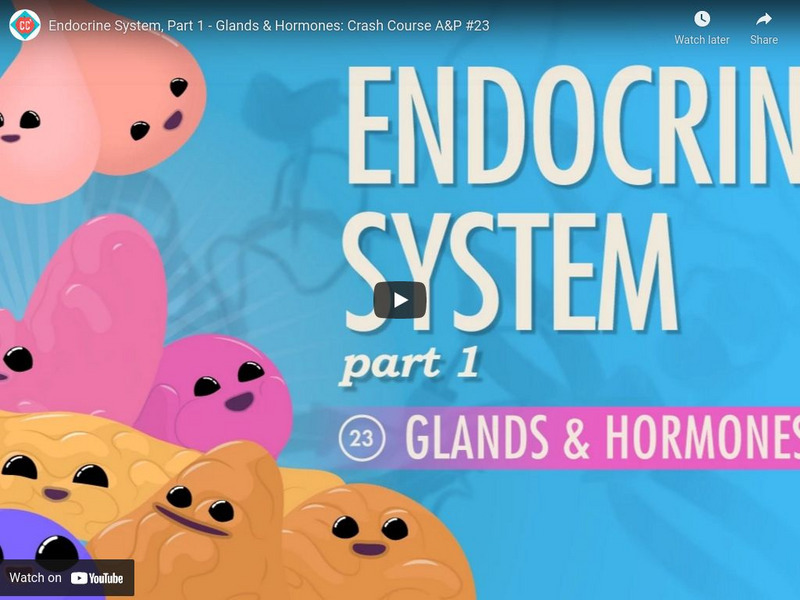
Endocrine System, part 1 - Glands & Hormones: Crash Course A&P
Hank begins teaching you about your endocrine system by explaining how it uses glands to produce hormones. These hormones are either amino-acid based and water soluble, or steroidal and lipid-soluble, and may target many types of...
Science ABC
What Does Chronic Stress Do To Your Mind And Body
Chronic Stress: The Silent Health Threat | Understanding Cortisol's Impact In this eye-opening video, we delve deep into the world of chronic stress and its hidden consequences on your health. Learn how cortisol, the stress hormone, can...
Crash Course
Crash Course A&p #23: Endocrine System, Part 1 Glands and Hormones
Hank begins teaching you about your endocrine system by explaining how it uses glands to produce hormones. These hormones are either amino-acid based and water soluble, or steroidal and lipid-soluble, and may target many types of cells...