Hi, what do you want to do?






The Brain Scoop
Chicago Adventure, Part 8: How to be an Insect
Have you ever seen a wingless fly or a katydid larger than many birds? The eighth part of a series on the Field Museum in Chicago shares both of these unique insects. The resource explains the location and features of some of the...

Deep Look
Pygmy Seahorses: Masters of Camouflage
Watch as pygmy seahorses become one with their environment. The life of a pygmy seahorse begins and ends on a branch of coral. An interesting video lesson explores how camouflage protects this delicate species and how they adapt when...

Deep Look
Decorator Crabs Make High Fashion at Low Tide
New York, Paris, Milan ... and now, high fashion in a California tide pool! Junior zoologists explore the world of the decorator crab and learn about its amazing camouflage. Also featured is the moss crab, which incorporates anemone into...

Deep Look
Nature's Mood Rings: How Chameleons Really Change Color
Demonstrate how our understanding of chameleons trying to blend in was wrong. An education video explains how scientists now know that chameleons manipulate tiny salt crystals in their skin to change colors.

Deep Look
You're Not Hallucinating. That's Just Squid Skin.
Cephalopods, including squid, use their color-changing skin for both camouflage and communication. A video explains how squid camouflage themselves in the open ocean with nothing else around. It shows how they mimic the interplay of...

MinuteEarth
Why Are There so Many Tigers in Texas?
Everything is bigger in Texas, including its cats! An engaging video compares and contrasts the global wild tiger population to the domesticated population in Texas. By comparing habitat characteristics, the instructor explains why the...

MinuteEarth
The Secret Social Life of Plants
Who knew plants can communicate? An interesting video shows how plants communicate with insects and other plants. The instructor gives many examples including mimicry, parasitism, and self-defense.

MinuteEarth
This Is Not A Bee
Is it a bee or not a bee? That seems to be the question of a video lesson that explains how insects such as flies and moths mimic the coloring of bees. The narrator discusses the purpose of the coloring in association to predators.

MinuteEarth
Are These Butterflies The Same?
A descriptive video lesson explains the history of the white admiral and red-spotted purple butterfly. As the butterflies' habitats overlap, scientists discovered a specimen with characteristics of both butterflies. The narrator...

Be Smart
Cuttlefish: Tentacles In Disguise
Cuttlefish are actually not fish — they are relatives of the octopus, squid, and nautilus! Scholars explore this concept and more as they observe cuttlefish and their ability to change their coloring through chromatophores. Viewers...

Be Smart
Nature's Most Amazing Animal Superpowers
If you could have any superpower, what would it be? The animal kingdom has more superpowers than all of the comic book heros combined. The video quickly goes through many of these animals and their powers including the ability to shoot a...

Crash Course
Community Ecology II: Predators
The first examples of mimicry we have found date back to before flowering plants. The video goes in depth on predators at the community ecology level. It includes discussions of herbivores, parasitism, adaptations, cryptic coloration,...

PBS
Pbs Learning Media: Evolution of Camouflage
This video segment from Evolution: "Darwin's Dangerous Idea" illustrates the remarkable camouflage of a praying mantis against its leafy backdrop. [0:57]
PBS
Pbs Learning Media: Masters of Disguise
In the face of danger, what's a spineless animal to do? This video segment introduces the concept of camouflage -- how animals achieve it and how this form of disguise benefits both predators and prey. Footage from NOVA: "Animal...

TED Talks
Ted: Ted Talks: David Gallo: Underwater Astonishments
Enter the depths of the ocean to see actual footage of several amazing sea creatures, and witness animal survival behaviors unseen by casual observers. [5:25]
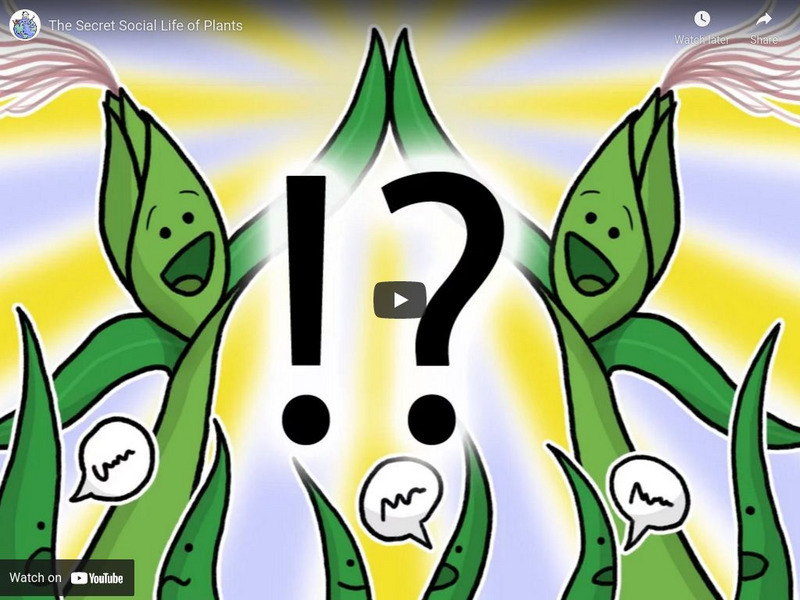
Minute Earth
Minute Earth: The Secret Social Life of Plants
Plants are more than just green, photosynthesis machines. They behave and adapt to their environmental cues much like animals do. [2:32]
Science Friday Initiative
Science Friday: Where's the Octopus
A movie following the research of Roger Hanlon on cephalopods and their ability to use camouflage. Learn about a cephalopods ability not only to change their coloring but also their skin texture. Roger Hanlon explains his research and...
Science Friday Initiative
Science Friday: Where's the Cuttlefish?
Duke biologist Sarah Zylinski discusses her work with cuttlefish and their peculiar camouflage behaviors. [3:51]
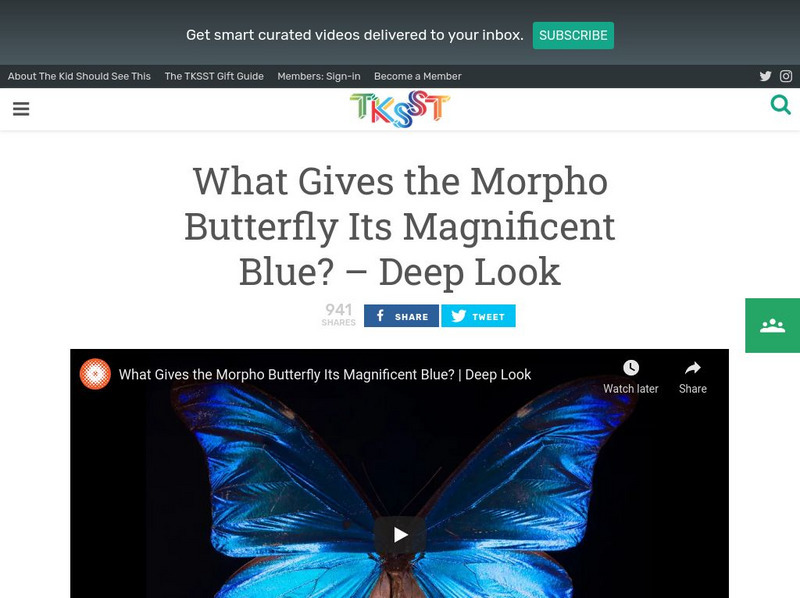
The Kid Should See This
Tksst: Deep Look: What Gives the Morpho Butterfly Its Magnificent Blue?
Take a look into structural coloration, the physics of light, and how it is possible that the Morpho butterfly's wings appear to be blue, despite their containing no blue pigment at all. [3:03]

Howard Hughes Medical Institute
Hhmi: Bio Interactive: Pocket Mouse and Predation
Students watch a short animation showing how the pocket mouse adapts and evolves in a changing environment. Includes discussion questions. [0:20]

Science Friday Initiative
Science Friday: Squid, Octopus, Cuttlefish: Masters of Camouflage
In less than a second, cephalopods can change the color, pattern and shape of their skin.

Science Friday Initiative
Science Friday: Where's the Cuttlefish?
Duke biologist Sarah Zylinski studies how cuttlefish see the world by looking at their skin change patterns and their ability to use camouflage.